

Six pieces cover almost every outfit a man needs: an oversized or heavyweight tee, a heavyweight hoodie, relaxed denim or cargo pants, a clean white sneaker plus one statement pair, a lightweight jacket, and one accessory like a cap or crossbody bag. The organizing principle behind all of it is relaxed silhouette, neutral palette, and quality over hype. Build around those six items first, then use the fit and shopping notes below to buy smart instead of buying often.
TL;DR:
- Heavyweight cotton tees should have a shoulder seam slightly past the natural shoulder and be paired with graphics or blank styles for versatility.
- A fleece hoodie in 400+ GSM is the most worn piece, with neutral tones prioritized for easy layering and mixing.
- Relaxed straight-leg denim or cargo pants provide volume and texture, with cargo pants offering additional functionality and texture.
- A clean white sneaker and a statement pair create a balanced rotation, with the statement shoe used sparingly for impact.
- Investing in quality denim, a solid jacket, and durable sneakers ensures longevity, while cheaper graphic tees and seasonal accessories can be replaced more frequently.
Table of Contents
- Streetwear Basics for Men: What Each Piece Should Actually Do
- How to Build Streetwear Outfits: The Formula That Always Works
- Fit and Sizing: How Streetwear Should Actually Sit
- Colors and Materials: Building a Palette That Actually Works Together
- Where to Invest and Where to Save
- Care and Maintenance: Keeping Your Pieces Looking New
- The Muskop Perspective on Building Basics That Last
- Editorial Perspective: The Case for Quieter, Better-Made Streetwear
- Get Your Core Rotation Started With Muskop
- Sources
- FAQ
Streetwear Basics for Men: What Each Piece Should Actually Do
Before spending a dollar, it helps to know what each piece is supposed to accomplish in a rotation. Streetwear basics for men aren’t about owning the most items. They’re about owning the right six or seven and knowing exactly why each one earned its spot.
1. The oversized or heavyweight tee
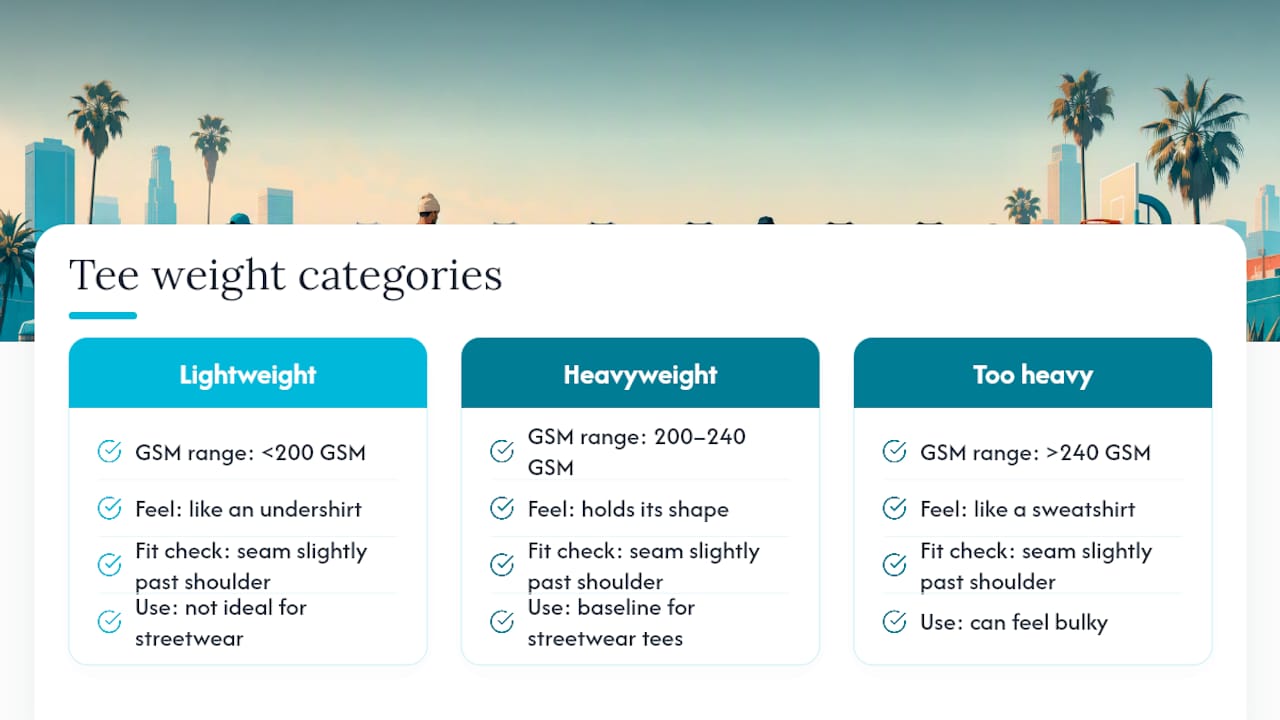
A good streetwear tee sits somewhere between 200 and 240 GSM (grams per square meter), heavy enough that it holds its shape and doesn’t cling. Anything lighter feels like an undershirt; anything much heavier starts to feel like a sweatshirt. The Ultimate Streetwear Style Guide for Men puts heavyweight tees at 200+ GSM as a baseline for the category.
Fit check: the shoulder seam should sit slightly past your natural shoulder, not halfway down your arm, and the body should have room to move without ballooning. Graphic or blank is a matter of personal expression rather than function, but one or two graphic tees paired with several blanks gives you more mileage than an entire drawer of loud prints.
2. Hoodie or zip-up sweatshirt
A heavyweight hoodie is arguably the single most worn piece in a modern streetwear rotation. Look for fleece in the 400+ GSM range, which is thick enough to wear as an outer layer on cool days and warm enough to layer under a jacket in winter. Pullover hoodies read a little more relaxed; a zip-up version gives you a layering option for days that start cold and warm up by noon. Stick to neutral tones first (black, gray, off-white, olive) and treat colorful hoodies as the exception, not the rule.
3. Relaxed denim and cargo pants
The pant is doing more work in 2026 streetwear than most guys realize. Trend coverage consistently points to volume in the trousers with quieter tops, meaning a wider or straighter leg carries the silhouette while the top half stays simple, according to Mylook’s 2026 streetwear guide. A relaxed or straight denim works for most days. Cargo pants earn their place when you want extra texture and functional pockets, though they run warmer and heavier, so they’re less ideal for peak summer.
4. Sneakers: one clean pair, one statement pair
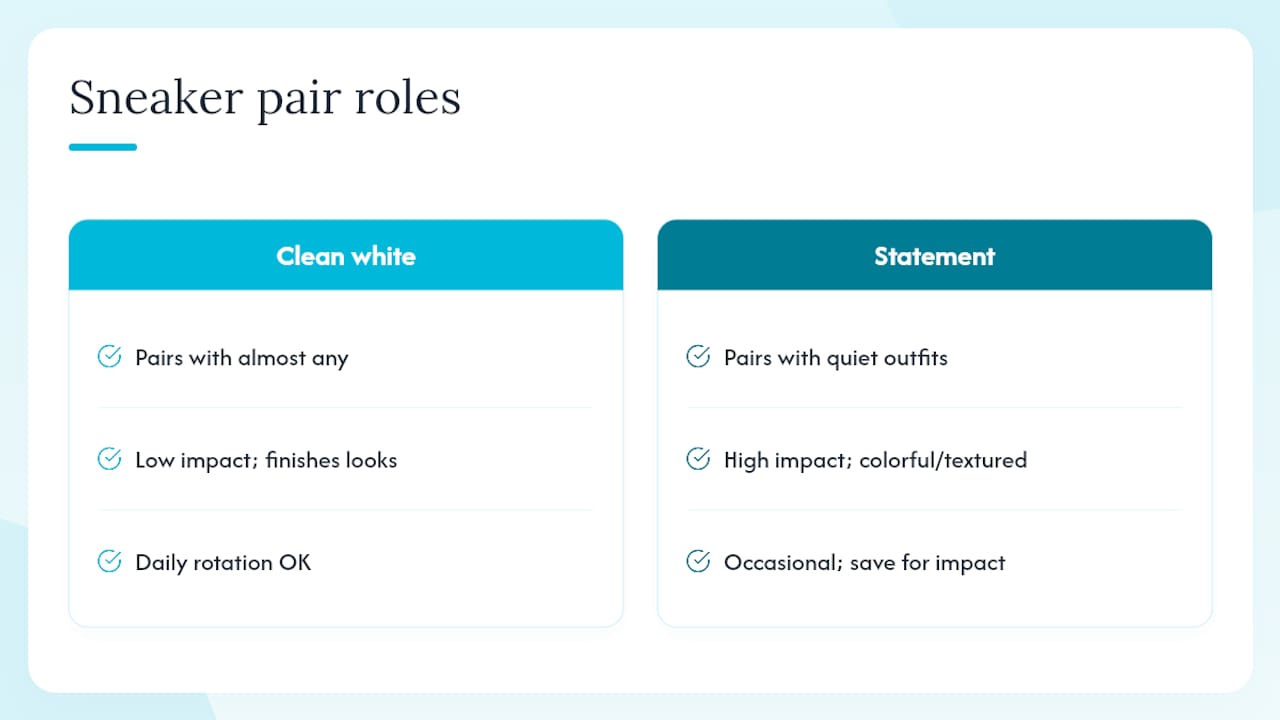
Every rotation needs a clean white low-top sneaker. It’s the piece that makes almost any tee, hoodie, and pant combination look finished rather than thrown together. Then add one statement pair, something with more color, texture, or an unusual silhouette, and rotate the two based on the outfit’s energy. Wearing the statement pair every day dulls its impact; save it for looks where the rest of the outfit stays quiet.
5. Lightweight outerwear
A bomber, a denim trucker jacket, or a coach jacket each solves a slightly different problem. The bomber layers well over a hoodie without adding bulk. The denim trucker adds texture and works almost year round in mild climates. The coach jacket, with its snap front and simple collar, reads a little cleaner and works better when you want the outfit to lean casual rather than sporty. One insight worth remembering: the jacket often does the heaviest styling work in an outfit, so a good one can make even inexpensive basics look considered, according to The Movie Fashion’s 2026 outerwear guide.
6. Accessories that actually matter
A cap and a crossbody or sling bag do more for an outfit’s finish than most guys give them credit for. A structured cap in a neutral color pulls a simple tee-and-jeans look together in seconds. A compact sling bag adds a functional edge without disrupting the relaxed silhouette streetwear depends on. Keep the size proportional. Oversized bags fight with oversized tops instead of complementing them.
How to Build Streetwear Outfits: The Formula That Always Works
The formula behind almost every good streetwear look is simple: top + relaxed bottom + sneakers + one accessory. Once that structure is locked in, you’re just swapping pieces in and out based on mood, weather, and how dressed up you want to look.
- Default weekday formula — heavyweight tee, relaxed denim, clean white sneakers, cap. This is the outfit you build everything else from.
- Clean casual formula — hoodie, straight leg denim, clean sneakers, crossbody bag. Slightly more put together without trying hard.
- Layered formula — tee, hoodie, cargo pants, statement sneakers, coach jacket. This is the version with the most visual interest, so keep colors neutral to avoid clutter.
- Summer example — oversized tee, relaxed shorts or lightweight cargo pants, clean sneakers, cap. Skip the jacket entirely.
- Transitional weather example — hoodie under a denim trucker jacket, straight denim, clean sneakers.
- Cold weather example — heavyweight hoodie under a bomber, relaxed cargo pants, statement sneakers for contrast against darker tones.
To swap in a statement piece, drop it into either the top or the shoes, never both at once. To dress the same formula up slightly, trade cargo pants for straight denim and swap the cap for nothing at all. For weather, add or remove the jacket layer before you touch anything else. It’s the easiest adjustment and the one that changes the outfit the least.
Fit and Sizing: How Streetwear Should Actually Sit
Baggy is not the same as sloppy, and that distinction is where most guys get streetwear wrong. Oversized pieces are supposed to look intentional, which means fit still matters even when the goal is volume.
- Tee and hoodie shoulder seam: should land at or just past your natural shoulder, never drooping down your upper arm.
- Sleeve length: should hit around mid-forearm on a tee, slightly longer on a hoodie.
- Hem placement: an oversized tee’s hem typically falls at or just below the fly; anything longer starts to look like a dress.
- Pant rise and break: a mid to high rise balances an oversized top better than a low rise, which can make the silhouette look top heavy. A slight break at the shoe keeps a relaxed leg from pooling into a mess at the ankle.
- Taper versus straight: if your top is heavily oversized, a straight or slightly tapered leg balances it. A wide leg with an already-oversized top can swallow your frame entirely.
Pro Tip: Stand sideways in a mirror before buying. If you can’t see any daylight between your body and the fabric at the waist and chest, the piece is too tight to read as streetwear, no matter how the label describes the fit.
When you’re not sure, size up on hoodies you plan to layer under a jacket, and size true on tees you’ll wear alone. Most tailors can shorten a hem or taper a leg for a modest fee, which is often cheaper than returning and reordering a different size.
Colors and Materials: Building a Palette That Actually Works Together
Streetwear has moved away from neon graphics toward tonal, neutral palettes, with one loud piece used sparingly rather than an entire outfit competing for attention, per Mylook’s trend analysis. Black, gray, off-white, olive, and tan form a base that mixes freely. From there, pick one loud color or pattern, a bright sneaker or a bold graphic, and let everything else stay quiet around it.
- Tees: 200 to 240 GSM cotton for structure without stiffness.
- Hoodies: 400+ GSM fleece for warmth and drape.
- Cargo pants and jackets: ripstop cotton or a denim/cotton blend for durability under regular wear.
- Seasonal swaps: trade fleece hoodies for lighter French terry in summer, and add a flannel or denim layer underneath outerwear once temperatures drop.
Texture does a lot of the work that color used to do. A ribbed cap against a smooth tee, or a textured cargo pant against a clean sneaker, creates visual interest without needing bright colors at all.
Where to Invest and Where to Save
Not every piece deserves the same budget. Sneakers, your jacket, and your denim are worth spending more on, since they get worn the most and show wear the fastest when they’re cheaply made. A well built pair of sneakers or a solid denim trucker jacket can last several years with basic care, while a $15 tee falls apart after a dozen washes.
- Invest: sneakers ($90 to $180), a lightweight jacket ($80 to $200), and one pair of quality denim ($60 to $130).
- Save: extra graphic tees, seasonal novelty pieces, and trend-driven accessories you’ll likely retire within a year.
This lines up with common shopping guidance: put real money into denim, one great hoodie, and a reliable sneaker, then save on the pieces you’ll cycle through anyway, according to WEAR2AM’s streetwear basics guide. Building a versatile wardrobe around a handful of durable pieces beats owning twenty things that all look tired by spring.
Care and Maintenance: Keeping Your Pieces Looking New
Heavyweight tees and hoodies last longer when washed inside out in cold water, which protects prints and reduces fading, according to The Modern Observer’s 2026 style guide.
- Air dry heavyweight cotton when possible; tumble dry low only if you’re short on time.
- Spot clean sneakers with a soft brush and mild soap, and apply a fabric protectant before the first wear.
- Rotate your statement sneakers rather than wearing them daily to avoid premature sole wear.
- Fold heavy knits like hoodies to prevent shoulder stretch; hang structured jackets to keep their shape.
The Muskop Perspective on Building Basics That Last
At Imuskop, quality checks come down to fabric weight, stitching density at stress points, and how well a print holds up after repeated washes. Original artwork means nothing if the tee shrinks or the graphic cracks after a month. Whatever brand you buy from, run the same checks: pull the seams, check the GSM if it’s listed, and ask how the print is applied before you trust it to last.
Editorial Perspective: The Case for Quieter, Better-Made Streetwear
Streetwear’s loudest era is fading, and that’s a good thing. Relaxed silhouettes and neutral palettes aren’t a trend cycle. They’re what happens when guys get tired of replacing cheap hype pieces every season. A tight rotation of six or seven well-made basics, worn on repeat and cared for properly, will always outperform a closet full of things bought for a single photo. Quality over hype isn’t a slogan. It’s just cheaper in the long run.
— Robert
Get Your Core Rotation Started With Muskop
This guide focuses on original graphic tees, hoodies, and accessories made with attention to fabric quality and durable artwork. If you’re starting from scratch, a simple three-piece set, one heavyweight tee, one hoodie, and one accessory like a cap or crossbody bag, gives you enough to build several of the outfit formulas above without overbuying.
Some apparel brands offer free shipping and interest-free payment plans through third-party services to spread the cost. Before you check out, confirm your size against the fit notes in this guide and review the return policy in case anything needs to go back. Browse the current lineup at Imuskop’s storefront and start with the pieces that fit your rotation best.
Sources
- 9 Men’s Streetwear Essentials (2026 Style Guide) | The Modern Observer
- Streetwear for Men in 2026: The Complete Guide - Mylook
- The Ultimate Streetwear Style Guide for Men in 2026 | Tops and Bottoms USA
FAQ
What is the 3-3-3 rule for men’s clothing?
The 3-3-3 rule is a packing and outfit-building method: three tops, three bottoms, and three pairs of shoes that all mix and match, giving you roughly nine to twenty-seven outfit combinations from a small set of pieces. It’s a useful way to test whether your streetwear basics actually work together before adding more to your closet.
What are some popular men’s streetwear brands?
Popular streetwear brands range from heritage sportswear labels to independent graphic-focused brands like Imuskop, which centers its designs on pop culture and activism themes. Beginners typically do best starting with a mix of one or two established basics brands and one or two independent labels for personality.
What is the 3-3-3 rule in fashion?
In fashion generally, the 3-3-3 rule refers to the same mix-and-match capsule approach used in streetwear: three tops, three bottoms, three pairs of shoes, chosen so every piece pairs with at least two others.
What are the top streetwear brands?
There’s no single official ranking, since “top” varies by region, price point, and personal taste, but the category spans large sportswear labels, luxury-streetwear crossovers, and independent graphic brands. Rather than chasing a specific brand name, focus on the fit, fabric weight, and construction quality covered earlier in this guide.
How many pieces do I really need to start a streetwear rotation?
Six to seven core pieces, one tee, one hoodie, one pair of relaxed bottoms, two sneaker options, one jacket, and one accessory, cover most outfit needs for a season without overbuying.