

For one-offs and photorealistic artwork, pick DTG. For bulk runs, bold spot-color designs, or specialty effects like metallic and puff inks, screen printing wins. The break-even point sits around 24–36 identical pieces — below that, DTG is usually cheaper and faster; above it, screen printing’s per-unit cost drops sharply.
- Small runs and full-color art: DTG handles photos, gradients, and unlimited colors with zero setup fees, making it the obvious call for one-offs, limited drops, and print-on-demand.
- Bulk orders and bold designs: Screen printing becomes more cost-effective past roughly two dozen shirts, especially for simple, high-contrast artwork where color vibrancy matters.
- Specialty effects or synthetic fabrics: Neither method covers everything. Metallic, foil, puff, and discharge inks are exclusive to screen printing. For polyester blends, direct-to-film (DTF) printing is worth considering as a third option.
Table of Contents
- What is DTG printing and how does it work?
- What is screen printing and how does it work?
- How do DTG and screen printing compare side by side?
- What do DTG and screen printing actually cost?
- Which fabrics work best, and why does pretreatment matter?
- What specialty effects can only screen printing deliver?
- How does durability compare, and how should you care for each?
- How can you tell if a shirt was screen printed or DTG?
- Where does DTF fit, and is it replacing screen printing?
- When should you choose DTG vs screen printing? A decision checklist
- Key Takeaways
- The method should follow the job, not your preference
- Sources and further reading
What is DTG printing and how does it work?
DTG, short for direct-to-garment printing, is essentially an industrial inkjet printer built for fabric. The garment lies flat on a platen, and the machine jets water-based pigment ink directly into the fibers, then heat-cures the print. No screens, no film, no minimum order.
The “direct” part matters more than it sounds. Because the ink absorbs into the fibers rather than sitting on top of them, DTG prints have a noticeably soft hand. Colors blend smoothly because an inkjet can dither millions of tones, while a screen press is limited to the ink colors loaded on it. A twelve-color photorealistic logo costs the same to set up as a two-color one.
Practical pros:
- Unlimited colors and photorealistic detail in a single pass
- No per-color setup fees; one shirt costs roughly the same per unit as ten
- Ideal for on-demand fulfillment and small streetwear drops
Practical cons:
- Per-unit cost stays flat, so it never gets cheaper at scale the way screen printing does
- Struggles on polyester and synthetic blends; 100% cotton performs best
- Dark garments require a heavy white underbase, which adds time and can feel thick
One thing buyers often underestimate: pretreatment. Before printing, most garments need a chemical pretreatment spray to help the ink bond properly. Skip it or apply it unevenly, and the print can look washed out after a few cycles.
What is screen printing and how does it work?
Screen printing pushes ink through a mesh stencil onto the fabric using a rubber squeegee, one color at a time. Each color in a design requires its own screen, burned with a photo-emulsion stencil. After printing, the garment goes through a conveyor dryer to cure the ink.
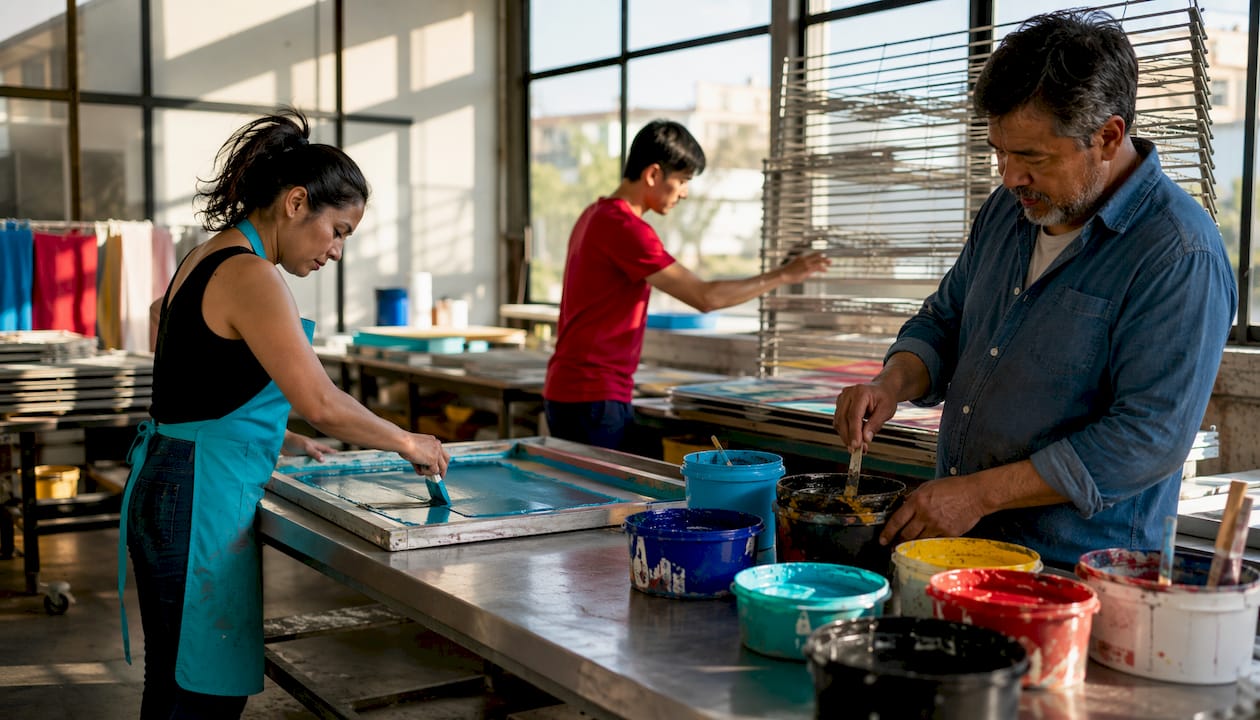
The result is a thick, opaque ink deposit that sits on top of the fabric rather than soaking in. That’s what gives screen prints their characteristic pop: plastisol inks create vibrant, saturated colors because the ink layer is physically thick. High mesh counts (305–355) can reproduce fine halftone detail, so the old myth that screen printing can’t handle complex artwork isn’t entirely true. The real constraint is color count, not resolution.
Pros:
- Exceptional color vibrancy and opacity, especially on dark garments
- Per-unit cost drops sharply with volume, making it the most cost-efficient method for large runs
- Supports specialty inks and effects unavailable in digital methods
- Durable: properly cured plastisol typically outlasts DTG in long-term wash testing
Cons:
- Setup costs apply per color ($20–$40 per screen), making small runs expensive
- Each additional color adds cost and complexity
- Gradients and photorealistic images are difficult without halftone separations
- Longer setup time than DTG; not practical for one-offs
Screen printing handles most fabric types well, including cotton, polyester blends, and performance fabrics, because the ink sits on the surface rather than needing to bond with fibers. That surface-level adhesion is both a strength (opacity) and a limitation (hand feel).
How do DTG and screen printing compare side by side?
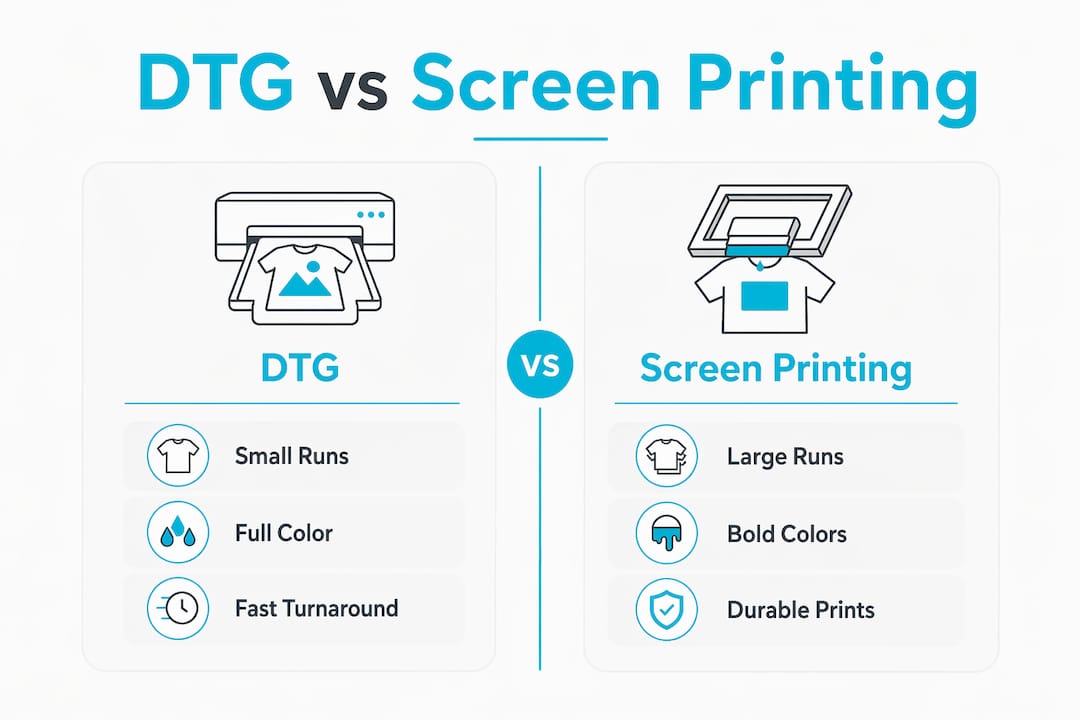
The choice between these two methods almost always comes down to three variables: order quantity, design complexity, and whether you need specialty effects. Here’s how they stack up across every dimension that matters.
| Dimension | DTG | Screen Printing |
|---|---|---|
| Sweet spot | 1–~50 pieces, full-color art | 24+ pieces, bold spot-color designs |
| Break-even quantity | No minimum | ~24–36 identical units |
| Setup costs | None | ~$20–$40 per color/screen |
| Per-unit cost (small run) | Higher flat rate | High due to setup amortization |
| Per-unit cost (large run) | Stays flat | Drops sharply with volume |
| Color fidelity | Photorealistic, unlimited colors | Bold, vibrant spot colors |
| Fabric compatibility | Best on 100% cotton | Wide: cotton, blends, synthetics |
| Print hand/feel | Soft, in the fabric | Thicker, sits on surface |
| Durability | Good on cotton with proper cure | Excellent; plastisol outlasts DTG |
| Specialty effects | Not available | Metallic, foil, puff, discharge, glow |
| Turnaround time | Fast (hours to 1–2 days) | Longer (2–7 days typical) |
| Environmental impact | Water-based inks; less waste on small runs | Ink waste and screen chemicals; more efficient at scale |
The break-even point around 24–36 pieces is the single most useful number in this comparison. Below it, DTG wins on price almost every time. Above it, screen printing’s economics take over — and the gap widens fast as volume grows.
What do DTG and screen printing actually cost?
Cost is where most buyers get surprised. DTG’s flat per-unit pricing feels predictable, but screen printing’s setup fees front-load the cost in a way that punishes small orders and rewards large ones.
Screen printing cost components:
- Screen preparation: ~$20–$40 per color
- Film/separations: varies by shop
- Ink and curing: built into per-unit price at scale
- Minimum order: typically 12–24 pieces per design
DTG cost components:
- No setup fees
- Per-unit cost driven by ink coverage, garment color, and print size
- Dark garments cost more due to white underbase ink consumption
| Run Size | DTG (est. per shirt) | Screen Printing (est. per shirt) |
|---|---|---|
| 1–12 pieces | $20–$40 | setup fees amortized over large runs |
| 12–24 pieces | $12–$20 | $20–$40 |
| — | — | $5–$10 |
| — | — | $3–$7 |
These are illustrative ranges based on industry-standard pricing structures; actual quotes vary by shop, ink colors, garment blank, and print size. For a real-world benchmark, custom t-shirt bundles at the 10-for-$99 price point show where screen printing starts becoming genuinely competitive for small bulk orders.
Turnaround times follow a similar pattern. A single DTG shirt can be printed and shipped same-day or next-day. A screen printing job requires screen burning, color registration, and setup time before a single shirt is printed, so typical production runs 2–7 business days, longer for complex multi-color designs.
Which fabrics work best, and why does pretreatment matter?
Fabric choice is the variable most buyers ignore until something goes wrong. For DTG, it’s the most critical factor in print quality.
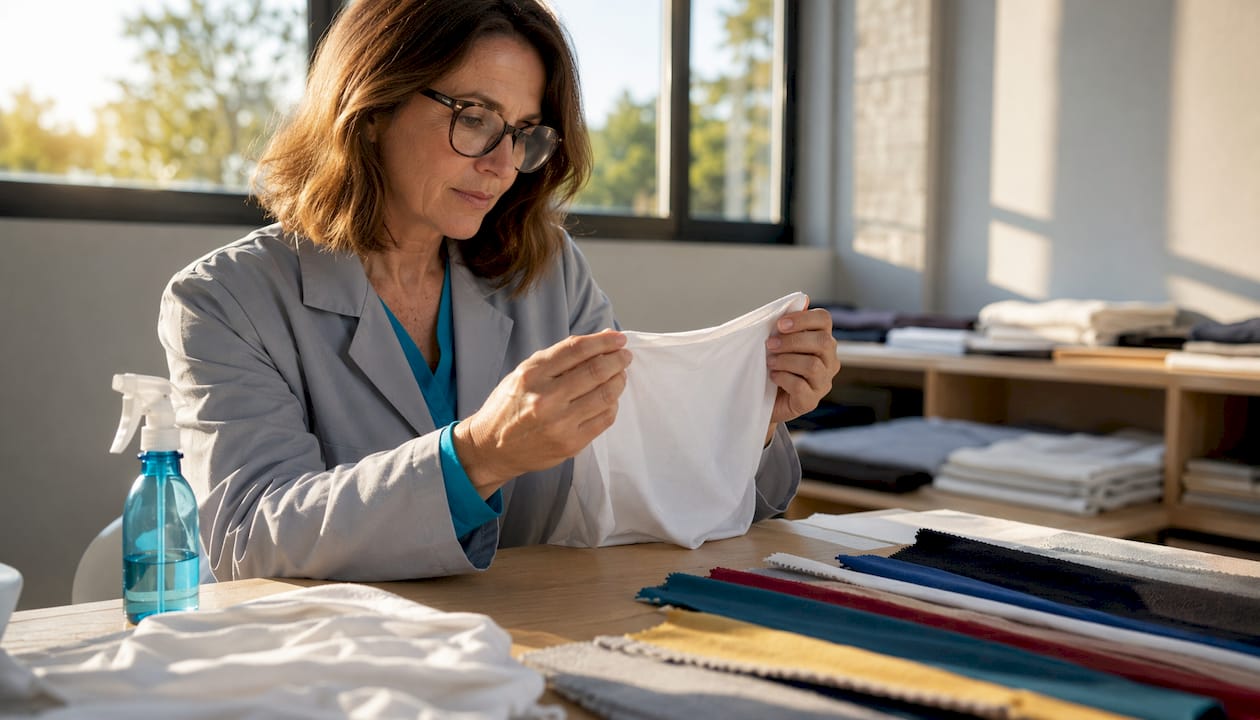
100% cotton is the gold standard for DTG. The natural fibers absorb water-based ink well, pretreatment bonds effectively, and colors come out vibrant. Ringspun cotton performs especially well because the tighter fiber structure gives the ink a smoother surface to work with.
Polyester blends are where DTG starts to struggle. Poly fibers resist water-based ink, and the higher the poly content, the more the print can look faded or washed out even before the first wash. A 50/50 cotton-poly blend will produce noticeably less vibrant DTG results than a 100% cotton blank.
Performance fabrics and synthetics are largely off-limits for DTG. Screen printing handles them better because the ink sits on the surface rather than needing to penetrate the fiber. For streetwear hoodies and fleece blanks with higher poly content, screen printing or DTF is usually the smarter call.
Pretreatment for DTG works by chemically preparing the fabric so the ink bonds correctly during curing. Without it, prints on dark garments look dull and fade quickly. The problem is consistency: inconsistent pretreatment application is one of the most common failure points in DTG production, leading to uneven vibrancy and poor washfastness across a run.
Pro Tip: Before committing to a full DTG run, request a printed sample on the exact blank you plan to use. Pretreatment behavior varies between garment brands and fabric weights, and a test print is the only reliable way to confirm color accuracy and wash performance before you’re committed to 50 shirts.
What specialty effects can only screen printing deliver?
This is where screen printing has no real competition. Digital methods can approximate some effects, but they can’t replicate the physical dimension and tactile quality of specialty screen inks.
- Metallic inks: Contain aluminum or bronze flakes for a shiny, reflective finish that catches light. No digital method produces the same depth.
- Foil: A heat-applied metallic film bonded over a screen-printed adhesive layer. The result is mirror-bright and impossible to fake with inkjet.
- Puff ink: Contains a heat-activated agent that expands during curing, creating a raised, three-dimensional texture you can feel.
- Discharge ink: Chemically removes the dye from the garment and replaces it with pigment, leaving a soft, dye-in-fabric finish with no ink layer on the surface. Particularly striking on dark garments.
- Glow-in-the-dark and UV-reactive inks: Phosphorescent or UV-sensitive pigments that activate under specific light conditions.
- Silicone inks: Create a glossy, rubberized texture with excellent stretch recovery, popular for athletic and streetwear applications.
- High-density inks: Thick deposits that build up off the surface of the garment, creating a sculptural, embossed look.
Specialty effects are one of the strongest reasons to choose screen printing even when your order size might otherwise favor DTG. A limited streetwear drop with a foil hit or puff texture commands a premium that a flat DTG print simply can’t justify.
Pro Tip: Always request a test print when using specialty inks for the first time on a new blank. Puff ink height and foil adhesion vary with garment texture and curing temperature, and a failed production run is far more expensive than a single test shirt.
How does durability compare, and how should you care for each?
Screen printing wins on longevity, and the gap is wider than most people expect. Properly cured plastisol bonds to itself during curing, creating a surface deposit that resists abrasion and repeated washing. DTG can perform adequately on 100% cotton with correct pretreatment and full cure, but it tends to fade sooner, especially on blends or when care instructions aren’t followed.
Dark garments highlight the difference most clearly. DTG’s white underbase, which is required to make colors pop on dark fabric, can crack over time or appear muted compared to screen-printed white. Screen printing’s plastisol white is typically more opaque and more durable wash-over-wash.
Care tips that extend the life of both:
- Wash inside out in cold water
- Avoid high heat in the dryer; air dry when possible
- Never bleach either print type
- For DTG specifically, skip fabric softener, which can break down the ink bond over time
The practical takeaway: if you’re producing event shirts or merch that needs to look good after 50+ washes, screen printing is the safer bet. DTG is fine for limited drops and items that won’t see heavy rotation.
How can you tell if a shirt was screen printed or DTG?
Flip the shirt over and look at the back of the print area first. A screen print often leaves a slight ink bleed or ghost impression on the inside of the garment. DTG usually shows nothing on the reverse side because the ink soaks into the fibers rather than pressing through.
Then check these on the front:
- Hand feel: Run your finger across the print. Screen prints feel raised and have a distinct ink layer; DTG prints feel almost flush with the fabric, soft and integrated.
- Halftone dots: Look closely at a gradient or shadow area. Screen printing uses halftone dots to simulate tonal variation; you can often see them with the naked eye or a loupe. DTG renders gradients continuously.
- Edge sharpness: Screen prints have clean, hard edges on spot-color areas. DTG edges are slightly softer, especially on fine detail.
- Fabric visibility: On a DTG print, you can often see the fabric grain through lighter ink areas. Screen printing’s thick ink deposit covers the fabric surface more completely.
- White underbase on dark shirts: A thick, slightly raised white layer under the colors is a DTG tell. Screen-printed white tends to be flatter and more opaque.
A photoreal portrait on a black tee? Almost certainly DTG. A bold, three-color logo with hard edges and a slight raised feel? Screen printing.
Where does DTF fit, and is it replacing screen printing?
Direct-to-film (DTF) printing is a newer process that prints onto a special film, applies a hot-melt adhesive powder, and then heat-transfers the finished print onto the garment. Unlike DTG, it doesn’t require pretreatment and works on virtually any fabric, including polyester, nylon, and blends that DTG struggles with.
DTF advantages for apparel brands:
- Works on almost any fabric type without pretreatment
- Full-color, photorealistic output similar to DTG
- No minimum order; good for small runs and one-offs
- Faster setup than screen printing
DTF limitations:
- The print sits on top of the fabric as a film layer, giving it a noticeably thicker, slightly plasticky hand compared to high-quality DTG on cotton
- Less breathable than DTG or discharge screen printing
- Specialty effects (metallic, puff, foil) are still exclusive to screen printing
- Long-term durability data is still accumulating compared to decades of plastisol performance data
DTF is growing fast, particularly for small brands starting a clothing line who need fabric flexibility without screen setup costs. But it isn’t replacing screen printing for bulk runs or specialty effects. Think of it as a strong third option for polyester-heavy blanks and small mixed-fabric orders, not a universal upgrade.
When should you choose DTG vs screen printing? A decision checklist
Walk through these questions before sending any job to print:
- How many identical pieces? Under 24: lean DTG. Over 36: lean screen printing. Between 24–36: run the numbers with your decorator.
- How complex is the artwork? Photorealistic, gradients, or more than six colors: DTG wins on economics. Bold spot-color with one to four colors: screen printing.
- What fabric are you printing on? 100% cotton: both methods work. Poly blend or synthetic: screen printing or DTF.
- Do you need specialty effects? Metallic, foil, puff, discharge: screen printing only.
- What’s your deadline? Same-day or next-day: DTG. Standard production run: screen printing at 2–7 days.
Use cases that illustrate the decision:
- One-off prototype or sample: DTG every time. No setup cost, fast turnaround, and you can tweak the design before committing.
- 50-shirt limited streetwear drop with a detailed graphic: DTG if the design has gradients or photo elements; screen printing if it’s bold spot-color and you want specialty ink options.
- 500-piece event shirt run, two-color logo: Screen printing, no question. The per-unit cost advantage is significant, and the durability is better.
Pro Tip: For brands running both DTG and screen printing jobs, ask your decorator to do a pretreatment QC check on every DTG run and confirm screen count before approving a screen printing quote. Reducing screen count by simplifying artwork to three colors or fewer can cut setup costs by 30–40% on a typical job.
Imuskop uses DTG for limited, highly detailed drops where photorealism and fast turnaround matter, and screen printing for seasonal bulk runs and any design calling for specialty ink effects. The method follows the job, not the other way around.
Key Takeaways
Screen printing wins on volume and durability; DTG wins on detail and small-run economics, with the break-even sitting at roughly 24–36 identical pieces.
| Point | Details |
|---|---|
| DTG sweet spot | Best for 1–~50 pieces with full-color, photorealistic, or gradient-heavy artwork and no setup fees. |
| Screen printing sweet spot | Most cost-effective past 24–36 identical units; excels at bold spot-color designs and specialty ink effects. |
| Break-even quantity | Screen setup costs (~$20–$40 per color) make DTG cheaper below ~24 pieces; screen printing wins above that threshold. |
| Fabric and pretreatment | DTG requires 100% cotton and consistent pretreatment for reliable results; screen printing handles blends and synthetics more easily. |
| Durability and care | Properly cured plastisol screen prints typically outlast DTG; wash both inside out in cold water and avoid high heat. |
The method should follow the job, not your preference
Most of the debate around screen printing versus DTG is framed as a loyalty question, as if picking a side is part of your brand identity. It isn’t. The right answer changes with every job, and treating it as a permanent allegiance is how brands end up paying $40 per shirt for a 500-piece run or getting a flat, faded print on a polyester hoodie.
What I find genuinely underappreciated is how much the fabric choice drives the decision before design complexity or order size even enters the picture. A brand that defaults to DTG for everything will eventually print on a 60/40 blend and wonder why the colors look wrong after two washes. The fabric question should come first, not last.
The other thing worth saying plainly: specialty inks are not a niche consideration for boutique print shops. For streetwear and graphic apparel specifically, a foil hit or a puff texture is often the difference between a shirt that reads as premium and one that doesn’t. DTG can’t get you there, and no amount of photorealistic detail compensates for that when the brief calls for dimension and tactile weight.
The practical move is to audit every job against the five-question checklist above before you commit to a method. Quantity, artwork complexity, fabric, specialty effects, deadline. That order. The answer usually becomes obvious by question three.
Sources and further reading
- Screen Printing vs DTG Printing: How to Choose the Right Method — Printable Press: The most thorough publicly available breakdown of run-size economics, specialty inks, and durability comparisons. Start here for cost guidance.
- What Is DTG Printing? Direct-to-Garment Printing Tips — Shopify: Solid overview of the DTG workflow and print-on-demand economics for e-commerce brands.
- What Is DTG Printing? Direct-to-Garment Explained — Arklavo: Detailed technical guide covering pretreatment, fabric compatibility, and hand-feel comparisons.
- DTG Printer Guide — Erasmart: Production-focused guide on pretreatment protocols and curing requirements for consistent DTG output.
- How to Tell the Difference Between DTG and Screen Printed Tees — Defunkd: Practical visual and tactile identification guide for inspecting finished garments.
- Screen Printing — Wikipedia: Technical reference for mesh counts, ink types, and the screen-printing process.
For pricing benchmarks, request a quote from your decorator with the exact blank, color count, and run size before finalizing your method. Always request a test print for final approval before committing to a full production run.