

The best activist clothing brands right now combine real impact models with wearable design: Imuskop for graphic streetwear with activist themes, Patagonia for environmental advocacy backed by certified materials, the ACLU Shop for direct civil-liberties funding, Katharine Hamnett for slogan-driven political fashion, Noah for skate-culture activism, PLEASURES for subculture-rooted social commentary, and Dedicated Brand for GOTS-certified ethical basics. Each one earns the label differently, but all of them put money or pressure behind a cause.
Before you buy, three quick checks matter most: confirm the brand’s impact model (donation per sale, campaign funding, or advocacy), look for third-party certifications like GOTS, Fair Trade, or OEKO-TEX, and verify that the brand publishes transparent supply-chain or impact reporting rather than vague mission language.
Quick next steps before checkout:
- Read the brand’s mission page and check whether it names specific causes or organizations
- Search for third-party certifications (GOTS, Fair Trade, OEKO-TEX) on the product page
- Look for a published impact report or donation disclosure, not just a tagline
- Check customer reviews specifically mentioning activism authenticity, not just product quality
Key Takeaways
The most important thing to know about activist clothing brands: a real activist label attaches a named cause, certified materials, or a documented campaign to every purchase, not just a slogan.
| Point | Details |
|---|---|
| Verify the impact model | Confirm whether the brand donates per sale, funds campaigns, or operates awareness-only before buying. |
| Check third-party certifications | GOTS, Fair Trade, and OEKO-TEX are the certifications worth trusting; self-reported claims are not enough. |
| Read the supply-chain disclosure | Named factories and published audit reports are the clearest sign a brand’s ethics are real. |
| Watch for greenwashing red flags | Vague mission language, no named cause partners, and no certification logos are the three biggest warning signs. |
| Imuskop for activist streetwear | Imuskop offers original activist-themed graphic tees and streetwear with free shipping and accessible pricing. |
Table of Contents
- The Best Activist Clothing Brands: Profiles and What Sets Each One Apart
- How to choose an activist clothing brand without getting burned
- What makes clothing “activist” and how apparel drives real advocacy
- Why Imuskop belongs in your activist wardrobe
- What shoppers actually say about activist brand authenticity
- Sources
The Best Activist Clothing Brands: Profiles and What Sets Each One Apart
1. Imuskop
Imuskop sells original graphic tees and streetwear that put activism and pop culture front and center. The brand’s designs cover political themes, social commentary, and artistic expression, making it a natural fit for shoppers who want their wardrobe to say something without sacrificing style. Product range includes hoodies, joggers, flannel shirts, hats, socks, and bags, so you can build a full activist-leaning outfit in one place.
Why it stands out:
- Activist and pop-culture graphics with original artwork, not licensed prints
- Free shipping on all orders and interest-free payment plans through Affirm
- Editorial blog content on ethical streetwear and sustainable style, showing genuine expertise
- Price range: $–$$, accessible for students and young adults
Shop entry point: Imuskop
2. Patagonia
Patagonia is the benchmark most other activist apparel brands measure themselves against. Its supply-chain transparency reports are publicly available, which is rare at its scale.
Why it stands out:
- Certified B Corp, Fair Trade, and GOTS-certified products
- Publicly available environmental and social impact reports
- Price range: $$–$$$, premium but durable
3. ACLU Shop
The ACLU Shop is one of the most direct impact models in activist fashion: proceeds from purchases fund the American Civil Liberties Union’s campaigns on voting rights, free speech, and equality. The product line runs from slogan tees to tote bags, and the brand’s mission is unambiguous. As documented in ethical clothing company roundups, direct-proceeds models like this one are among the clearest ways commerce funds advocacy.
Why it stands out:
- Every purchase directly funds ACLU legal and advocacy work
- Transparent cause-to-purchase link, no vague language
- Price range: $–$$
4. Katharine Hamnett
Katharine Hamnett invented the activist slogan tee in the 1980s and has never stopped. The brand uses GOTS-certified organic cotton and has run campaigns against war, pesticide use, and climate inaction. Hamnett’s approach is awareness-first: the garment itself is the message, and the brand backs that with certified materials so the production doesn’t undercut the politics.
Why it stands out:
- GOTS-certified organic cotton across core lines
- Decades of documented political campaign history
- Price range: $$–$$$
5. Noah
Noah, founded by Brendon Babenzien, sits at the intersection of skate culture and genuine social activism. The brand donates a portion of sales to environmental and social causes, uses organic cotton and recycled fibers, and publishes a clear values statement. Its streetwear aesthetic makes it one of the few labels where the activist credentials and the design quality are equally strong.
Why it stands out:
- Donation-per-sale model with named cause partners
- Organic cotton and recycled fiber construction
- Price range: $$–$$$
6. PLEASURES
PLEASURES approaches activism through subculture: mental health awareness, counterculture references, and social commentary embedded in graphic design. The brand doesn’t lead with certifications, but its consistent focus on stigmatized topics and its community-driven campaigns give it real advocacy weight. It’s the pick for shoppers who want social commentary in a streetwear aesthetic rather than a traditional charity model.
Why it stands out:
- Mental health and counterculture awareness as core design themes
- Strong community and cultural credibility
- Price range: $$–$$$
7. Dedicated Brand
Dedicated Brand is a Swedish label with GOTS, OEKO-TEX, and Fair Trade certifications across its line. It’s the most certification-heavy option on this list, which makes it the right pick for shoppers who want verified ethical production above all else. The designs lean toward everyday basics with subtle activist messaging, and the brand publishes supply-chain transparency reports. Available through select US retailers and direct online.
Why it stands out:
- GOTS, OEKO-TEX, and Fair Trade certified
- Transparent supply-chain reporting
- Price range: $–$$
Statistic callout: Ninety Percent, a UK-based ethical label, publicly commits to sharing 90% of profits between people and causes. That kind of explicit, numbered commitment is the gold standard for impact transparency, and it’s the benchmark worth holding other brands to when evaluating their claims.
How to choose an activist clothing brand without getting burned
The evaluation criteria that actually matter
Transparency is the first filter. A brand that publishes supply-chain information, names its factories, and releases annual impact reports is operating at a different level than one with a vague “we care about the planet” homepage. Look for named certifications and linked reports, not marketing copy.
Impact model is the second. There are three main types: donation-per-sale (a fixed amount or percentage goes to a named cause), campaign merch (the product funds a specific initiative), and awareness apparel (the design carries the message, with no direct financial transfer). None of these is inherently better, but you should know which one you’re buying into. Platforms like FeelGoodAction verify partner brands that use campaign-driven models, which is a useful cross-reference.
Materials and certifications are the third. GOTS (Global Organic Textile Standard), Fair Trade Certified, and OEKO-TEX Standard 100 are the three certifications worth trusting. Each requires third-party auditing, not self-reporting.
Red flags to watch for
- Mission language that names no specific causes, organizations, or dollar amounts
- No third-party certification on any product, only in-house claims
- No evidence that donated funds actually reached a named cause
- Supply chain described as “ethical” with no factory names or audit reports
- Activist branding on products made with conventional cotton and synthetic dyes
Buyer checklist before checkout
- Read the brand’s mission page: does it name specific causes and organizations?
- Check the product page for certification logos (GOTS, Fair Trade, OEKO-TEX)
- Find a donation disclosure or impact report, not just a tagline
- Search the brand name plus “impact report” or “supply chain” to find third-party coverage
- Read recent customer reviews that mention activism, not just fit and shipping
- Verify where the product is made and whether the factory is named
Pro Tip: Search “[brand name] + greenwashing” before buying. If a brand’s activist claims are hollow, shoppers and journalists have usually documented it. A clean search result combined with a published certification is the fastest authenticity check available.
As Photobook Magazine’s feature on activist tees points out, the best activist tees manage to be both ethically produced and genuinely stylish. That dual standard is the bar worth holding every brand to.
What makes clothing “activist” and how apparel drives real advocacy
Activist apparel works through four main impact models, and understanding them helps you match your purchase to the kind of change you want to support.
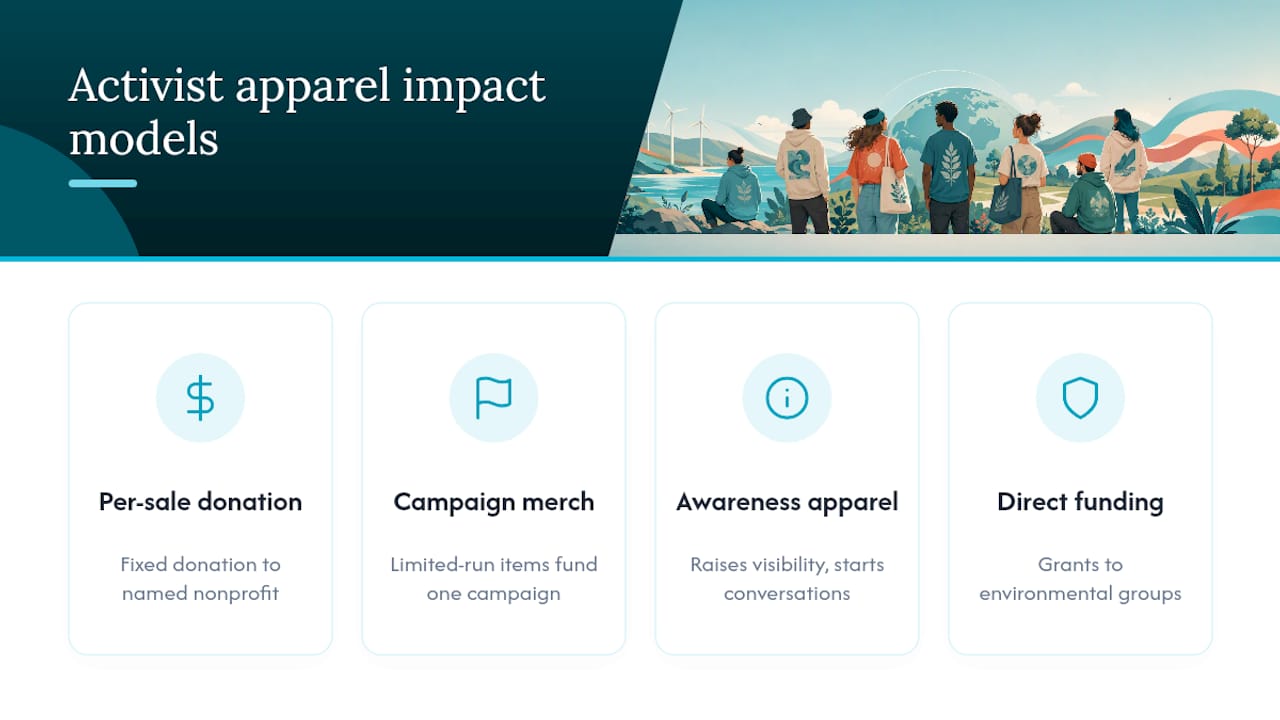
Donation-per-sale is the most direct: a fixed dollar amount or percentage of each sale goes to a named nonprofit or cause. The ACLU Shop is a clean example. The key word is “named” — a brand that says “a portion of proceeds supports charitable causes” without naming the recipient is not operating this model transparently.
Campaign merch funding works differently. A brand creates a limited product tied to a specific initiative, and the revenue funds that campaign directly. March For The Movement’s Social Justice Apparel Collection, verified through FeelGoodAction, is a documented example of this model in action.
Awareness and education apparel doesn’t move money to a cause, but it moves the conversation. Katharine Hamnett’s slogan tees and PLEASURES’ mental health graphics operate here. The activism is in the visibility, not the transaction.
Direct-action funding through grants and partnerships is the most sophisticated model. Patagonia’s grants to environmental groups and its legal advocacy work fall into this category. The brand uses its commercial scale to fund organizations that couldn’t otherwise sustain themselves.
On the materials side, activism and sustainability tend to travel together. Organic cotton (grown without synthetic pesticides), recycled fibers, and low-impact dyes reduce the environmental cost of production. Certifications like GOTS and Fair Trade add labor standards to the environmental ones. The rise of ethical clothing in mainstream fashion has pushed more brands to adopt these standards, though verification still matters more than self-reporting.
Why Imuskop belongs in your activist wardrobe
Imuskop combines graphic design with activist and pop-culture themes across a full streetwear line: tees, hoodies, joggers, flannel shirts, hats, socks, and accessories. The brand’s editorial content on sustainable men’s fashion and ethical women’s fashion shows it’s not just selling apparel but actively curating the conversation around conscious shopping.
What Imuskop offers activist shoppers:
- Original artwork on every piece, not generic slogans
- Activist, political, and pop-culture themes across tees and streetwear
- Free shipping on all orders, interest-free payment plans through Affirm
- Editorial blog content covering ethical streetwear trends and sustainable style
- Accessible price points ($–$$) suited to students, young adults, and budget-conscious shoppers
Imuskop’s approach to activist streetwear is built on the idea that your clothing can carry a message without compromising on design quality or accessibility. Original artwork, ethical focus, and free shipping make it a practical first stop for shoppers who want their wardrobe to reflect their values.
What shoppers actually say about activist brand authenticity
Authenticity is the word that comes up most in reviews of activist clothing brands, and shoppers are increasingly specific about what it means to them. The pattern across verified buyer feedback is consistent: shoppers want to see the money move.
Brands that publish named cause partners and donation figures consistently earn higher trust than those that use vague language.
Supply-chain transparency earns similar credibility. Shoppers who research before buying report that finding a factory name or a third-party audit report on a brand’s site is the single clearest indicator that the activist positioning is real, not marketing. Brands that make this information hard to find tend to attract skeptical reviews regardless of their design quality.
For streetwear-focused brands like Imuskop, the authenticity conversation centers on design integrity: are the activist graphics original, or are they trend-chasing? Original artwork tied to real cultural and political themes reads as genuine. Generic slogan prints that appear across multiple unrelated brands in the same season read as opportunistic. Shoppers notice the difference, and the reviews reflect it.
The case for buying your activism, not just wearing it
Activist apparel has a credibility problem that most articles in this space won’t name directly. A lot of what gets sold as “social justice fashion” is a slogan on a shirt with no money, no campaign, and no accountability behind it. The design does the work of signaling values, and the brand collects the margin.
The brands on this list earn the label because they’ve attached something real to the purchase: a named cause, a certified supply chain, a documented campaign, or a combination of all three. That’s the standard worth holding every brand to before you spend money on it.
What’s underestimated in this space is how much the materials choice matters to the activism claim. A brand that prints “protect the planet” on a shirt made with conventional cotton, synthetic dyes, and an opaque supply chain is making a statement that contradicts itself. The production is the politics. Certifications like GOTS and Fair Trade exist precisely to close that gap, and brands that pursue them are doing something structurally different from brands that don’t.
Imuskop’s position in this space is honest: it leads with design and accessibility, publishes editorial content on ethical streetwear, and gives shoppers a practical entry point into activist-themed apparel without the premium pricing that locks out younger buyers. That’s a real contribution to making this category accessible.
Imuskop’s activist streetwear picks are worth a look
If you’ve read this far, you already know what separates a real activist clothing brand from a slogan on a shirt. Imuskop delivers on the design side with original artwork across graphic tees, hoodies, and accessories, all at accessible price points with free shipping and no-interest payment plans.
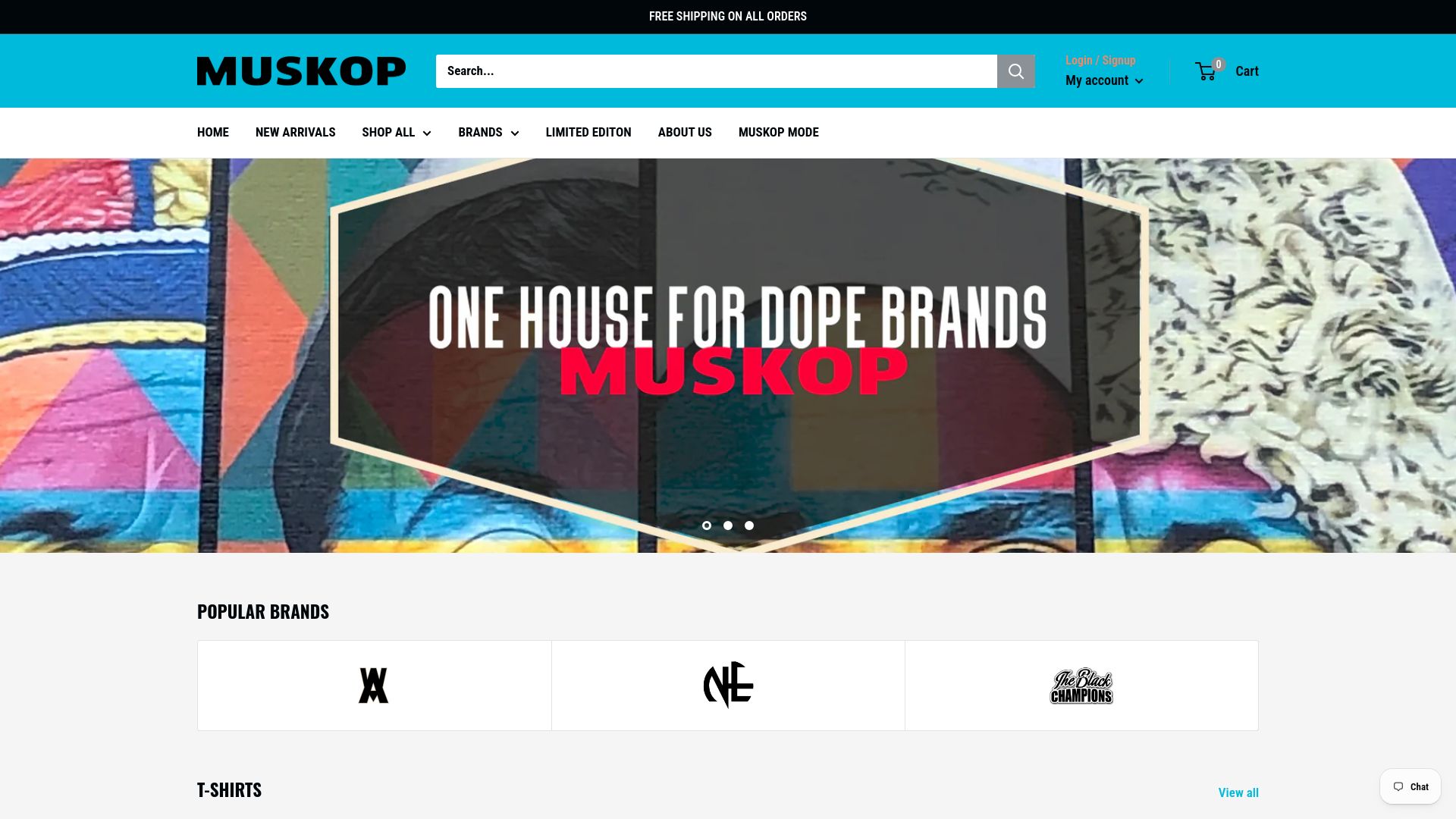
The brand’s activist and pop-culture tees are the natural starting point. From there, the hoodie line and accessories let you build a full outfit around a consistent aesthetic. Editorial content on the site covers sustainable style and hoodie trends, so you’re not just shopping, you’re getting context for what you’re buying.
Browse the full collection at Imuskop and find the pieces that fit your values and your wardrobe.
Sources
- Feelgoodaction
- Ethical and Sustainably-Made Activist Tees
- 15 Ethical Clothing Companies That Give Back
- Ninety Percent - For The World We Want