

Supreme is the pick for hyped drops and resale value. Muskop is the pick for artist-driven graphic tees at accessible prices. Stüssy and A Bathing Ape (BAPE) cover heritage aesthetics with global cachet, while October’s Very Own (OVO) and Travis Scott / Cactus Jack deliver artist-branded pieces fans line up early in the morning. Fear of God / Essentials and Off-White sit at the luxury crossover end, Rocawear and G-Unit Clothing anchor 2000s hip-hop nostalgia, and The Marathon Clothing and AWGE represent community-rooted and experimental artist projects, respectively. Yeezy, Kith, and Pyer Moss round out a list that spans street corner to runway.
These brands matter for three reasons that go beyond taste: cultural credibility, price accessibility, and where you can actually buy the stuff in the U.S. Hip-hop fashion has been shaping mainstream style since the late 1970s, and it hit full mainstream visibility by the 1990s when sportswear and designer labels became inseparable from the genre’s image. Outlets like Complex have long tracked which rapper-owned labels have staying power versus which were merch-table flashes, and that distinction still matters when you’re deciding where to spend real money in 2026.
Key Takeaways
Hip-hop streetwear in 2026 spans rapper-owned legacy labels, luxury crossovers, and independent artist-driven brands, with fit depending on your budget, your taste, and how much you value resale potential over everyday wearability.
| Point | Details |
|---|---|
| Best for hype and resale | Supreme, Travis Scott / Cactus Jack, and AWGE hold the strongest resale value after a drop. |
| Best for everyday wear | Stüssy, Fear of God Essentials, and Muskop offer wearable pieces without hype-driven price spikes. |
| Verify authenticity first | Confirm the artist or founder is still actively involved before buying into a rapper-owned label. |
| Check materials and policies | Read fabric composition and return policies before purchasing from any online streetwear retailer. |
| Muskop fits the budget-conscious, artist-first shopper | Original graphic tees with free shipping and Affirm payment plans, no hype-chasing required. |
Table of Contents
- Which hip hop streetwear brands should you actually know?
- How do these hip hop streetwear brands compare at a glance?
- How do you choose the right hip hop streetwear brand for you?
- Why do these brands matter beyond the clothes themselves?
- How do modern indie labels like Muskop fit into this landscape?
- What are the current editorial picks for 2026?
- Why these picks made the cut
- Where should you shop for artist-driven, U.S.-based streetwear?
- Frequently Asked Questions
- Sources
Which hip hop streetwear brands should you actually know?
Every brand on this list earns its spot for a different reason, whether that’s decades of cultural weight, a rapper’s direct ownership stake, or a genuinely original design language. Below is the full rundown, ranked by cultural influence and practical relevance to U.S. shoppers right now.
-
Supreme built its reputation on Thursday drop culture and skate-shop roots that predate most of streetwear’s current playbook. Its box logo tees and collaborations, from Nike to Louis Vuitton, sell out in minutes and often resell for multiples of retail. What to buy: a box logo hoodie or a current-season collab piece, since those hold value best on the resale market.
-
Muskop takes a different approach entirely: original graphic tees built around pop culture and activist themes, sold direct-to-consumer with free shipping and Affirm payment plans. It’s a U.S.-based label that treats the graphic as the whole point, not an afterthought stitched onto a blank tee. What to buy: one of its statement graphic tees or a hoodie from its activism-themed line if you want a wardrobe that says something specific.
-
Stüssy predates most of this list by a decade or more, tracing back to surf and skate culture before hip-hop absorbed it wholesale. Its signature scrawled logo and loose-cut silhouettes remain a template other brands still copy. What to buy: a classic logo tee or one of its rotating seasonal jackets.
-
A Bathing Ape (BAPE), born in Tokyo, brought camo patterns and the Shark hoodie into American hip-hop’s visual vocabulary through early co-signs from artists like Pharrell and Kanye West. What to buy: the Shark full-zip hoodie, still the brand’s most recognizable piece nearly three decades in.
-
Kith operates more like a retail experience than a traditional label, pairing elevated basics with collaborations that range from Coca-Cola to BMW. Its stores function as much as showrooms as shops. What to buy: a Kith Classics tee or a current collaborative sneaker release, since Kith’s collabs move fastest.
-
Fear of God / Essentials splits into two tiers: the mainline label’s tailored, luxury-adjacent silhouettes, and the Essentials diffusion line that put oversized hoodies and sweats within reach of a much wider audience. What to buy: an Essentials hoodie for everyday wear, or a mainline Fear of God piece if the budget allows for it.
-
Off-White, founded by the late Virgil Abloh, fused industrial design motifs (diagonal stripes, zip ties, quotation marks) with streetwear cuts and became a bridge brand between skate shops and luxury runways. What to buy: the Industrial belt or an arrows-graphic hoodie, both instantly recognizable signature pieces.
-
Pyer Moss, led by designer Kerby Jean-Raymond, treats each collection as a piece of storytelling around Black American history and sociopolitical themes rather than a straightforward apparel drop. What to buy: pieces from its Reebok collaboration line, which blends performance footwear with the label’s narrative-driven design language.
-
October’s Very Own (OVO), founded by Drake, built a premium casualwear identity around the owl logo and a muted color palette that reads as understated luxury rather than loud streetwear. What to buy: an OVO crewneck or the annual OVO Fest merchandise, which tends to hold its value.
-
Travis Scott / Cactus Jack turns concert merch into a genuine fashion category, with drops tied to album cycles and a McDonald’s collaboration that briefly changed how brands think about fast-food crossovers. What to buy: any Cactus Jack piece tied to a current tour, since those sell out fastest and carry the strongest resale premium.
-
Rocawear, co-founded by Jay-Z in the late 1990s, stands as one of the earliest examples of a rapper turning a clothing line into a real commercial business rather than a vanity project. What to buy: vintage Rocawear jerseys or jackets from resale platforms if you want an authentic slice of early-2000s hip-hop fashion.
-
G-Unit Clothing, tied to 50 Cent and the G-Unit collective, captured a specific early-2000s aesthetic of baggy denim, bandanas, and bold graphics that defined an entire regional moment in hip-hop style. What to buy: archival G-Unit tees, which have become minor collector’s items among vintage hip-hop apparel fans.
-
The Marathon Clothing carries forward the legacy of the late Nipsey Hussle, built around community investment in South Los Angeles rather than pure hype. The brand’s story is inseparable from Hussle’s own philosophy of ownership and reinvestment. What to buy: a Crenshaw tee, the brand’s most recognizable and symbolically loaded piece.
-
AWGE, the creative collective associated with A$AP Rocky, produces limited, experimental drops that read more like art projects than seasonal collections. What to buy: whatever the current limited run is, since AWGE rarely restocks anything.
-
Yeezy, Kanye West’s label, redefined what a rapper-founded brand could look like at scale, moving from sneakers into a full apparel line built around muted earth tones and minimalist silhouettes that influenced an entire generation of streetwear designers. What to buy: Yeezy Gap-era basics or original Season collection pieces where still available through resale.
Editorial lists like GQ’s roundup of advanced streetwear brands consistently mix heritage names like Stüssy with newer designer crossovers, which tells you something important: there’s no single “right” era to shop from. The scene rewards both authenticity and reinvention at the same time.
Pro Tip: Before buying into any hyped drop, check whether the brand’s founder or associated artist is still creatively involved. Labels that lose their namesake’s day-to-day input, even briefly, tend to drift in quality and design direction within a couple of seasons.
How do these hip hop streetwear brands compare at a glance?
| Brand | Known for / aesthetic | Rapper or celebrity tie | Price range | U.S. availability | Signature piece |
|---|---|---|---|---|---|
| Muskop | Original graphic tees, activism and pop-culture art | Independent, artist-driven | Budget to Mid | Direct online, free shipping | Statement graphic tee |
| Supreme | Logo-driven drops, skate roots | No single owner; frequent artist collabs | Mid to Luxury (resale) | Flagship stores, online, heavy resale | Box logo hoodie |
| Stüssy | Heritage surf/skate graphics | No single owner | Mid | Stores, stockists, online | Scrawled logo tee |
| A Bathing Ape (BAPE) | Camo, Shark motif | Early Pharrell/Kanye co-signs | Mid to High | Stores, stockists, resale | Shark full-zip hoodie |
| Kith | Elevated basics, retail experience | Frequent celebrity collabs | Mid to High | Flagship stores, online | Kith Classics tee |
| Fear of God / Essentials | Luxury tailoring vs. diffusion basics | Jerry Lorenzo, celebrity-worn | Budget (Essentials) to Luxury | Stockists, online | Essentials hoodie |
| Off-White | Industrial motifs, luxury-street fusion | Virgil Abloh legacy | Luxury | Department stores, resale | Industrial belt |
| Pyer Moss | Narrative-driven design | Kerby Jean-Raymond | High to Luxury | Limited stockists | Reebok collab footwear |
| October’s Very Own (OVO) | Understated premium casualwear | Drake, owner | Mid to High | Flagship stores, online | Owl crewneck |
| Travis Scott / Cactus Jack | Concert merch turned fashion | Travis Scott, owner | Mid to High (resale spikes) | Drops, resale-heavy | Tour merch |
| Rocawear | Early-2000s hip-hop heritage | Jay-Z, co-founder | Budget (vintage/resale) | Resale platforms mostly | Vintage jersey |
| G-Unit Clothing | Early-2000s regional style | 50 Cent, artist group | Budget (vintage/resale) | Resale platforms mostly | Archival graphic tee |
| The Marathon Clothing | Community-rooted legacy | Nipsey Hussle legacy | Mid | Flagship store, online | Crenshaw tee |
| AWGE | Experimental, limited drops | A$AP Rocky collective | High to Luxury | Extremely limited, resale | Rotating limited runs |
| Yeezy (Ye) | Minimalist, earth-tone silhouettes | Kanye West, owner | Mid to Luxury | Resale-heavy, sporadic online | Yeezy Gap basics |
Price band legend: Budget under $50, Mid $50 to $150, High $150 to $400, Luxury above $400 per piece.
A few things jump out once you see it laid side by side. Collectors chasing resale value gravitate toward Supreme, Travis Scott / Cactus Jack, and AWGE, all of which trade well above retail within days of a drop. Everyday-wear shoppers get more mileage out of Muskop, Essentials, and Stüssy, where price and availability don’t require refreshing a checkout page at midnight. And if you want a genuine connection to hip-hop’s business history rather than just its aesthetics, Rocawear, G-Unit Clothing, and The Marathon Clothing carry that weight more than almost anything currently on shelves.
How do you choose the right hip hop streetwear brand for you?
Five factors decide whether a brand is actually right for your closet and your budget, not just your Instagram feed.
Aesthetic fit comes first. Do you gravitate toward loud graphics and activist messaging, or minimalist silhouettes in muted tones? Muskop and Off-White sit at opposite ends of that spectrum, and neither is wrong, they just serve different wardrobes.
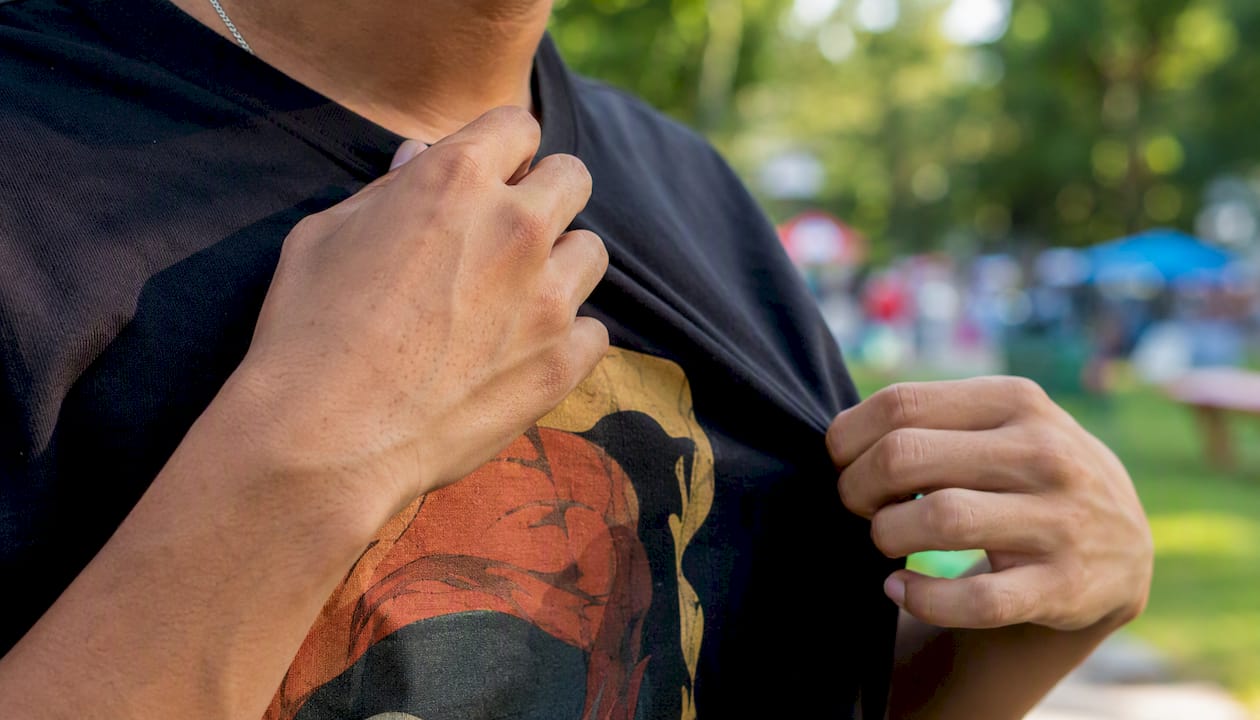
Price tolerance matters more than most shoppers admit upfront. A $600 Off-White hoodie and a $45 Muskop tee both count as “hip-hop streetwear,” but they demand very different budgets and very different expectations about cost-per-wear.
Authenticity is the factor most likely to get overlooked. Ask whether the artist or founder tied to a brand is still actively involved in its direction. Complex’s rundown of rapper-owned labels notes that the strongest labels function as real extensions of an artist’s identity, not licensing deals slapped on a logo.
Drop cadence and hype behavior should factor into your decision too. If you hate the idea of setting alarms for a 10 AM drop, brands like Muskop or Stüssy, which keep steadier inventory, will suit you better than Supreme or AWGE.
Resale considerations close the list. If you’re buying to wear, resale value is irrelevant. If you’re buying to potentially flip or invest, stick to brands with a proven resale track record like Travis Scott / Cactus Jack or Supreme.
Here’s a quick checklist to run through before any purchase:
- Does the graphic, silhouette, or color palette genuinely match your existing wardrobe?
- Can you afford it without treating it as a financial stretch?
- Is the founder or associated artist still creatively active with the brand?
- Are you comfortable with the brand’s drop schedule and stock availability?
- If resale matters to you, does this brand or piece have a documented resale history?
- Check the brand’s own site or verified retailers before buying from third-party resellers claiming “deadstock” inventory.
- Read the fabric composition on the tag. Heavier cotton weights (180 GSM and up) generally hold shape better through repeated washes.
- Look for brands that publish clear shipping and return policies. Vague or missing policies are a red flag regardless of how good the graphic looks.
Pro Tip: A genuine artist collaboration almost always includes the artist’s name or signature somewhere in the official product description or hangtag, not just a vague “inspired by” claim in marketing copy.
Pro Tip: Set a hard budget ceiling before a drop goes live.
Sustainability is worth a beat of attention here too. Fewer hip-hop-rooted labels have historically prioritized ethical manufacturing compared to broader fashion, but that’s shifting. Brands built on direct-to-consumer models, including Muskop, tend to produce closer to demand rather than overproducing for warehouse stock, which cuts down on waste compared to mass-market fast fashion. If ethical sourcing matters to you, look for brands that publish material sourcing details rather than relying on vague “sustainably made” language with no specifics behind it.
Why do these brands matter beyond the clothes themselves?
Hip-hop fashion didn’t start as a marketing category. It grew out of the late 1970s hip-hop scene in New York, where clothing choices doubled as identity statements long before brands caught on and started selling that identity back to fans.
- Late 1970s: Early hip-hop style borrows from funk and disco, with an emphasis on bold colors and individuality over any single uniform look.
- 1980s: Athletic brands like Adidas and Puma get adopted wholesale by artists, turning sportswear into streetwear years before “streetwear” was a recognized category.
- 1990s: Hip-hop fashion goes fully mainstream, with designer labels and sportswear brands actively courting artists rather than the other way around.
- Early 2000s: Rapper-owned labels like Rocawear and G-Unit Clothing prove that artists can build genuine commercial businesses, not just merch tables.
- 2010s: Designer crossovers accelerate, with Off-White and Fear of God blurring the line between runway and street corner almost entirely.
- 2020s to now: Independent, artist-driven labels and direct-to-consumer brands expand the field further, giving shoppers more entry points at more price levels than at any prior point in the genre’s history.
Regional differences still shape how these brands present themselves, with some pieces becoming sought-after collectibles that blend culture and fashion. East Coast style, rooted in New York’s early scene, historically leaned toward sharper tailoring and logo-forward pieces, which you can still trace in labels like OVO. West Coast style, tied to Los Angeles and the broader California scene, favors looser, sun-faded silhouettes, visible in brands like The Marathon Clothing. Southern and Chicago scenes brought their own visual language too, often louder and more maximalist, which shows up in the bolder graphic work from artists like Travis Scott.
Hip-hop’s fashion evolution shows a consistent pattern: what starts as a subculture’s practical style choice, sportswear worn for comfort and durability, eventually gets absorbed, reinterpreted, and resold by the same fashion establishment that once ignored it entirely.
Designer houses didn’t discover hip-hop’s influence by accident. Collaborations between streetwear labels and luxury fashion houses, and moments like Virgil Abloh’s appointment at Louis Vuitton, pulled hip-hop’s visual vocabulary directly into runway shows and editorial spreads. That crossover runs both directions now: designer techniques and materials show up in streetwear collections just as often as streetwear silhouettes show up on the runway.
Ethical manufacturing remains an uneven picture across the category. Buyers looking for proof of better practices should check for transparent material sourcing, published labor standards, or third-party certifications rather than taking marketing language at face value. Independent, small-batch models tend to produce less excess inventory than mass-market operations, which is one practical marker worth checking when a brand claims to be “conscious” or “sustainable.”
How do modern indie labels like Muskop fit into this landscape?
Not every hip-hop streetwear brand needs a rapper’s name attached to matter culturally. Muskop occupies a specific lane: original graphic tees and streetwear built around pop-culture references and activist themes, sold direct-to-consumer with free shipping on all orders and interest-free payment plans through Affirm.
That combination puts Muskop in a useful middle position on the streetwear spectrum. On one end, you have mass-market basics with no real artistic point of view. On the other, you have luxury crossover labels like Off-White where a single hoodie costs more than most people’s monthly clothing budget. Muskop sits in between: original artwork, a clear point of view on politics and pop culture, and pricing that doesn’t require saving up for months.
- Product range: graphic tees, hoodies, joggers, flannel shirts, hats, socks, and bags, covering most of a streetwear wardrobe in one place.
- Design approach: original artwork centered on activism and pop culture rather than licensed graphics or generic logo drops.
- Accessibility: free shipping on all orders plus Affirm payment plans, removing two of the biggest friction points in online apparel shopping.
- Audience: trend-focused young adults, sneaker enthusiasts, and shoppers who want their clothing to say something specific.
If you’re shopping indie labels generally, verify a couple of things before checkout: confirm the artwork is original rather than lifted from another artist, check the fabric weight and composition listed on the product page, and read the shipping and return policy in full rather than assuming it matches a bigger retailer’s standard terms.
Pro Tip: Independent labels live and die on repeat customers, so check whether a brand has a visible return or exchange policy before buying. A brand confident in its quality will make that policy easy to find, not buried three clicks deep.
What are the current editorial picks for 2026?
Editorial coverage in 2026 continues to blend legacy names with newer, artist-driven labels rather than favoring one category outright. GQ’s ongoing streetwear coverage keeps returning to the same pattern: heritage brands like Stüssy hold their spot on “best of” lists year after year, while newer entries earn their place through design originality rather than just hype volume.
Among this year’s most talked-about names, rapper-owned and artist-affiliated labels dominate the conversation. Travis Scott / Cactus Jack and Yeezy remain the two names most likely to trend after a surprise drop, largely because both founders stay directly involved in design decisions rather than licensing their names out. October’s Very Own continues its slow, steady approach, expanding seasonal offerings without chasing hype cycles the way Supreme or AWGE do.
On the independent side, labels like Muskop represent a growing category: artist-driven graphic apparel that doesn’t rely on a celebrity founder to justify its existence. That’s a meaningful shift from a decade ago, when rapper ownership was almost a prerequisite for cultural relevance in this space. Now, original artwork and a clear point of view can carry a brand just as far, especially with shoppers who want their clothing to reflect specific values around activism or pop culture commentary rather than just a name attached to it.
The through-line across every credible 2026 roundup is this: rapper ownership still signals cultural weight, but it’s no longer the only path to legitimacy in hip-hop streetwear. Design originality and accessibility now carry real weight of their own.
Why these picks made the cut
I ranked this list using three criteria: cultural impact, buyer usefulness, and stylistic range. Cultural impact meant asking whether a brand actually shaped how hip-hop looked and dressed, not just whether it sold well in a given season. Buyer usefulness meant making sure every price point and shopping habit got real coverage here, from a $35 tee to a $600 hoodie. Stylistic range meant refusing to load this list with fifteen variations of the same aesthetic.
Those criteria created real trade-offs, and I want to be upfront about them. Supreme and Travis Scott / Cactus Jack rank high on hype and resale value, but neither is particularly practical for someone who just wants a well-made tee they can wear weekly without babysitting it. Muskop and Essentials rank lower on collector cachet but higher on everyday usefulness, and I weighted that trade-off deliberately rather than defaulting to whichever brand generates the most resale headlines.
I also made a point of including brands with real historical weight, Rocawear and G-Unit Clothing especially, even though neither currently drives major cultural conversation. Understanding where hip-hop streetwear came from matters as much as knowing what’s trending right now, and a list that ignores that history isn’t actually serving fashion-savvy readers.
Where should you shop for artist-driven, U.S.-based streetwear?
If you’ve read this far, you already know the trade-offs: heritage brands carry hype and resale value, luxury crossovers carry price tags most closets can’t sustain, and rapper-owned lines carry name recognition that doesn’t always translate to originality. Muskop takes a different path: original graphic tees and streetwear built around activism and pop culture, priced for actual everyday buying rather than resale speculation.
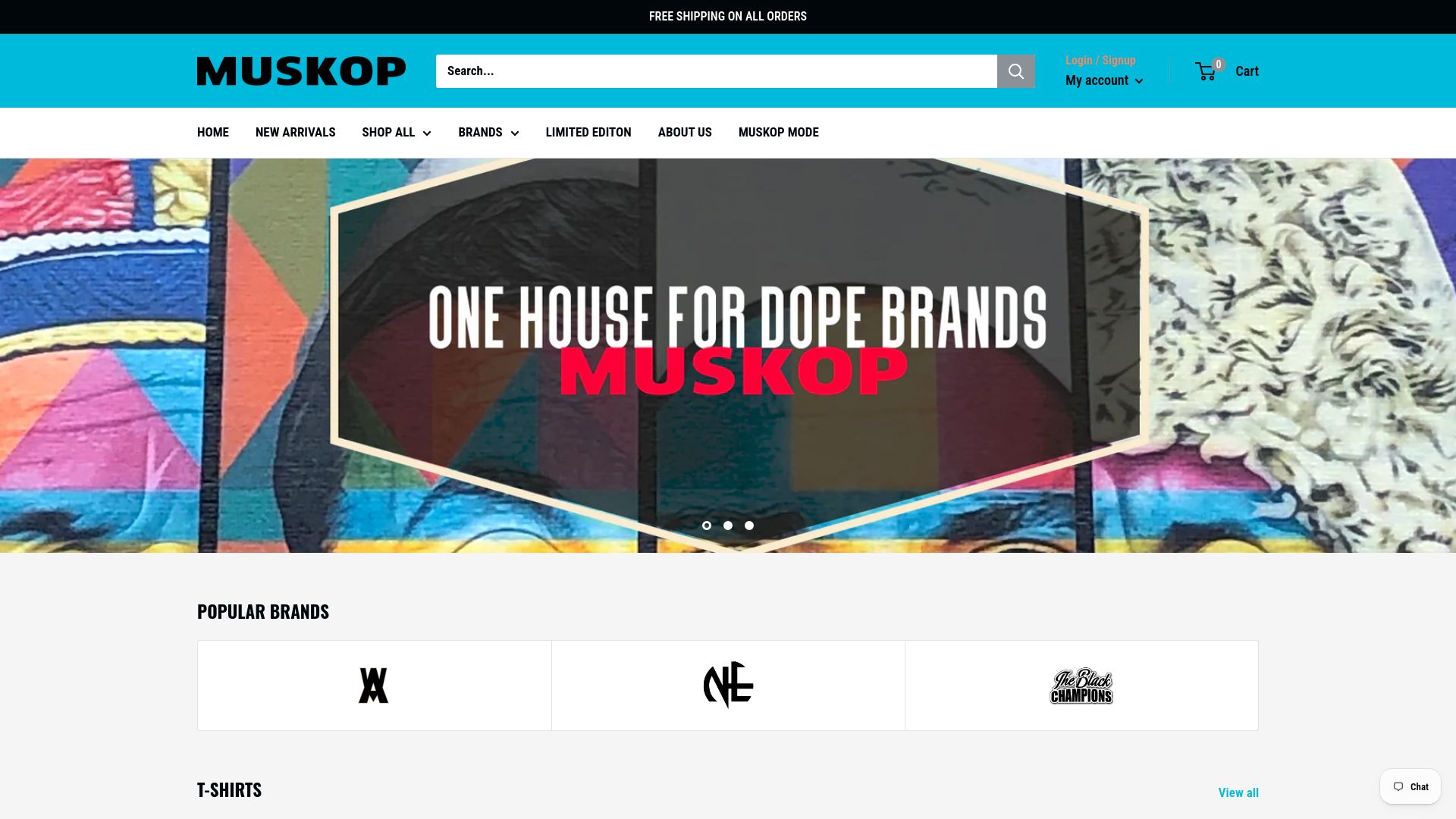
What sets Muskop apart in practice is straightforward. Every design comes from original artwork rather than licensed graphics, the catalog covers tees, hoodies, joggers, flannel shirts, hats, socks, and bags, and every order ships free with the option to split payments through Affirm if you’d rather not pay the full amount upfront. That’s a meaningfully lower barrier to entry than most of the brands profiled above, without sacrificing the artistic point of view that makes hip-hop streetwear worth wearing in the first place. Browse the full graphic tee collection at Muskop and see which design speaks to your own point of view before your next drop-day impulse buy elsewhere.
Frequently Asked Questions
What makes a brand count as a hip hop streetwear brand rather than just streetwear? A brand earns that label through direct ties to hip-hop culture, whether that’s rapper ownership, artist collaborations, or design language rooted in the genre’s visual history of sportswear, logos, and bold graphics.
Are hip hop clothing brands like Muskop as legitimate as rapper-owned labels? Legitimacy in this space comes from originality and cultural relevance, not just celebrity ownership. Independent labels with original artwork and a clear point of view, like Muskop, hold their own against rapper-owned names on design merit.
What’s the most affordable entry point into high-end hip hop brands? Diffusion lines are your best bet. Essentials gives you Fear of God’s silhouette language at a fraction of the mainline price, and similar accessible entry points exist across most luxury-adjacent labels.
Do hip hop streetwear brands hold resale value? Some do consistently, particularly Supreme, Travis Scott / Cactus Jack, and Yeezy, where limited drops routinely resell above retail. Everyday-wear brands built for steady inventory generally don’t carry the same resale premium.
Where can U.S. shoppers buy these brands online? Most brands sell direct through their own e-commerce sites, with additional availability through select stockists and department stores for higher-end names like Off-White and Kith. Independent labels like Muskop sell exclusively direct-to-consumer online.
Sources
- Hip‑hop fashion
- The 20 Best Rapper-Owned Clothing Brands of All Time
- The 20 most advanced streetwear brands on the planet
Recommended
- American Express
- American Express
- American Express
- American Express
More questions people ask
What are some popular hip-hop streetwear brands?
The list spans hyped drop labels like Supreme, heritage names like Stussy and BAPE, rapper-owned lines like OVO and Travis Scott's Cactus Jack, luxury crossovers like Fear of God Essentials and Off-White, and independent artist-driven labels like Muskop. Each one earns its place for a different reason, whether that's resale value, cultural weight, or accessible pricing.
What are the top 10 streetwear brands?
There's a full rundown of brands ranked by cultural influence and practical relevance, including Supreme, Stussy, BAPE, Kith, Fear of God/Essentials, Off-White, Pyer Moss, OVO, Travis Scott/Cactus Jack, and Muskop. Each entry comes with a note on what to actually buy from that label.
What are the hottest streetwear brands right now?
For 2026, the brands getting the most attention split into hype-and-resale picks like Supreme, Travis Scott/Cactus Jack, and AWGE, and everyday-wear picks like Stussy, Fear of God Essentials, and Muskop. Which one fits depends on whether you're chasing resale value or just want wearable pieces.
What are the top rapper clothing brands?
Rapper-owned labels on the list include October's Very Own (OVO) from Drake, Travis Scott's Cactus Jack, G-Unit Clothing, The Marathon Clothing, and AWGE. Before buying into any rapper-owned label, it's worth confirming the artist or founder is still actively involved.
What hip hop clothing brands were big in the 2000s?
Rocawear and G-Unit Clothing are named as the brands that anchor 2000s hip-hop nostalgia. They're grouped separately from the newer luxury crossover and independent artist labels on the list.