

Start here: Muskop for graphic tees and hoodies built around pop culture and activism ($30 to $70), Online Ceramics for surrealist-meets-grateful-dead artwork ($40 to $90, direct site and select boutiques), Aime Leon Dore for prep-inspired basics with real craftsmanship ($80 to $300, direct and flagship stores), Advisory Board Crystals for hand-dyed streetwear staples ($60 to $150, direct site), Better™ Gift Shop for NYC-rooted graphic pieces ($40 to $120, direct site and marketplaces), Bricks & Wood for West Coast basketball culture merch ($45 to $110, direct site), and Corteiz for scarcity-driven UK-to-US drops ($50 to $130, mostly resale in the States since retail access is limited).
Every one of these operates on a fraction of the marketing budget of a mainstream label, which is exactly the point. Small streetwear brands survive on design conviction and word of mouth, not ad spend, and that changes what shows up on the rack.
Pro Tip: Check a brand’s “About” page before you buy. If it names an actual designer and describes a specific production process, that is usually a real independent operation, not a private-label reseller.
Key Takeaways
Small streetwear brands earn loyalty through storytelling, limited drops, and production transparency that mainstream labels rarely match.
| Point | Details |
|---|---|
| Start with a shortlist | Try Muskop, Online Ceramics, Aime Leon Dore, Advisory Board Crystals, Better™ Gift Shop, Bricks & Wood, or Corteiz to begin exploring. |
| Buy direct when possible | Purchasing from a brand’s own site sends more revenue to the designer and gives clearer return policies. |
| Verify before you buy | Check for named designers, stated production locations, and official stockist lists to avoid counterfeit listings. |
| Style with restraint | Pair one statement piece with neutral basics and a single accent to keep outfits balanced. |
| Muskop is purchase-ready now | Muskop offers free shipping and Affirm payment plans across graphic tees, hoodies, and accessories built around pop culture and activism. |
Table of Contents
- Why Shoppers Choose Small Streetwear Brands Over Mainstream Labels
- How We Picked These Small Streetwear Brands
- Curated Brand Profiles: Small Streetwear Labels to Discover Now
- Where to Buy Small Streetwear Brands and How to Support Them
- How to Style Small Streetwear Brand Pieces With Your Existing Wardrobe
- Muskop Spotlight: What We Make and How Shopping Works
- Sustainability and Ethics in Small Streetwear Labels
- Community and Culture Behind Emerging Streetwear Brands
- Editor’s Perspective: Why Small Labels Matter in 2026
- Try Muskop: Your Next Streetwear Order Made Simple
- Sources
Why Shoppers Choose Small Streetwear Brands Over Mainstream Labels
The pull toward independent labels comes down to four things: storytelling, scarcity, transparency, and cultural weight. A small brand’s founder usually has a specific reason for a graphic or cut, and that story travels with the piece. Limited drops mean you are not seeing your shirt on five other people at a show. Streetwear enthusiasts increasingly favor labels that lean into storytelling and production transparency instead of chasing mass distribution, and that preference shows up in resale prices for early runs from now-bigger names.
There are practical upsides too, beyond the feeling of wearing something rare:
- Pieces are harder to replicate at scale, so fit and print quality often get more attention per unit.
- Early support sometimes opens doors to custom runs, direct messages with designers, or invites to limited restocks.
- A first-run piece from a brand that later blows up can become a genuine collector item.
Pro Tip: A real independent label will usually credit an individual artist or small team by name. If a “boutique” brand’s site reads like corporate copy with no names attached, it is likely a private-label shop riding the streetwear label without the substance behind it.
How We Picked These Small Streetwear Brands
The brands on this list earned their spot through six concrete signals, not gut feeling:
- Production transparency, meaning the brand states where and how garments are made.
- Limited-run drops instead of continuous mass restocking.
- A traceable founder or designer story tied to the artwork or cut.
- Coverage from independent style press or curator lists.
- Clear sizing charts and material breakdowns on the product page.
- Direct-to-consumer availability for U.S. shoppers, with real shipping timelines.
Annual roundups from outlets like Highsnobiety and Complex shaped part of this shortlist, since editorial attention is one of the fastest ways a small label gets discovered before wider retail. Nothing here is a paid placement.
- Price bands sampled typically range from lower-end prices for basic tees to higher-end prices for outerwear or premium collaborations.
- Shipping expectations varied from two days for domestic small-batch runs to two to three weeks for pieces made abroad.
Curated Brand Profiles: Small Streetwear Labels to Discover Now
Muskop
Muskop builds its lineup around original graphic tees, hoodies, joggers, flannel shirts, hats, socks, and bags, with a heavy focus on pop culture references and activist messaging. The brand pairs bold artwork with straightforward pricing, generally landing between $25 for basics and $70 for heavier hoodies. It ships direct through its official site, with free shipping on every order and an Affirm-backed payment plan for anyone who wants to spread out the cost. If you want a wardrobe piece that doubles as a statement, this is the most purchase-ready option on this list right now.
Online Ceramics
Online Ceramics turns tie-dye and psychedelic Americana into wearable art, often riffing on Grateful Dead visual language filtered through modern streetwear cuts. The founders started as a small operation obsessing over hand-dyed batches before scaling into a recognizable name in the space. A standout drop paired oversized tees with hand-marbled dye jobs that made every unit slightly different. Expect $45 to $95 for tees and up to $150 for outerwear, sold direct and through a short list of boutique stockists.
Aime Leon Dore
Aime Leon Dore built its identity on quiet-luxury prep mixed with New York street sensibility, favoring muted colorways and heavyweight fabrics over loud graphics. Founder Teddy Santis has leaned into craftsmanship over trend cycles, which shows in the brand’s collaborations with legacy sportswear names. A notable drop reworked classic running silhouettes with tailored, almost menswear-grade materials. Pricing runs $80 for basics up to $300 for jackets, available through the direct site and a small number of flagship locations.
Advisory Board Crystals
Advisory Board Crystals treats hand-dyeing as its signature technique, producing streetwear staples that look intentionally weathered and one-of-a-kind. The label grew out of a small studio practice rather than a factory pipeline, and that shows in the texture of every piece. A popular release used a mineral-wash dye process that no two shirts replicated identically. Expect $60 to $150, sold almost entirely through the brand’s own site.
Better™ Gift Shop
Better™ Gift Shop grew out of a physical New York storefront before expanding into a wider apparel line built around irreverent graphics and city-specific references. The brand’s roots as an actual neighborhood shop give it a grounded, non-corporate feel that a lot of digital-first labels lack. One popular capsule reworked classic NYC subway signage into graphic tees. Pieces run $40 to $120 and are available direct, plus on a handful of curated marketplaces.
Bricks & Wood
Bricks & Wood channels West Coast basketball and skate culture into simple, well-constructed graphics on heavyweight cotton. The label built its following through community events and pickup games before apparel sales scaled, which gives it real neighborhood credibility. A standout piece featured a hand-drawn court scene that became a cult favorite among collectors. Prices land between $45 and $110, sold through the direct site with occasional pop-up availability.
Corteiz
Corteiz runs on scarcity by design, dropping limited quantities through app-based “raids” that sell out in minutes and rarely restock. The UK founder has kept retail distribution deliberately narrow, which means most U.S. shoppers encounter the brand through resale rather than direct purchase. That scarcity model is exactly what made the brand a fixture on discovery-focused roundups tracking labels before they blow up wider. Expect to pay $50 to $130 retail, though resale often runs higher given the limited U.S. footprint.
A quick note on authenticity: always buy from a brand’s own domain or a stockist explicitly listed on that domain’s official retailers page. Counterfeit listings on general marketplaces often copy product photos exactly, so check stitching descriptions, tag placement, and return policy language against the brand’s real site before trusting a third-party seller.
Where to Buy Small Streetwear Brands and How to Support Them
Direct-to-brand sites remain the strongest option for U.S. shoppers, since nearly all your dollars flow back to the label instead of getting split with a retailer’s margin. Beyond that, regional boutiques in cities like New York, Los Angeles, and Chicago carry curated small-label racks, and platforms built around independent design aggregate several brands under one checkout. Pop-up events, often announced through Instagram or social threads tracking brands before they blow up, give you a chance to buy in person and sometimes meet the designer directly. Vetted resale platforms fill the gap for sold-out drops, though prices there run above retail.
Buying direct matters for a simple reason: small labels operate on tight margins, and every third-party markup or consignment fee eats into what actually reaches the person who designed the piece. Direct purchases also tend to come with clearer size guidance and more flexible exchanges, since the brand controls the entire transaction.
Pro Tip: Read the shipping and returns page before checkout, not after. Small labels often ship in small batches, so a “2 to 3 week” estimate is normal, not a red flag, but a brand with no stated return window at all is worth a second look.
How to Style Small Streetwear Brand Pieces With Your Existing Wardrobe
A simple rule of three keeps small-label pieces from feeling like a costume: one anchor piece from the brand, two neutral basics you already own, and one small accent that ties them together. A bold graphic tee from a label like Muskop pairs well with plain black joggers and white sneakers, letting the artwork carry the outfit instead of competing with other patterns, as seen in seasonal styling tips from Jaguar Golf. An elevated hoodie from a brand like Advisory Board Crystals works layered under a plain field jacket, with the hand-dyed texture doing the visual work.
- Anchor with one statement piece, not two, or the outfit reads as cluttered.
- Keep denim or joggers in solid, muted tones so the graphic or texture stands out.
- Save loud accessories, like a graphic bucket hat, for outfits where the rest of the pieces are quiet.
Small labels often run smaller size charts than mass retailers, so check the brand’s own measurements table rather than assuming your usual size, and size up on hoodies if you plan to layer.
Muskop Spotlight: What We Make and How Shopping Works
Muskop focuses on original graphic t-shirts, hoodies, joggers, flannel shirts, hats, socks, and bags, all built around designs that lean into pop culture commentary, activism, and standalone artistic statements. Every piece uses original artwork rather than licensed reprints, and the brand pairs that with midweight cotton construction meant to hold up to regular wear.
Shopping details worth knowing before you check out:
- Free shipping applies to every order, with no minimum spend required.
- An interest-free payment plan through Affirm lets you split larger orders into smaller payments.
- Tees and hoodies run true to standard U.S. sizing, though heavier hoodies tend to fit slightly oversized by design.
- The catalog spans menswear-focused cuts with a growing selection of women’s styles.
Robert, who covers streetwear shopping trends for the Muskop blog has tracked how regional streetwear scenes develop their own visual language, which shapes how Muskop’s design team approaches new graphic drops.
Sustainability and Ethics in Small Streetwear Labels
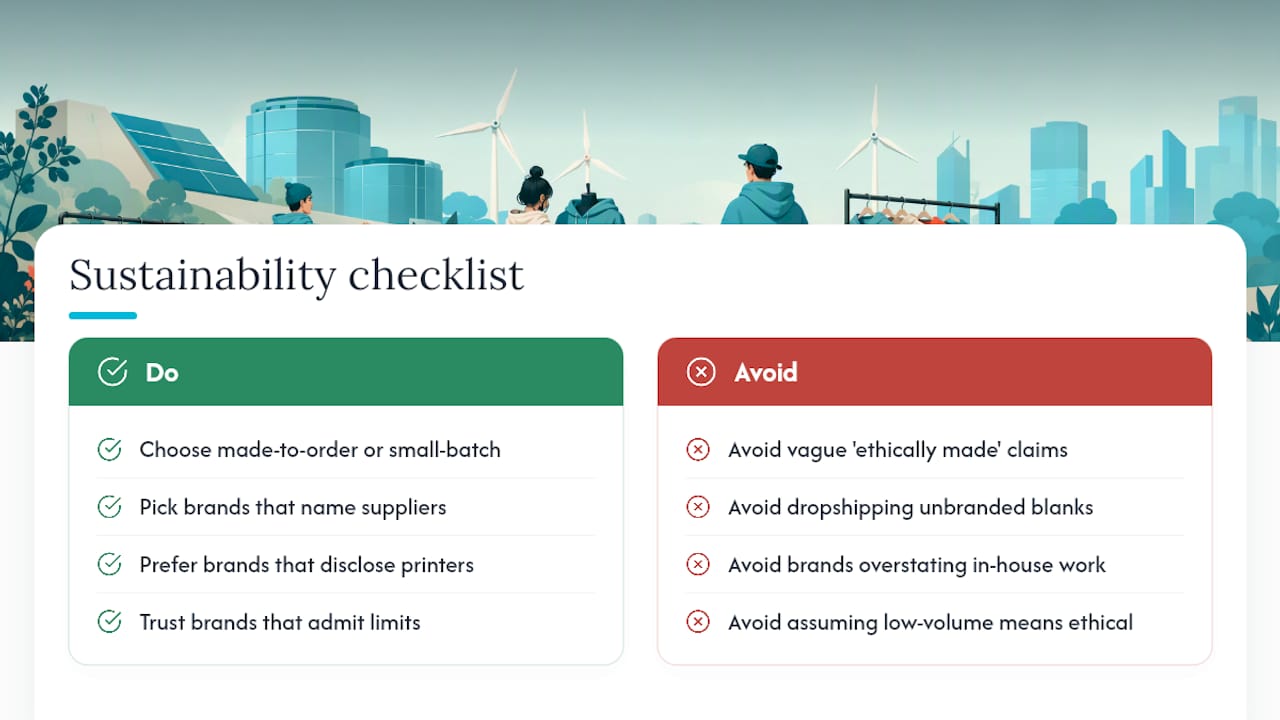
Small labels face a different sustainability equation than mainstream apparel companies. Lower production volume naturally limits overproduction and unsold inventory, which is one of the biggest waste sources in fast fashion. Many independent brands run small-batch models specifically to avoid warehousing dead stock, and that decision is usually a cost necessity as much as an ethical one.
Ethics gets murkier around materials and labor. A small brand printing locally on organic cotton blends is making a very different choice than one dropshipping unbranded blanks from overseas and slapping a logo on top. The honest way to tell the difference is checking whether a brand names its printer, fabric supplier, or manufacturing region anywhere on its site. Vague language like “ethically made” with no specifics is a signal to dig further, not a guarantee of anything.
Transparency also extends to how a brand talks about its own limitations. A small label that openly says it uses a third-party print shop, rather than pretending everything happens in-house, tends to be more trustworthy than one that overstates its production story for marketing effect. Readers looking for brands with documented ethical sourcing practices can find a broader breakdown in Muskop’s coverage of ethical streetwear brands.
Community and Culture Behind Emerging Streetwear Brands
Streetwear has always been community-built first and commerce-built second. Skate crews, basketball courts, music scenes, and activist circles have historically generated the visual language that small brands then translate into product. That order matters: a label growing out of an actual scene tends to produce more resonant work than one manufacturing “street” aesthetics from a boardroom.

Social platforms have sped up how fast a small brand’s community reach turns into sales. A single well-placed social thread flagging up-and-coming labels can send meaningful traffic to a brand’s site overnight, which is a different discovery path than the retail buyer meetings that used to gatekeep which labels got shelf space. Collaborations play a similar role: when an established name partners with a small label, it functions as a credibility transfer, introducing that label’s community to an entirely new audience fast.
None of this means every viral small brand has staying power. Plenty fade once the initial social moment passes. The ones that last tend to keep serving the specific community they started with, even as their audience grows, rather than chasing every trend that could expand reach.
Editor’s Perspective: Why Small Labels Matter in 2026
I keep coming back to the same idea: the most interesting design work in streetwear right now is happening at small scale, not at the top of the market. Big labels move slowly because they have more to lose. A two-person operation can put out a genuinely weird, specific idea next month and see if it lands. That speed is where the culture actually moves.
Supporting small labels is not charity. It is how you end up wearing something with an actual point of view instead of a safe reprint of last year’s trend. Sustainability and community both factor in here too, since smaller runs waste less and tend to stay rooted in the scenes that produced them. If you want to participate in where streetwear is headed, the small brands are where that future gets written first.
Try Muskop: Your Next Streetwear Order Made Simple
Muskop gives you the same design-driven, story-first approach as the independent labels covered here, but with same-brand consistency across tees, hoodies, joggers, and accessories, so you are not piecing together sizes and shipping windows from five different small sites.
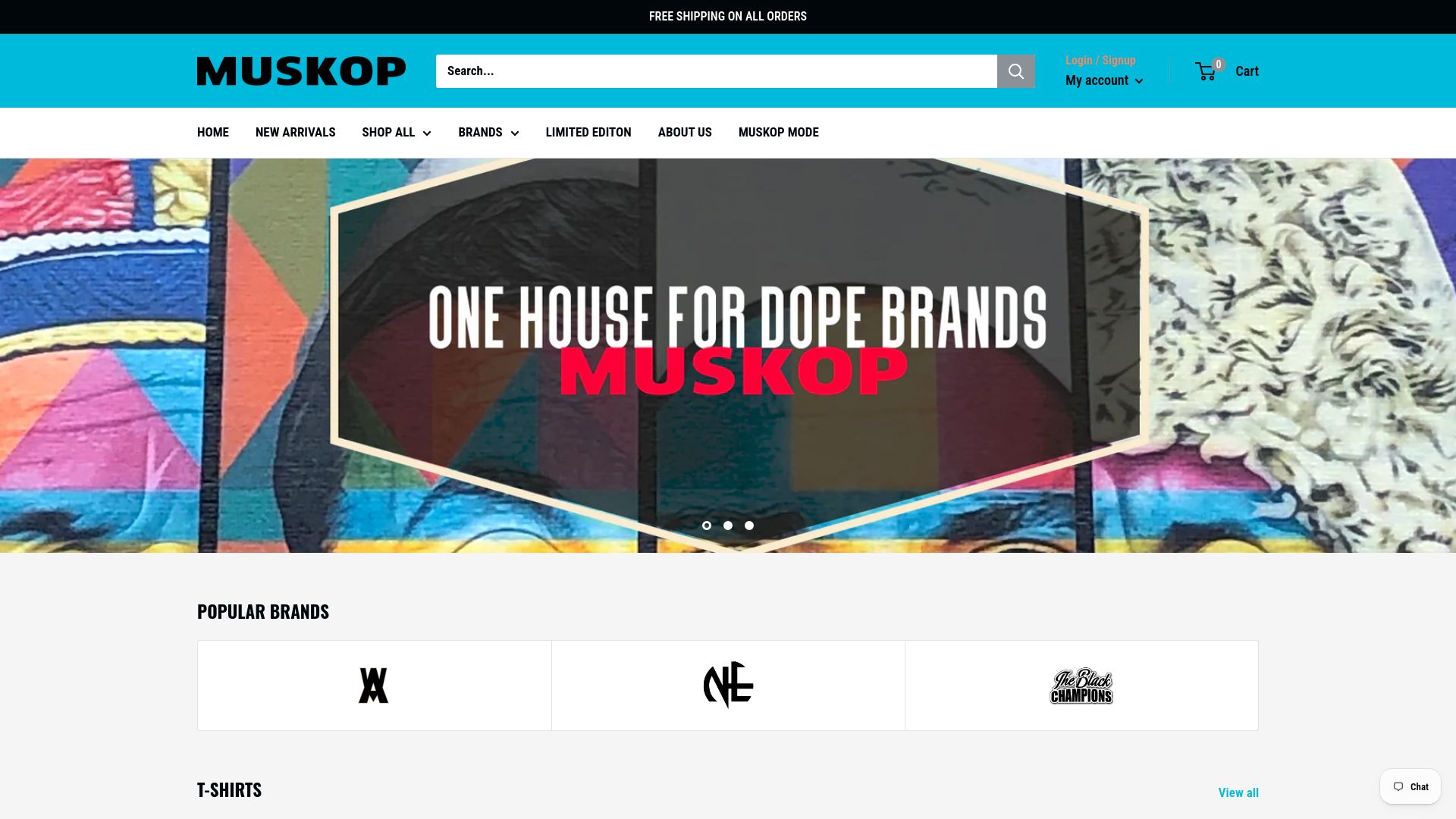
Every order ships free, no minimum required, and you can split payments through Affirm if you want to grab a hoodie and a couple of tees at once instead of waiting. Sizing runs true to standard for tees, with hoodies cut slightly roomier for layering. If you found a design angle here that fits your style, the fastest way to see the current lineup is to shop the full Muskop catalog and check what is in this season’s drop before it changes.
Sources
- 25 streetwear brands to know about in 2026
- Fashionista: Highsnobiety agency and streetwear
- The Best Streetwear Brands of 2025 — Complex
Recommended
- American Express
- American Express
- American Express
- American Express
FAQ
What are some small streetwear brands?
A few worth starting with include Muskop for graphic tees and hoodies built around pop culture and activism, Online Ceramics for its tie-dye and surrealist artwork, Aime Leon Dore for prep-inspired basics, Advisory Board Crystals for hand-dyed staples, Better Gift Shop for NYC-rooted graphics, Bricks & Wood for basketball culture merch, and Corteiz for its scarcity-driven drops.
What are the hottest streetwear brands right now?
Among smaller labels getting attention right now are Muskop, Online Ceramics, Aime Leon Dore, Advisory Board Crystals, Better Gift Shop, Bricks & Wood, and Corteiz, each building a following through limited drops and a clear design identity rather than big ad budgets.
How do I know if a small streetwear brand is legit?
Check the brand's About page before buying. If it names an actual designer and describes a specific production process, that is usually a real independent operation rather than a private-label reseller riding on the streetwear label without the substance behind it.