

A quality anime T-shirt is defined first by its fabric and print method, not by the design on the front. Check the material specs and print details on the listing before you check the price. Confirm the size chart lists actual chest and length measurements, not just S/M/L, as this typically covers most of what separates a shirt you’ll wear for years from one that peels and shrinks after a few washes.
TL;DR:
- Fabric type and weight are critical, with combed ringspun cotton on 180 to 220 GSM being the best for durability and print quality.
- Print methods like screen printing and discharge offer higher longevity, especially on heavier fabrics, compared to heat transfer or vinyl options.
- Accurate size measurement through chest and length comparisons is essential, as generic labels like S/M/L lack consistency across brands.
- Licensed anime tees often use similar low-cost materials as unlicensed ones, so checking the fabric specs and construction provides better quality assurance.
- Proper care, including cold washing inside out and low heat drying, significantly extends the lifespan of printed anime T-shirts.
Table of Contents
- What Makes a High-Quality Anime T-Shirt? A Fabric and Construction Checklist
- Which Print Methods Hold Up Best Over Time?
- How Do You Pick the Right Size Without Trying It On?
- Where to Buy Anime T-Shirts in the U.S.
- What Does the Price of an Anime T-Shirt Actually Tell You?
- How to Wash and Store Anime Tees So They Last
- What Red Flags Signal a Low-Quality or Fake Listing?
- What’s the Fastest Way to Decide Before Checkout?
- Muskop’s Practitioner Notes on Materials and Print Choices
- What Design Styles and Anime Themes Show Up Most on T-Shirts
- How Do You Style an Anime T-Shirt for Everyday Wear
- The Checklist Beats the Hype: An Editorial Take
- Get the Checklist Built Into Every Shirt Imuskop Makes
- Sources
What Makes a High-Quality Anime T-Shirt? A Fabric and Construction Checklist
The fabric is the foundation, and most shoppers skip straight past it to the artwork. That’s backwards. A stunning Attack on Titan print on thin, carded cotton will pill, fade, and lose shape within a month, while a simple one-color design on solid combed cotton can outlast your favorite hoodie.
Here’s the distinction that matters: carded cotton is the standard, lower-cost fiber used in most mass-market tees. The fibers run in different directions, which creates a rougher, less consistent surface. Combed cotton goes through an extra process that removes short fibers and aligns the rest, producing a smoother, stronger, more breathable fabric. Ringspun cotton takes it further by twisting the fibers tightly during spinning, which is why combed ringspun cotton is the gold standard for a soft hand-feel that holds up over time.
Weight matters just as much as fiber type. Shirt weight is measured in grams per square meter (GSM), and it’s one of the most reliable numbers a listing can give you:
- 130 to 150 GSM: lightweight, almost see-through, common in fast-fashion basics.
- 150 to 180 GSM: mid-weight, good for warmer climates, standard for many licensed anime tees.
- 180 to 220 GSM: heavier, more structured, better print grip, and the range where most premium streetwear tees land.
A buyer guide from Alibaba’s apparel sourcing team backs this up directly, recommending 100% combed cotton or cotton-blend fabric paired with durable print methods as the baseline for a shirt worth buying. Heavier fabric also holds detailed prints better because there’s more surface tension to keep ink from cracking at the edges of fine linework, which matters a lot for detailed anime portraits or screen-accurate character art.
Construction details tell you the rest of the story. Look at the collar: a ribbed collar (usually a cotton/spandex blend) holds its shape after repeated washes, while a single-layer hemmed collar tends to stretch out and go wavy. Check the side seams. Shirts made on a single continuous knit tube (“tubular” construction) skip side seams entirely and are cheaper to produce but often fit boxier. Side-seamed shirts cost more to make but generally hold a cleaner silhouette. Stitch density at the hem and sleeves is a quiet tell, too. Loose, widely spaced stitches unravel faster than tight, even stitching.
Retailers that spell out print method and fabric weight up front save buyers real time and cut down on returns, according to the same Alibaba guidance. If a product page just says “premium cotton” or “high-quality material” with no GSM, no fiber breakdown, and no construction notes, treat that as a gap, not a guarantee.
Pro Tip: Zoom into the product photos and look at the inside of the collar and hem if the seller shows them. A double-stitched hem and a ribbed, tag-free collar are small details that signal a brand actually thought about durability instead of just slapping a print on a blank shirt.
Which Print Methods Hold Up Best Over Time?
The print is where most anime tees live or die, literally, since a great design on bad fabric still cracks and fades. Six methods dominate the market, and each comes with a different durability and cost profile.
- Screen print: Ink is pushed through a stencil mesh, layer by layer. Extremely durable, vibrant, and the industry standard for large production runs, but less cost-effective for tiny batches or gradients.
- Discharge print: A dye-removal technique that replaces the shirt’s original color with the design, resulting in a soft, almost invisible hand-feel with no raised texture. Very durable, often used on darker garment-dyed shirts.
- DTG (direct-to-garment): Essentially inkjet printing straight onto fabric. Great for photo-realistic detail and small runs, but the print can crack or fade faster on lower-thread-count cotton.
- DTF (direct-to-film): Design is printed on film, then heat-pressed onto the shirt. Increasingly common for anime tees because it handles complex color gradients well; durability depends heavily on the quality of the press job.
- Heat transfer/vinyl: A pre-cut or printed transfer is heat-applied. Cheapest method, but prone to peeling and cracking at the edges within a year of regular washing, especially on cheap vinyl.
- Embroidery: Thread stitched directly into the fabric instead of ink. Extremely durable and gives a raised, textured feel, but it’s the most expensive option and usually limited to logos or small graphics rather than full-color scenes.
You can usually spot the print method in photos even when the listing doesn’t say. A slightly raised, rubbery texture under bright light suggests vinyl or a lower-grade DTF press. A print that feels like it’s part of the fabric, with no texture at all, points to discharge or a well-cured screen print. If a listing only shows a flat mockup with no macro shot of the actual print texture, that’s a real gap. For a deeper technical breakdown of how these last two compare on wash tests and color range, our DTF vs DTG comparison covers the tradeoffs in more depth. A soft, low-texture finish or embroidered patch usually costs more because it takes extra equipment or labor, not because a brand is marking up a basic tee.
How Do You Pick the Right Size Without Trying It On?
Buying anime tees online means sizing has to work off numbers, not guesswork. Here’s the sequence that actually works:
- Measure a T-shirt you already own and love the fit of. Lay it flat, measure pit-to-pit across the chest and from the collar seam to the hem. Write both numbers down.
- Compare those numbers against the seller’s size chart, not the generic S/M/L label. A “Large” from one anime merch brand can run two inches smaller than a “Large” from another, and chest and length measurements are the only reliable comparison point across brands.
- Identify the silhouette. Slim-cut tees sit close to the body and usually run small. Regular fit follows standard proportions. Oversized or streetwear-style anime tees are cut wider through the body and often drop the shoulder seam past your natural shoulder line, so sizing down one size from your regular fit usually preserves the intended drape instead of drowning you in fabric.
- Check customer photos, not just the model shot. Model images are usually a sample size on a specific body type. Real customer photos in the reviews section show you how the shirt fits across different heights and builds, which is often the single most useful sizing tool a listing offers.
- Confirm the return and exchange policy before you buy, especially with limited or seasonal drops that may not restock your size. A generous return window turns a sizing guess into a low-risk decision.
Our guide on graphic tee fit walks through this measurement method in more detail if you want a repeatable system for every future order.
Where to Buy Anime T-Shirts in the U.S.
Four channels cover most of the U.S. market, and each one trades authenticity, price, and production quality differently.
Official and licensed merch comes directly from a studio’s licensing partners, guaranteeing the artwork is authorized. Mainstream pop-culture retailers stock licensed goods at accessible prices but sometimes use lower-cost print methods to hit that price point. Specialty streetwear shops treat anime graphics as collaboration pieces, often with premium fabric and limited runs. Indie creators on marketplaces offer original interpretations and fan art, which sit outside official licensing entirely.
- BoxLunch curates a wide range of licensed anime tees and exclusives spanning both mainstream hits like Dragon Ball and Naruto and deeper-cut niche titles, which makes it a strong stop if you specifically want an officially licensed exclusive print.
- Hot Topic runs one of the largest anime tee selections among U.S. mass retailers, covering broad fandom appeal alongside more mainstream drops, and it’s a dependable baseline for licensed availability.
- Culture Kings leans into anime as streetwear collaborations rather than straightforward merch, positioning pieces as limited-run drops that justify a higher price tag and often a different, boxier fit than standard licensed tees.
Verifying licensing is simpler than it sounds: check for an official studio or distributor credit somewhere in the product description, on the hang tag, or in the brand’s “about” copy. If a shirt features an exact frame from an anime with zero licensing mention and sells for a fraction of what BoxLunch or Hot Topic charge for the same character, that’s usually unlicensed fan art, which isn’t inherently a problem, but you should know that’s what you’re buying.
What Does the Price of an Anime T-Shirt Actually Tell You?
Price in this category maps pretty closely to three things: licensing cost, print method, and run size, and knowing which one you’re paying for helps you avoid overpaying for the wrong feature.
- $18 to $28: Mass-market licensed tees, typically screen print or basic DTG on mid-weight cotton, sold through big retail chains.
- $28 to $45: Indie and boutique prints, often DTF or discharge on heavier cotton, where you’re paying more for fabric quality and originality than for licensing.
- $45 and up: Limited-run streetwear collaborations, where scarcity and brand collaboration drive the price as much as the shirt itself, since these crossovers tend to target collectors and fashion-forward buyers rather than casual fans.
Splurge when you want a specific licensed collaboration, a heavyweight fabric, or a limited drop you know you’ll wear constantly — similar to the care fans take to choose the right katana when selecting a specialty item for personal style and occasion. A budget tee is a reasonable choice for a one-off convention outfit or a design you’re testing out before committing to a pricier version.
How to Wash and Store Anime Tees So They Last
Care habits matter almost as much as the shirt you start with. Get this wrong and even a well-made 200 GSM combed cotton tee with a discharge print will fade within a season.
- Wash in cold water, turned inside out, to protect the print surface from direct friction against other garments.
- Use a mild detergent and skip fabric softener, which can leave a residue that dulls print vibrancy over time.
- Air-dry when possible. If you need a dryer, use low heat, since high heat is the single fastest way to crack vinyl or heat-transfer prints.
- Never iron directly over a print. If you must iron, do it inside out or place a thin cloth between the iron and the fabric.
- Fold graphic tees rather than hanging them long-term, since hanger stretch can distort the shoulder seams over months. Keep them out of direct sunlight to prevent color fade, particularly on discharge-printed dark shirts.
Pro Tip: If a print starts lifting slightly at one corner, a low-heat iron pressed briefly through a cloth can re-adhere heat-transfer and DTF prints before they peel further. It won’t fix a screen print gone bad, but it buys real time on the transfer-based methods.
What Red Flags Signal a Low-Quality or Fake Listing?
A handful of warning signs show up again and again in weak anime tee listings, and they’re easy to check in under a minute.
- Vague material language like “premium cotton” or “high quality” with no GSM number, no fiber percentage, and no print method named.
- Only mocked-up flat images or obviously staged renders, with zero close-up photos of the actual printed fabric texture.
- A price that’s dramatically below comparable licensed listings for the same exact artwork, especially with no licensing credit anywhere.
- No visible return or exchange policy, or a policy buried several clicks deep.
- A seller review pattern dominated by generic five-star comments with no photos, or a cluster of one-star reviews specifically about sizing and fading.
Any single one of these isn’t automatically disqualifying, but two or three together on the same listing is a strong signal to keep scrolling.
What’s the Fastest Way to Decide Before Checkout?
Run through this sequence and you’ll cut decision time down to under two minutes on most listings.
- Check the fabric spec: fiber type and GSM. No number listed means less confidence in the shirt.
- Identify the print method from the description or photos, and confirm there’s at least one macro shot of the actual print.
- Pull up the size chart and compare it against your own measured reference shirt.
- Confirm the return policy covers sizing exchanges, not just defects.
- Scan reviews specifically for fit and print-durability comments, not just star ratings.
If two or more of those checks come back empty, wait and keep looking rather than gambling on checkout. For limited drops tied to a new anime season or a streetwear collaboration, sizes and popular designs sell out fast, so having your reference measurements ready before the drop goes live saves you from rushing a size decision under pressure.
Pro Tip: Save a note on your phone with your reference chest and length measurements from your favorite tee. Pull it up instantly during a flash sale instead of digging through a drawer while a limited print sells out around you.
Muskop’s Practitioner Notes on Materials and Print Choices
Imuskop builds its graphic tees around the same priorities this guide walks through: solid-weight cotton and cotton blends chosen for print grip and long-term hand-feel, paired with print methods selected for how the specific artwork behaves rather than whichever method is cheapest to run. Detailed, multi-color anime-adjacent graphics get different print treatment than a simple one-color statement design, because the two demand different levels of ink coverage and wash durability.
Fabric and print decisions aren’t made separately from the design. The artwork dictates which print method will actually hold its detail wash after wash, and the fabric weight has to support that print without cracking at the edges.
Imuskop ships within the U.S. with free shipping on all orders, and offers interest-free payment plans through Affirm for buyers who want to spread out the cost of a larger order. Returns follow the standard policy checklist covered earlier in this guide.
What Design Styles and Anime Themes Show Up Most on T-Shirts
Anime T-shirt designs generally fall into a handful of recognizable categories, and knowing them helps you describe what you actually want when you’re searching or filtering.
Character portraits dominate the space, ranging from screen-accurate stills to stylized fan art reinterpretations of a specific character. Minimalist line art strips a character or symbol down to a single-color outline, which tends to age better stylistically than a busy, full-color scene and pairs more easily with everyday clothing. Iconic symbols and emblems pull from a series’ logos, factions, or recurring visual motifs (think a clan symbol or a guild crest) rather than a character’s face, appealing to fans who want subtler representation. Retro and vintage-wash designs mimic a distressed, decades-old bootleg tee aesthetic, which has become one of the most consistently popular anime clothing trends across both licensed and indie sellers. Typography-driven designs lean on Japanese text, series titles, or quote callouts rather than illustration.
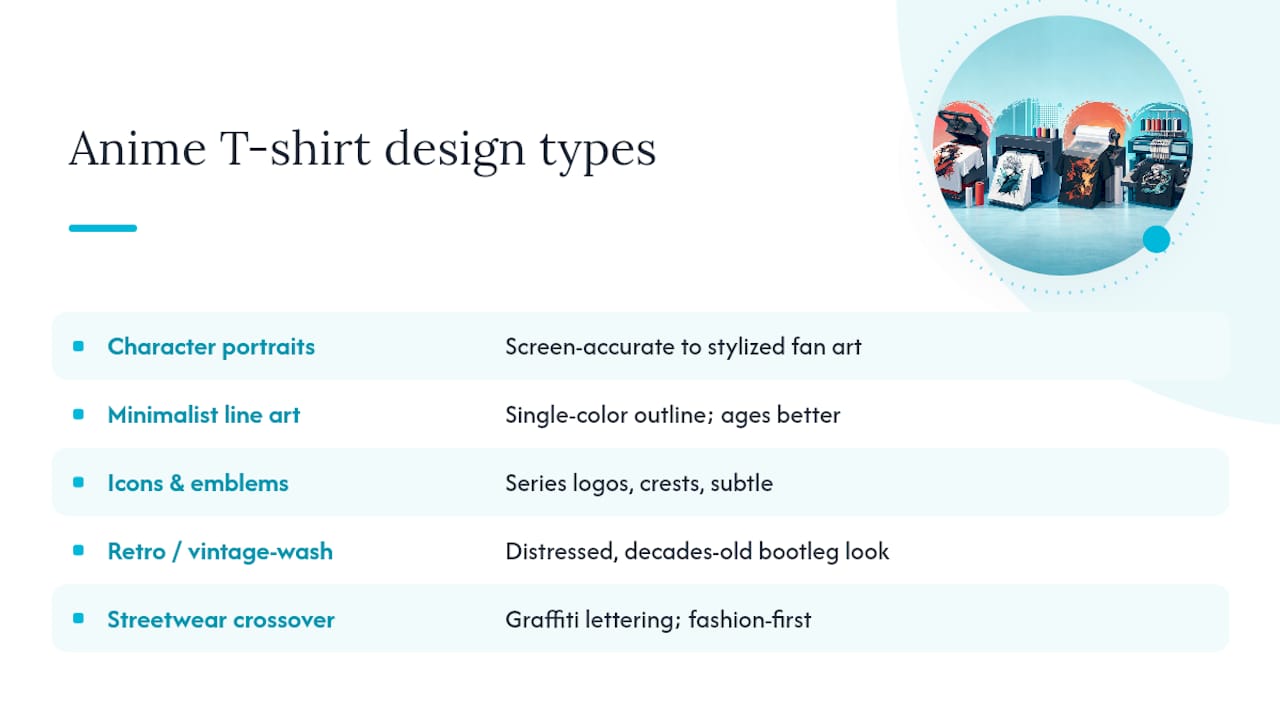
Streetwear crossover pieces, the kind Culture Kings specializes in, tend to blend anime characters with graffiti-style lettering or drop-shadow effects borrowed from hip-hop apparel, aimed squarely at buyers who want their fandom to read as fashion first and reference second.
How Do You Style an Anime T-Shirt for Everyday Wear
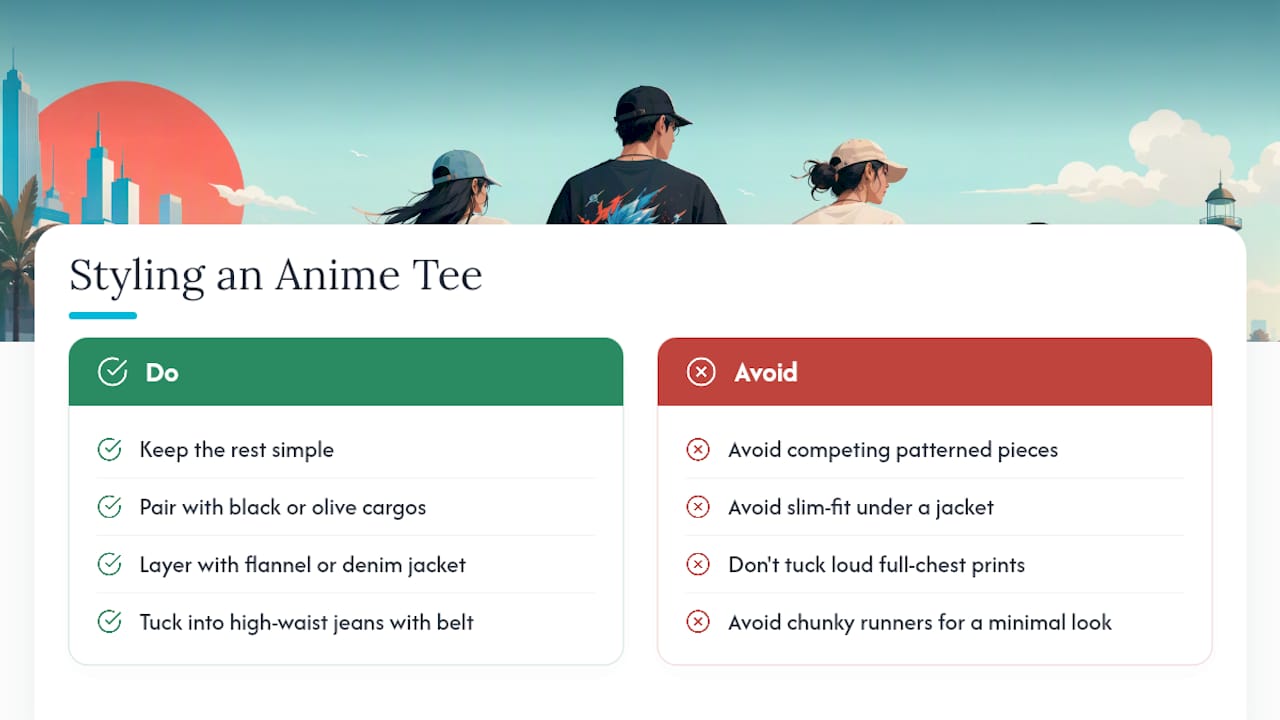
An anime tee reads as a statement piece, which means the rest of your outfit generally works best when it stays simple. Pair a bold character graphic with plain black or olive cargo pants and let the shirt carry the visual weight, rather than competing with another patterned piece.
Layering extends an anime tee’s range well past a single season. Throw an oversized flannel or a denim jacket over a graphic tee for cooler weather, leaving just enough of the print visible to signal what’s underneath. A cropped or oversized silhouette works particularly well under an open jacket because it avoids the bulky, doubled-up look that a slim-fit tee gets when layered.
For a more polished look, tuck a solid-color or minimalist line-art anime tee into high-waisted jeans and add a belt. This works better with subtler designs than with a loud, full-chest character print, which tends to look more casual no matter how it’s styled. Sneakers make the most natural footwear pairing, since anime and sneaker culture overlap heavily in streetwear circles, but clean white sneakers versus chunky retro runners will shift the whole outfit from minimal to statement-heavy.
Our graphic tee outfits guide covers specific pairing combinations in more depth if you want a season-by-season breakdown.
The Checklist Beats the Hype: An Editorial Take
Most buying advice for anime merch leads with the design, the license, the collaboration name. That’s the wrong entry point. The design is the reason you click; the fabric and print method are the reason you’re still wearing the shirt a year later. This guide’s whole premise rests on flipping that order, and I think it’s the only version of “anime merchandise guide” advice that actually holds up under repeated washing.
The conventional wisdom oversells licensing as a proxy for quality. A licensed shirt guarantees the artwork is authorized, nothing more. Plenty of licensed tees run on the same low-cost DTG presses and thin carded cotton as unlicensed ones. Meanwhile, some of the sturdiest anime shirts on the market come from indie printers who chose combed ringspun cotton and screen print specifically because they know their customer will wash it fifty times.
If you take one thing from this guide, make it this: read the fabric spec before you read the price tag. Everything else, fit, style, even authenticity, follows from getting that first decision right.
— Robert
Get the Checklist Built Into Every Shirt Imuskop Makes
Everything this guide asks you to verify on a listing, fabric weight, print method, honest sizing, is the baseline Imuskop builds into its own graphic tees rather than an upsell. Original artwork gets matched to a print method that actually holds up on repeated washes, cotton weight is chosen for drape and durability rather than the cheapest option available, and every order ships free within the U.S.
If a bigger order is on your list, Affirm’s interest-free payment plan spreads the cost without adding fees, which makes it easier to stock up on statement pieces instead of settling for one. Browse the current collection at Imuskop and run your next favorite tee through the same checklist you just learned. If it passes, it’s worth the closet space.