

A drop shoulder places the shoulder seam below the natural shoulder bone, usually by 2 to 8 centimeters (0.8 to 3.2 inches), which pushes the sleeve cap out onto the upper arm and gives the whole top a relaxed, boxy shape. It’s a pattern decision, not a size decision. Two shirts in the same size can have completely different drop measurements depending on how the maker positioned that seam.
The typical range runs from a subtle 2cm drop to a dramatic 8cm oversized drop, and where a garment falls in that range determines whether it reads as “slightly relaxed” or “streetwear oversized.”
Quick guide to picking one:
- Subtle drop (2 to 4cm): works under jackets, looks intentional in business casual settings
- Standard drop (4 to 6cm): the most common streetwear proportion, versatile for daily wear
- Oversized drop (6 to 8cm): best for layering and graphic tees, riskier on broad or petite frames
Pro Tip: If you’re between sizes on a drop shoulder tee, size down before you size up. The extra fabric from sizing up stacks on top of an already-widened shoulder line and can push you into “wearing a tent” territory.
Key Takeaways
Choosing the right drop shoulder fit comes down to matching the seam drop, fabric weight, and body proportions on purpose rather than by accident.
| Point | Details |
|---|---|
| Know your drop range | Subtle is 2 to 4cm, standard streetwear is 4 to 6cm, oversized is 6 to 8cm below the shoulder bone. |
| Match fabric weight to drop | Cotton in the 220 to 280 GSM range holds shoulder structure better than lighter fabrics. |
| Diagnose the “wide plus long” failure | If shoulders are too wide and body length passes your hip, size down first. |
| Alteration takes real pattern work | Converting to a set-in sleeve means reshaping the armhole curve, not just taking in seams. |
| Shop Imuskop for built-in proportion control | Imuskop sizes graphics and shoulder width together on its drop shoulder hoodies and tees. |
Table of Contents
- Drop Shoulder Fit Anatomy: How It’s Built and Measured
- How a Drop Shoulder Changes Your Silhouette
- Drop Shoulder vs. Set-In Sleeve vs. Raglan: What’s the Difference?
- Fabric and Proportions That Make a Drop Shoulder Work
- How to Alter a Dropped Shoulder Into a Set-In Sleeve
- Fitting and Sizing a Drop Shoulder Garment
- Fixing the Most Common Drop Shoulder Fit Problems
- How Imuskop Designs and Styles Drop Shoulder Pieces
- Get the Drop Shoulder Fit Right With Imuskop
- Sources
Drop Shoulder Fit Anatomy: How It’s Built and Measured
A drop shoulder shirt isn’t a set-in sleeve shirt sewn bigger. It’s a different pattern altogether. On a set-in sleeve, the pattern maker shapes a curved armhole and a matching curved sleeve cap that meet at the natural shoulder point. On a drop shoulder, that curve gets flattened or removed entirely, and the shoulder seam simply extends outward past the bone before the sleeve attaches. This is why drop shoulder construction shows up so often in knitwear and beginner sewing patterns: there’s no complex shaping to get wrong.
Measuring the drop yourself takes about two minutes and tells you more than any size label:
- Lay the garment flat on a table with the front facing up.
- Find the natural shoulder point, where your shoulder bone actually ends (on your own body, this is where the bone curves down toward your arm).
- Place a straight edge or measuring tape at that point on the garment’s shoulder seam.
- Measure straight down to where the fabric’s shoulder seam actually sits.
- Record that number. Anything under 4cm is subtle, 4 to 6cm is standard streetwear drop, and above 6cm is fully oversized.
Once you’ve got the number, check the fit from three angles. From the front, the seam should sit visibly on your upper arm, not still near your collarbone. From the side, the sleeve should hang without pulling backward or forward. From the back, look for horizontal pulling across the shoulder blades, which usually means the drop is fighting the fabric’s weight rather than working with it.
How a Drop Shoulder Changes Your Silhouette
The dropped seam widens your visual shoulder line, and that width reads differently depending on your starting proportions. Drop shoulders can flatter people with narrower shoulders by adding structure up top, while the same cut can make already broad or athletic shoulders look top-heavy, almost like the fabric is fighting your frame instead of skimming it.
Height and torso length matter just as much as shoulder width. Someone with a shorter torso can end up swimming in a drop shoulder tee that a taller person wears as a clean, relaxed layer, because the extra shoulder fabric combines with extra body length to create bulk in the wrong places.
A few styling moves fix most of the top-heavy problem:
- Pair a boxy drop shoulder top with fitted or tapered bottoms to keep the overall silhouette balanced.
- Tuck or half-tuck the front to break up the vertical block of fabric.
- Choose a slightly shorter body length if you’re under 5’7", since a long drop shoulder tee reads as a dress on a smaller frame.
- Add a light jacket or overshirt with structure at the shoulder to counter the boxiness underneath.
Pro Tip: Roll the sleeve cuff up once or twice on an oversized drop shoulder tee. It shortens the visual sleeve length just enough to keep your hands from disappearing, without touching the shoulder proportions you actually want.
Streetwear styling tends to lean into the boxy shape on purpose, layering a drop shoulder hoodie over a longer tee for a stacked look. Refined layering does the opposite: a drop shoulder sweater under a tailored coat, where the coat’s structure absorbs the width the sweater adds.
Drop Shoulder vs. Set-In Sleeve vs. Raglan: What’s the Difference?
Three sleeve constructions dominate casual apparel, and each one solves a different problem. A set-in sleeve uses a curved armhole and matching curved sleeve cap, sewn together at the natural shoulder point. This is what most button-downs, blazers, and fitted tees use because it follows your actual shoulder shape.
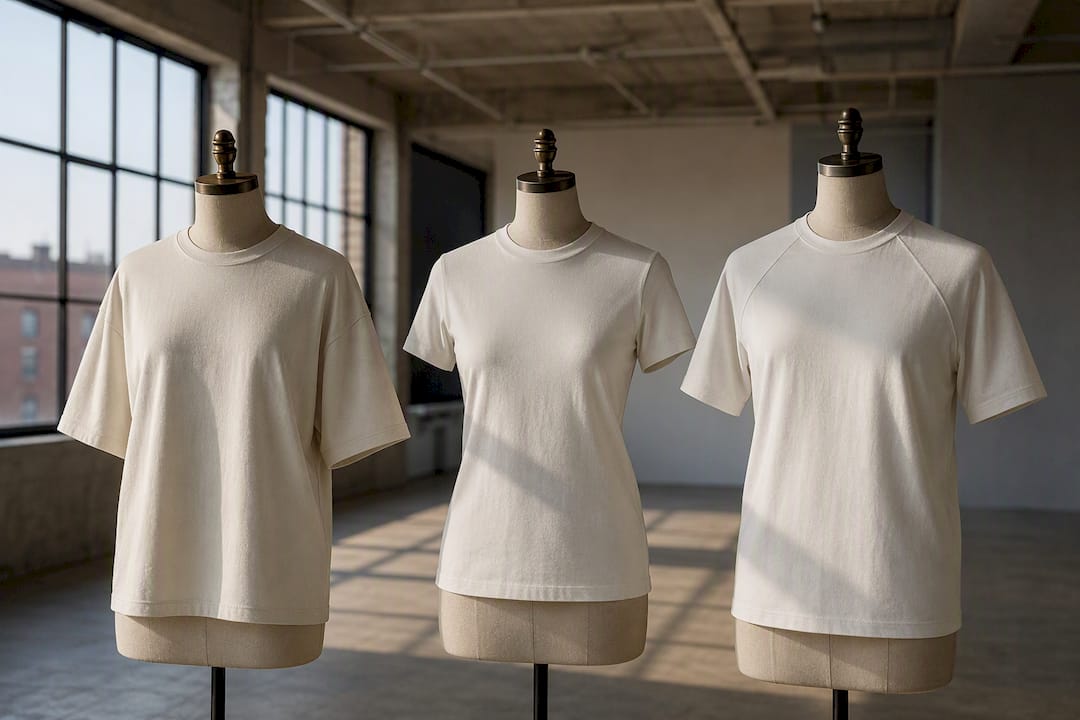
A raglan sleeve skips the shoulder seam entirely. The sleeve fabric runs in one diagonal piece from the collar to the underarm, which is why raglan baseball tees have that distinctive diagonal color-block line. Raglans give the most shoulder mobility of the three because there’s no seam restricting the joint.
Drop shoulder sits between the two structurally but leans toward simplicity. Manufacturers favor it because the armhole seam is flat and the sleeve cap is shortened, cutting assembly time and cost compared to a shaped set-in sleeve.
Here’s how the three stack up on what actually matters when you’re choosing:
- Shoulder mobility: raglan wins, set-in sleeve is most restrictive, drop shoulder falls in the middle but restricts overhead reach more than people expect.
- Construction complexity: set-in sleeve is hardest to sew well, drop shoulder is easiest, raglan is moderate.
- Best use case: set-in sleeve for tailoring and structured jackets, raglan for athletic wear and baseball tees, drop shoulder for streetwear and relaxed layering.
- Visual effect: set-in sleeve follows body shape, raglan is neutral, drop shoulder adds width and boxiness.
If you’ve ever felt a drop shoulder hoodie restrict your arms when you reach overhead, that’s the flattened sleeve cap doing exactly what it’s built to do. It trades some mobility for the relaxed shape.
Fabric and Proportions That Make a Drop Shoulder Work
A drop shoulder lives or dies on fabric weight. Too light, and the extended shoulder seam sags and loses its shape by the second wash. Too heavy without the right sleeve proportions, and the whole garment turns stiff and boxy in a way that reads cheap rather than intentional.
Streetwear-focused drop shoulder tees typically use mid- to heavyweight cotton fabric capable of holding shoulder structure better than lighter fabrics., heavy enough to hold the shoulder line without a stiff, cardboard feel. Lighter fabrics under 180 GSM tend to droop at the drop point, which is the single most common quality complaint on cheap oversized tees.
Sleeve proportions need to scale with the drop:
- A larger shoulder drop needs a proportionally wider sleeve opening, or the arm looks strangled coming out of a wide body.
- Sleeve length should land at or slightly past the natural wrist bone on a standard drop; oversized drops can go longer for a stacked, layered look.
- Reinforced shoulder seams or a lightweight interfacing at the seam edge prevents stretching over time, especially on heavier cotton blends.
- Ribbed cuffs and hems help pull in excess fabric at the extremities so the boxiness stays concentrated in the body and shoulders, not everywhere.
Fabric with good drape falls close to the body below the drop point. Stiffer fabric holds its shape outward, which is what gives streetwear hoodies their structured, architectural look rather than a sloppy one.
How to Alter a Dropped Shoulder Into a Set-In Sleeve
Converting a drop shoulder garment to a set-in sleeve is one of the more involved alterations you can attempt at home, but it’s doable if you’re comfortable with a seam ripper and basic pattern math.
- Measure everything first. Record the current shoulder drop, the armhole depth, and the sleeve cap length before you cut or unpick anything. You’ll need these numbers to redraw the new pattern pieces accurately.
- Unpick the sleeve. Carefully remove the sleeve from the body along the existing seam, keeping both pieces intact so you have fabric to work with.
- Redraw the shoulder point. Move the shoulder seam inward to the natural shoulder bone position, which shortens the overall shoulder width on the body piece.
- Reshape the armhole curve. This is the step most home sewers skip, and it’s why so many DIY conversions fail: a set-in sleeve needs a curved armscye, not the flat opening a drop shoulder uses. Draw a smooth curve from the new shoulder point down to the underarm.
- Add sleeve cap ease. The sleeve cap needs to be slightly larger than the new armhole opening, typically by half an inch to an inch, so it can be eased in without puckering.
- Match notches and pin. Align the underarm seams and shoulder point first, then work the ease evenly around the curve, pinning every inch or so.
- Baste and test fit. Sew a temporary basting stitch and try the garment on before committing to a final seam. Check for pulling, puckering, or restricted movement.
- Finish the seam. Once the fit checks out, sew the final seam and finish the raw edges to prevent fraying.
Pro Tip: Baste by hand rather than machine for your test fit. It takes an extra five minutes but saves you from ripping out a machine-sewn seam twice when the first curve isn’t quite right.
Skip this alteration on delicate fabrics like silk or loosely woven linen, where the seam ripper will leave visible holes, and on any garment with a complex yoke or paneling where reshaping the armhole means redesigning multiple pattern pieces. At that point, a professional tailor with pattern-drafting experience will save you the fabric.
Fitting and Sizing a Drop Shoulder Garment
True to size works for a subtle to standard drop if you like a clean, slightly relaxed fit without excess bulk. Size up only when you specifically want more oversized drape, since sizing up on a garment that already has a 6cm drop can push the shoulder seam almost to your elbow.
Run through this checklist when you try one on:
- Sleeve hang: the sleeve should fall naturally without bunching at the drop point or pulling tight across the bicep.
- Neckline tension: a stretched or gaping neckline usually means the body is too small even if the shoulders fit.
- Side seam alignment: side seams should hang straight down, not twist toward the front or back.
- Back wrinkling: horizontal wrinkles across the upper back signal the drop is too aggressive for the fabric weight.
Shopping online, request or check the shoulder-to-shoulder measurement and the sleeve length separately. Total garment length matters more than usual here, since a few extra inches on a drop shoulder tee reads very differently than on a fitted one. If you’re under 5’6" or have a shorter torso, expect to size down from what a size chart suggests for your chest measurement, since drop shoulder garments are typically drafted for average-to-tall frames first.
Fixing the Most Common Drop Shoulder Fit Problems
The “wide plus long” failure is the one to watch for: shoulders too wide combined with body length past your hip bone makes you look smaller inside the garment, not more relaxed. If you see both problems at once, size down before trying anything else.
- Armhole collapse: fabric bunching or twisting at the underarm usually means the sleeve opening is too narrow for the drop’s width.
- Seam drift: a shoulder seam that’s crept forward or backward after washing signals unreinforced fabric that’s stretched under its own weight.
- Collar distortion: a stretched-out neckline paired with a wide shoulder often means the whole size is too large, not just the shoulder cut.
- When it’s intentional: if the drop is deliberate and even on both sides with no pulling, style around the boxiness rather than fighting it.
Pro Tip: Wash a new drop shoulder tee once before judging the fit. Cotton in the 220 to 280 GSM range often relaxes slightly at the shoulder seam after the first wash cycle.
How Imuskop Designs and Styles Drop Shoulder Pieces
Graphic placement drives most of the proportion decisions behind Imuskop’s drop shoulder hoodies and tees. A large chest graphic on an oversized drop needs more shoulder width to breathe without looking cramped, so the artwork and the pattern get sized together, not separately.

For styling, pairing a drop shoulder hoodie with tapered joggers keeps the silhouette from reading as shapeless, and rolling the cuffs once on a standalone tee sharpens the proportions without losing the relaxed feel. On the construction side, mid-to-high GSM cotton and reinforced shoulder seams show up consistently across Imuskop’s streetwear pieces, since that combination holds the drop’s shape through repeated washing better than lighter blends.
Readers looking for real examples of these proportions in action can browse Imuskop’s streetwear sweatshirt lineup or check out tips on pairing hoodies for a complete streetwear look.
— Robert
Get the Drop Shoulder Fit Right With Imuskop
Imuskop builds drop shoulder hoodies and graphic tees with the proportion rules covered above already baked into the pattern, so you’re not left guessing whether a 6cm drop will swallow your frame or sit exactly where streetwear is supposed to sit. Original artwork gets sized to the shoulder width, not slapped on after the fact, which is why the graphic and the silhouette look designed together instead of stretched.

Every order ships free, and Affirm’s interest-free payment plans mean you can build out a layered streetwear rotation, hoodie, tee, and joggers, without paying it all upfront. If you’ve read this far and know your ideal drop range, browse Imuskop’s current lineup and check the shoulder and sleeve measurements listed on each product page before you check out.
Sources
For deeper detail on the measurement rules and fit checklist referenced throughout this guide, see MODAKNITS’s proportion guide. For styling and body-proportion guidance, Jo-Lynne Shane’s shoulder seam breakdown covers who the style flatters. For the alteration steps in full detail, In The Folds’s Q&A series walks through converting a drop shoulder to a set-in sleeve.
- Fit and proportion rules for drop shoulder t-shirts | MODAKNITS
- Understanding Shoulder Seams: Fit, Proportion & Style | Jo-Lynne Shane