

Women’s streetwear style blends oversized silhouettes, graphic tees, and sneaker culture with personal storytelling, rooted in skate, hip hop, and activist scenes that women helped build from the inside. You don’t need to overthink it to start. Try one of these two combinations tonight:
- Look 1 (skate-soft): oversized graphic tee + wide-leg jeans + chunky sneakers + a cross-body bag.
- Look 2 (city-utility): cropped hoodie + cargo pants + low-top sneakers + a bucket hat.
Both formulas work because they balance loose and fitted proportions, which is the real engine behind almost every good streetwear outfit. Editorial resources like Muskop track these combinations regularly, pairing graphic-tee culture with the same silhouette logic streetwear has used for three decades.
TL;DR:
- Fitting outfits around the 3-3-3 rule—three pieces, three colors, and three textures—ensures balanced and intentional streetwear looks.
- Capsule wardrobes with 6 to 10 versatile staples like graphic tees, wide-leg denim, and chunky sneakers offer practical and sustainable styling options.
- Women’s streetwear outfits are heavily influenced by history from brands like Baby Phat and X-Girl, emphasizing silhouettes rooted in activism and gender fluidity.
- Proper proportion balancing, layering, and accessories like shoes and bags are key to creating versatile and flattering streetwear outfits for all body types.
- Focus on owning statement graphics or heritage pieces from women-led brands to build authentic, personalized streetwear identities.
Table of Contents
- What Are the Signature Looks in Women’s Streetwear Style?
- What Wardrobe Staples Do You Actually Need?
- How Do You Balance Proportions in a Streetwear Outfit?
- Who Are the Women Who Shaped Streetwear?
- Where Can You Find Streetwear Inspiration and Community?
- How Do You Build Your Personal Streetwear Identity in 30 to 90 Days?
- How Does Muskop Approach Women’s Streetwear?
- Does Streetwear Actually Work for Every Body Type?
- How Do Accessories and Footwear Complete a Streetwear Look?
- How Do You Adapt Streetwear for Different Seasons?
- What Mistakes Should You Avoid in Streetwear Styling?
- What’s the Honest Take on Building a Streetwear Identity?
- Ready to Build Your Streetwear Capsule?
- Key Takeaways
- Sources
What Are the Signature Looks in Women’s Streetwear Style?
Streetwear style isn’t one look. It’s a wardrobe of repeatable categories you rotate depending on mood, weather, and where you’re headed. Below are the looks that show up again and again across city outfit guides, and each one comes with quick swaps so you’re not locked into a single version.
- Skate girl. Baggy cargo pants or wide-leg denim, a graphic tee, and slip-on skate shoes. Swap the cargos for straight-leg denim if you want less bulk, trade the tee for a longline hoodie, or add a beanie for cooler months. Works for campus, thrifting trips, and casual weekend errands.
- Cropped hoodie and wide-leg denim. A cropped hoodie balances the volume of wide-leg denim, a combination The Stylish Trail highlights as one of the most reliable city templates for women’s streetwear. Swap the hoodie for a fitted crop tee in summer, add a chain belt, or layer a flannel over the top when temperatures drop.
- Varsity and overshirt. A varsity jacket or oversized flannel worn open over a fitted layer, paired with straight-leg jeans and retro sneakers. Swap the jacket for a denim trucker, add a beanie, or roll the sleeves for a looser feel.
- Athleisure-street hybrid. Bike shorts or joggers, an oversized graphic tee, and chunky trainers. Swap joggers for a matching set, add a cross-body bag, or layer a zip hoodie for transitional weather.
- Monochrome minimal. One color family head to toe, mixed textures (nylon, cotton, denim) to keep it from looking flat. Swap in a contrasting sneaker, add a single bold accessory, or break monochrome with graphic socks.
- Protest and statement. A graphic or slogan tee front and center, paired with utility pants and combat boots. Swap boots for sneakers in warmer months, add a denim jacket, or layer a flannel tied at the waist.
- Gender-fluid oversized. Boxy fits borrowed from menswear, cinched at the waist with a belt or tucked partially at the front. Swap a men’s-cut hoodie for a boyfriend blazer, add a dad cap, or pair with platform boots.
- Sneaker-forward. Any simple base outfit, jeans and a tee, built entirely around a standout sneaker as the focal point. Swap the sneaker color seasonally, add matching socks, or bring in one accessory that echoes the shoe’s color.
Trend coverage from Fibre2Fashion notes a real shift happening right now: women’s streetwear is moving away from purely fitness-driven athleisure toward looser, more relaxed silhouettes, often carrying a protest or activism edge. That’s why looks like “protest and statement” and “gender-fluid oversized” feel current rather than retro.
What Wardrobe Staples Do You Actually Need?
You don’t need forty pieces to build a working streetwear rotation; consider sustainable staples like the playful unisex zip hoodie to keep your wardrobe eco-friendly and versatile. You need the right ten, chosen for how often they’ll actually get worn.
- Oversized graphic tee. The anchor piece of almost every look above. Wash inside out to protect the print.
- Wide-leg or straight denim. Balances fitted tops and works across seasons.
- Cargo pants. Adds utility texture without sacrificing comfort.
- Cropped or zip hoodie. Layers over tees, works solo in cooler weather.
- Oversized flannel. Tie it, layer it, or wear it open over anything.
- Chunky or platform sneakers. Yahoo’s roundup of defining streetwear items points to sneakers and logo tees as the pieces that crossed over from women-led labels into mainstream streetwear culture, and they still anchor most outfits today.
- Cross-body or mini bag. Practical and keeps proportions tidy against baggier fits.
- Bucket hat or beanie. Cheap way to finish a look without extra effort.
- Statement outerwear (varsity jacket or puffer). The piece people remember.
- Basic ribbed tank or long sleeve. Layers under everything else.
Three capsule builds:
- Minimal (6 pieces, budget-friendly): graphic tee, straight denim, sneakers, flannel, beanie, cross-body bag.
- Standard (10 pieces, mid-range): add cargo pants, a cropped hoodie, a second sneaker colorway, and a bucket hat.
- Expressive (14+ pieces, higher investment): add statement outerwear, a protest or slogan tee, platform boots, and one collectible sneaker.
Buy denim and outerwear at the higher end of your budget since they get the most wear; save on tees and accessories where trends move faster. Secondhand and eco-conscious pieces are worth prioritizing here too, since Fibre2Fashion’s trend analysis flags slower, more sustainable production as a growing thread in streetwear rather than a niche side note.
How Do You Balance Proportions in a Streetwear Outfit?
Most streetwear outfits that look “off” fail for one reason: nothing in the outfit is fitted. The fix is the 3-3-3 rule: pick three pieces (top, bottom, shoes), keep three color tones or fewer, and mix three textures at most (denim, cotton, leather, nylon). A cropped hoodie, wide-leg jeans, and leather sneakers hits all three rules at once and reads intentional instead of accidental.
Layering order matters more than most people realize. Fitted base, looser mid-layer, structured outer layer. A tank under an oversized tee under an open flannel works. Three oversized layers stacked on top of each other just reads bulky.
Pro Tip: If your top and bottom are both oversized, fix it with your shoes. A sleek low-top sneaker or a slim boot pulls the whole silhouette back into balance without changing a single garment.
Three hacks worth memorizing:
- Cuffing. Roll denim or joggers once at the ankle to show off sneakers and shorten a long line.
- Partial tuck. Front-tuck a graphic tee into wide-leg pants to define your waist without losing the loose fit.
- Deliberate contrast. Pair one structured piece (blazer, denim) with one soft piece (jersey, fleece) so the outfit doesn’t read as one texture.
Break these rules once you understand them. An all-oversized look works fine for a low-key day; the rule just gives you a fallback when something feels off.
Who Are the Women Who Shaped Streetwear?
Streetwear’s DNA runs through labels women built and ran, not just labels that eventually marketed to women. Complex’s history of pioneering streetwear brands traces names like Baby Phat, X-Girl, and Triple 5 Soul back to the '90s, each one shaping pieces that still show up in outfits today: Baby Phat’s fur-lined puffer, X-Girl’s ringer tees, Triple 5 Soul’s boxy fits.
Baby Phat’s puffer wasn’t just outerwear. It became a signature silhouette that later streetwear brands referenced directly, and knowing that lineage changes how you see the piece hanging in a thrift store today.
That lineage keeps surfacing. Sneaker and accessory collaborations from creatives like Vashtie and Melody Ehsani, also documented in Complex’s timeline, pushed women further into sneaker culture rather than keeping them on the sidelines of it. Modern gender-fluid silhouettes and artist-led collabs are a direct extension of that same push, not a new trend arriving from nowhere.
Practically, this history gives you permission to wear pieces with weight behind them. A ringer tee or a boxy puffer isn’t just “on trend.” It’s a callback, and wearing it that way, tucked or cuffed your own way, is how you turn a borrowed silhouette into something personal.
- Look for reissued or vintage pieces from women-led labels when thrifting.
- Treat collabs (sneaker, accessory, or artist-led) as shortcuts to authentic pieces.
- Use one heritage piece per outfit as an anchor, and keep the rest simple.
Where Can You Find Streetwear Inspiration and Community?
Building a personal style faster usually means borrowing eyes from people already doing it well. A handful of platforms carry most of the useful visual noise.
- Pinterest boards. Search “women’s street style” and save aggressively; boards with hundreds of curated pins exist specifically for this kind of outfit reference.
- Reddit’s r/womensstreetwear. Community threads where people post fit checks and get direct, specific feedback, useful when you want opinions beyond your own mirror.
- Instagram street-style accounts. Look for accounts that repost real outfits from cities rather than only studio shots, since real-world lighting and backgrounds tell you more about how a fit actually reads.
- Campus and city spotting. Walking around a college campus or downtown district on a weekend still beats most apps for seeing what people are genuinely wearing right now.
- Thrift and consignment markets. Ethical sourcing starts here. Check seams and fabric composition before buying, and prioritize natural fibers when you want a piece to last.
Save ten images that genuinely match your taste, not fifty that are just “cool.” A tight moodboard is easier to shop from than a sprawling one.
How Do You Build Your Personal Streetwear Identity in 30 to 90 Days?
Style confidence comes from repetition and small tests, not from one big wardrobe overhaul. This four-step process works over a season.
- Audit (days 1 to 10). Collect ten to fifteen images that represent looks you’d actually wear, pulled from Pinterest, Reddit, or street-style accounts.
- Choose signature pieces (days 10 to 20). Pick two or three staples from your audit, a graphic tee style, a sneaker colorway, an outerwear shape, and buy or thrift them first.
- Experiment and photograph (days 20 to 60). Wear one new combination per week and photograph it. Photos catch proportion issues mirrors miss.
- Edit and refine (days 60 to 90). Drop what you never repeat, double down on what got compliments or just felt right, and adjust for the season ahead.
Track one metric: how many times you reach for a piece without thinking about it. That’s your real signature, not what looked best in a single photo. Test one new silhouette per month rather than overhauling everything at once, and swap heavier layers for lighter ones as the season shifts.
How Does Muskop Approach Women’s Streetwear?
Muskop builds around original graphic artwork, not recycled logos, which means a tee doing double duty as a statement piece and a wardrobe anchor. The brand leans into activism and pop-culture themes, so a Muskop graphic tee slots directly into the “protest and statement” look from the lookbook, paired with utility pants and boots, or softened with wide-leg denim and sneakers for a lower-key day.
- Original artwork instead of licensed reprints, so pieces feel less generic.
- A focus on self-expression and activism themes, matching the “protest and statement” look.
- Free shipping and interest-free payment plans through Affirm, which lowers the barrier to testing a new silhouette.
A graphic tee with real artwork behind it works harder in an outfit than a plain one. It gives you a reason to build the rest of the look around it instead of the other way around.
Does Streetwear Actually Work for Every Body Type?
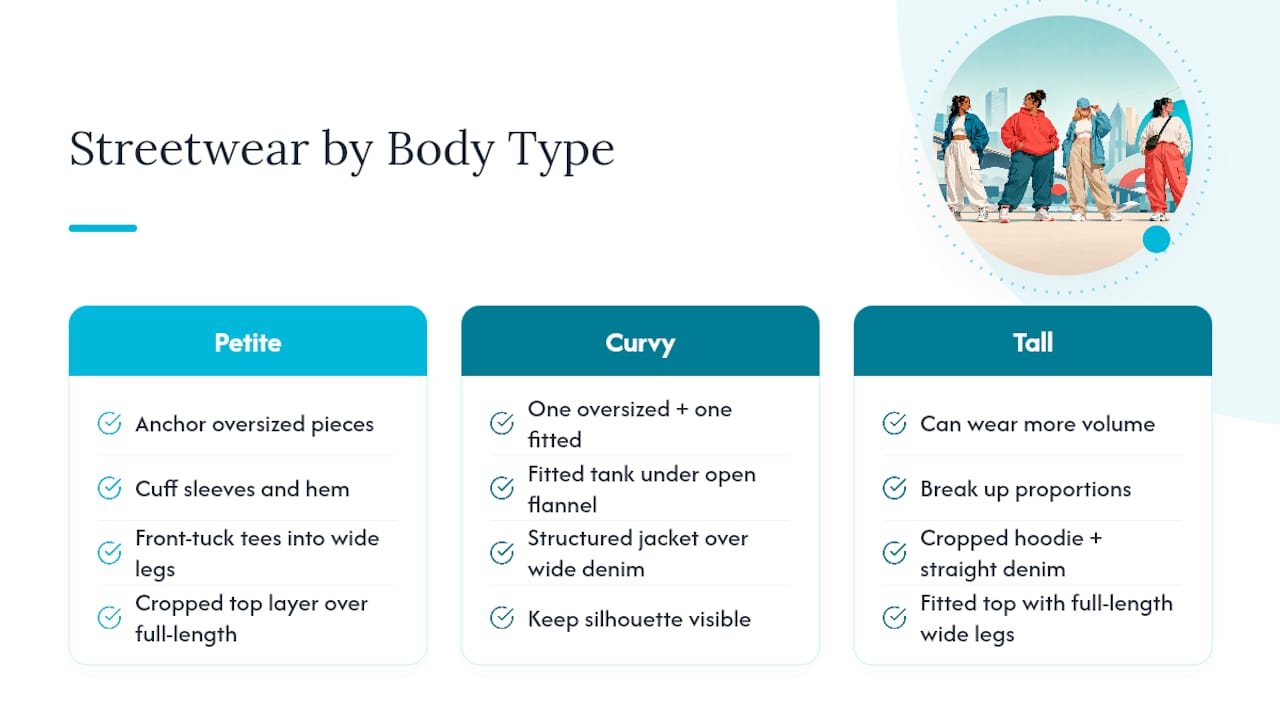
Streetwear’s baggy reputation makes some women assume it only works on certain frames. That’s backwards. Proportion, not size, is what makes an outfit work, and the 3-3-3 rule applies exactly the same way regardless of body type.
If you’re petite, oversized pieces can swallow your frame unless you anchor them. Cuff the sleeves and hem, front-tuck a tee into wide-leg pants, and choose a cropped top layer over a full-length one so you’re not covered in fabric from neck to knee. A platform sneaker also helps add visual height without changing your outfit’s tone.
If you have a curvier frame, one oversized piece paired with one fitted piece reads intentional rather than shapeless. Try a fitted tank under an open flannel, or a structured jacket over wide-leg denim, so the silhouette still shows your shape somewhere in the outfit.
If you’re tall, you can wear more volume without looking overwhelmed, but breaking up proportions still matters. A cropped hoodie with straight-leg denim, or full-length wide-leg pants with a fitted top, keeps the outfit from reading as one long block of fabric.
Whatever your frame, the same core move applies: pair one loose piece with one closer-fitting piece, and let your shoes do the work of grounding the whole look. Streetwear was never built around a single body type. It was built around silhouette contrast, which works on every shape when you apply it deliberately.
How Do Accessories and Footwear Complete a Streetwear Look?
Footwear carries more weight in streetwear than in almost any other style category. A sneaker-forward strategy means the shoe often becomes the outfit’s focal point, with everything else built to support it rather than compete with it. Chunky trainers ground an oversized fit, while a low-top or slim sneaker can pull a baggy silhouette back into balance.
Accessories work best when you pick one and commit, rather than layering five small pieces that fight for attention. A bucket hat, a chain, a cross-body bag, or graphic socks, each can be that one piece, but stacking all four at once usually reads busy instead of intentional.
Bags deserve more thought than they usually get. A structured mini bag adds contrast against baggy denim or cargo pants, while a slouchy cross-body matches a softer, more relaxed outfit. Match the bag’s texture to your outerwear rather than your top, since outerwear sets the tone for the whole look.
Socks are a small detail that reads as a big one in photos, especially with cropped pants or rolled cuffs. A bold sock color peeking out at the ankle is a cheap way to add a second color note without touching the rest of the outfit.
Jewelry in streetwear tends to skew simple and layered rather than delicate. Chains, a single statement ring, or stacked bracelets fit the aesthetic better than fine, minimal pieces that get lost against bold graphics and heavier fabrics.
How Do You Adapt Streetwear for Different Seasons?
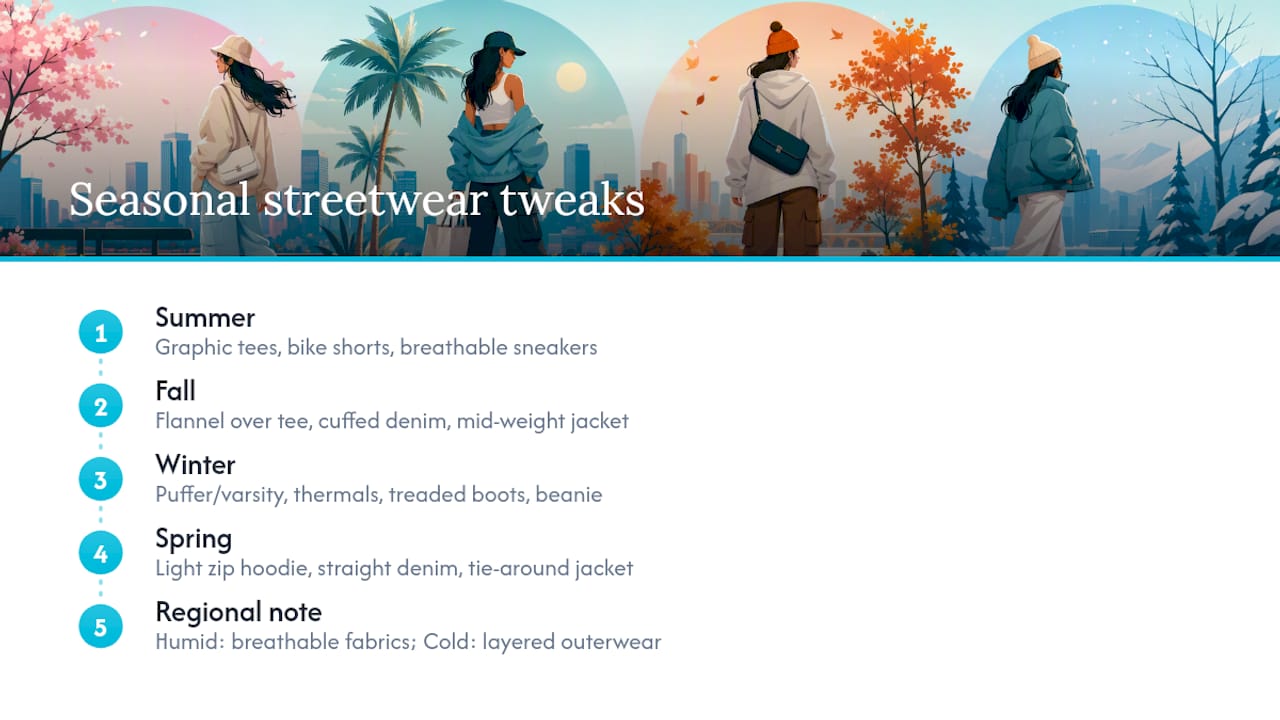
Streetwear translates across seasons more easily than people assume, mostly because layering is already built into the aesthetic. The trick is swapping fabric weight, not swapping the whole formula.
In summer, drop the hoodie and lean on graphic tees, bike shorts, and lighter cotton cargo pants. Sneakers stay, but breathable canvas or mesh options replace anything insulated. A bucket hat does double duty here, finishing the look and blocking sun.
In fall, this is where streetwear’s layering logic shines. A flannel over a graphic tee, cuffed denim, and a mid-weight jacket cover temperature swings without losing the silhouette. Boots start replacing lighter sneakers as the weather turns.
In winter, outerwear becomes the statement piece. A puffer or varsity jacket, thermal layers underneath a hoodie, and boots with real tread handle cold without forcing you into a completely different aesthetic. Thick socks and a beanie fill the accessory role that hats and bags played in warmer months.
In spring, transitional pieces do the heavy lifting: a light zip hoodie, straight-leg denim, and a jacket you can tie around your waist once temperatures climb midday. This is also the easiest season to test a new silhouette, since you’re not committed to heavy layers if it doesn’t work.
Regional climate matters too. Humid, warmer parts of the country lean on breathable fabrics year round, while colder regions get more mileage out of layered outerwear as a core styling tool rather than an afterthought.
What Mistakes Should You Avoid in Streetwear Styling?
The most common mistake is going oversized everywhere at once. Baggy top, baggy bottom, and bulky shoes together erase your shape entirely and usually look sloppy rather than intentional. Fix it with the 3-3-3 rule: anchor at least one piece close to your body.
Ignoring proportion at the shoe level is another frequent miss. Chunky sneakers under already-oversized pants can tip a look from “balanced streetwear” into “swallowed by fabric.” If your outfit is already loose, a slimmer shoe often reads better than another bulky one.
Overloading on logos and graphics is a mistake too. One statement piece, a graphic tee or a bold jacket, is usually enough. Two or three loud pieces competing in the same outfit tends to look cluttered instead of confident.
Buying trend pieces without checking fabric quality is a costly one. A trendy cargo pant that falls apart after five washes isn’t a bargain. Check seams and fabric weight before buying, especially with fast-fashion retailers pushing streetwear-adjacent lines.
Finally, copying a look exactly without adjusting it to your own proportions or climate is the mistake that keeps people stuck imitating instead of styling. Treat every outfit template in this guide as a starting formula, not a fixed rulebook.
What’s the Honest Take on Building a Streetwear Identity?
Most streetwear content treats the category like a shopping list: buy these ten items, follow these five accounts, done. That undersells what actually makes an outfit work. The pieces matter less than the proportion logic behind them, and most guides skip that part entirely because a rule like 3-3-3 is less exciting to write about than a haul.
The conventional advice also tends to flatten streetwear’s history into “urban aesthetic” without naming who built it. Baby Phat, X-Girl, Triple 5 Soul, these weren’t footnotes. They were the blueprint, and skipping that context is why so many outfits that copy the silhouette still feel hollow.
If you take one thing from this guide, prioritize proportion over acquisition. Buy fewer pieces, test them against the 3-3-3 rule, and photograph yourself before you buy anything new. A tee with real design intent behind it, the kind Muskop builds around, will outlast three forgettable trend purchases because you’ll actually keep reaching for it.
— Robert
Ready to Build Your Streetwear Capsule?
Muskop is the shortcut to the “protest and statement” and “sneaker-forward” looks covered above, without hunting through a dozen retailers for a graphic tee that actually says something. The brand’s original artwork means you’re not buying the same licensed print everyone else has, and free shipping plus interest-free payment plans through Affirm make it easy to test a new silhouette without overcommitting up front.

Start with one graphic tee built around a design that actually matches your interests, whether that’s activism, pop culture, or bold visual art, and pair it with wide-leg denim and a clean sneaker for an easy first outfit. If a specific print or fit catches your eye, check current styles at Muskop and build your first capsule piece from there.
Key Takeaways
Women’s streetwear style works best when you prioritize proportion balance over piece count, and when you understand the women-led brands that built the aesthetic you’re borrowing from.
| Point | Details |
|---|---|
| Use the 3-3-3 rule | Limit outfits to three pieces, three colors, and three textures for a balanced silhouette. |
| Build a capsule, not a haul | Start with 6 to 10 staples like graphic tees, wide-leg denim, and versatile sneakers. |
| Know the history | Women-led labels like Baby Phat and X-Girl shaped the silhouettes you’re styling today. |
| Test before you commit | Photograph new combinations weekly and edit out what you don’t repeat within 90 days. |
| Start with one statement piece | Muskop’s original graphic tees work as an anchor piece for protest-inspired or sneaker-forward looks. |
Sources
- 10 Pioneering Women’s Streetwear Brands You Need to Know
- 10 items that define women’s streetwear
- Streetwear outfits for women with a cool aesthetic feel - The Stylish Trail
- The Ultimate Guide For Women’s Streetwear - Fibre2Fashion
Recommended
- American Express
- American Express
- American Express
- American Express
FAQ
What is the 3-3-3 rule for women's clothing?
In streetwear styling, it means fitting an outfit around three pieces, three colors, and three textures so the look stays balanced instead of cluttered. It's a quick mental check rather than a strict formula, useful when you're mixing oversized and fitted pieces.
What is women's streetwear style?
It's a wardrobe built from oversized silhouettes, graphic tees, and sneaker culture, mixed with personal touches drawn from skate, hip hop, and activist scenes. Rather than one fixed look, it's a rotation of categories like skate girl, cropped hoodie and wide-leg denim, or sneaker-forward outfits you adapt to mood and weather.
What wardrobe staples do I need for a streetwear style?
A working rotation doesn't require dozens of pieces, just the right ten: an oversized graphic tee, wide-leg or straight denim, cargo pants, a cropped or zip hoodie, an oversized flannel, chunky sneakers, a cross-body bag, a bucket hat or beanie, and a piece of statement outerwear like a varsity jacket. IMUSKOP carries graphic tees, hoodies, and varsity jackets that fit this kind of starter lineup.
How do I balance proportions in a streetwear outfit?
The real engine behind most good streetwear outfits is balancing loose and fitted proportions, like pairing an oversized tee with wide-leg jeans or a cropped hoodie with baggier cargo pants. Accessories like a cross-body bag or sneakers help keep the overall silhouette from looking too loose.