

No single detail proves a piece is real, so the rule is simple: check a cluster of signals, not one. Immediate red flags include a price far below resale value, a seller who only has stock photos, and tags that don’t match verified references. Run the checklist below on every piece before you pay, especially anything sold as rare or limited.
TL;DR:
- Authentic streetwear should be verified by checking tags, stitching, materials, logos, and seller reputation, not a single indicator.
- Genuine tags feature muted red ink, precise placement, thin fonts, and correct spelling, with backside photos often lacking in fakes.
- Seams on real garments are even, reinforced at stress points, and inside seams reveal higher-quality construction not easily faked.
- Feel the fabric for weight and texture, especially heavyweight fleece, and examine print textures, hardware quality, and embroidery details closely.
- Confirm limited release authenticity by cross-referencing exact drop details, production numbers, and matching each brand’s specific cues, especially on collabs.
Table of Contents
- Quick Five-Point Checklist Before You Buy Streetwear
- Tags and Labels: What Neck Tags and Wash Tags Reveal
- Stitching and Construction: What Quality Seams Look Like
- Fabric, Hand-Feel, and Hardware: Testing What You Can’t See in a Photo
- Logos and Graphics: Spotting Misaligned Prints and Embroidery
- Seller Red Flags: Photos, Pricing, and Account History
- Applying the Checklist to Supreme
- Muskop’s Verification Workflow and When to Call a Professional
- Why Original Packaging and Authenticity Cards Matter Less Than You Think
- Using Official Brand Apps and Authentication Services
- Verifying Exclusivity on Limited Releases
- Common Counterfeit Tactics You Should Expect
- Protecting What Streetwear Actually Means
- Sources
- FAQ
Quick Five-Point Checklist Before You Buy Streetwear
Before you send money to anyone, run through five checks. Skipping even one is how experienced buyers still get burned, because modern counterfeiters have gotten good enough to nail one famous tell perfectly while getting everything else wrong.
- Seller and listing signals: Look at account age, feedback history, and whether the photos are original or lifted from another listing.
- Tag consistency: Compare the neck tag, wash tag, and any size tags against verified photos of the same release.
- Construction quality: Check stitching density, seam alignment, and whether stress points are reinforced.
- Material and hardware feel: Handle the fabric weight, print texture, and any zippers or buttons for weight and finish.
- Reference verification: Match the piece against timestamped photos or archive images from the exact same season and colorway.
Treat these five checks as a set. A holistic, five-point mismatch approach that weighs multiple small inconsistencies together catches far more fakes than hunting for one smoking gun.
Tags and Labels: What Neck Tags and Wash Tags Reveal
Tags are where counterfeiters cut corners fastest, because they’re small, text heavy, and easy to rush. This is also where identifying fake streetwear gets genuinely satisfying once you know what to look for.
On neck tags, authentic printing tends to run in a muted, slightly desaturated red rather than a loud, saturated tone. Text sits centered with clean spacing, and the ® symbol is small and precisely placed. Counterfeits routinely run the opposite: oversaturated red, bulkier fonts, and cramped or off-center layouts.
Wash tags tell a similar story. Look closely at:
- Font weight and thickness (authentic tags use thin, clean strokes).
- Spacing between lines of text, particularly around registration numbers.
- Any RN number formatting, since fakes often crowd the layout and enlarge the ® mark.
- Spelling. Counterfeiters have shipped tags reading things like “TUBMLE” instead of “TUMBLE,” an error that’s an instant disqualifier.
To verify, pull up authenticated reference images from resale platforms or brand archives and compare tag-for-tag. If you’re buying secondhand, ask the seller for a straight-on photo of the reverse side of the tag and a close-up of the stitching that holds it in place. Counterfeiters rarely think to fake the back.
Pro Tip: Ask for a photo of the tag under natural daylight, not studio lighting. Color temperature can hide a red tint problem that becomes obvious the moment you see it outdoors.
Stitching and Construction: What Quality Seams Look Like
Run your eyes along the seams before you look at anything else, because stitching is one of the hardest things to fake cheaply. Authentic streetwear typically shows even stitch length, consistent thread density, and reinforced stitching at stress points, meaning the shoulders, underarms, and pocket corners.
Inspect these areas specifically:
- Shoulder seams: Should lie flat with no puckering or thread showing through.
- Inside logo backing: Check how the embroidery or print is finished on the interior, not just the front.
- Cuffs and hems: Look for a double stitch line and consistent folding, not a single loose pass.
- Pocket bags and side seams: These get skipped or rushed on cheap knockoffs.
Common fake tells include disconnected stitches that don’t quite meet at a seam junction, loose threads dangling near logos, and hems that fold unevenly from one side of the garment to the other. None of these mistakes are visible in a thumbnail photo, which is exactly why sellers who only post far-away shots deserve extra scrutiny.
If you’re shopping in person, turn the garment inside out before you decide. A five second glance at the internal seams tells you more than ten minutes of staring at the front logo. This step alone eliminates a large share of low-effort counterfeits, since most fakes are made to photograph well, not to survive an inside-out inspection.
Fabric, Hand-Feel, and Hardware: Testing What You Can’t See in a Photo
Fabric weight is one of the hardest things to fake in a photo and one of the easiest to feel in person. Authentic streetwear fleece, especially heavyweight hoodies and crewnecks, tends to have a dense, brushed nap that holds structure when you scrunch it in your hand. Thin, scratchy, or overly stretchy fleece is a common sign of a cheaper blank underneath a convincing print.
Print versus embroidery matters too. Screen prints on authentic pieces sit close to the fabric with a slight texture, while many counterfeit prints have a thick, rubbery, raised feel that catches light differently. Run a finger across any large graphic. If it feels like a sticker glued on top of the shirt rather than part of it, treat that as a warning sign.
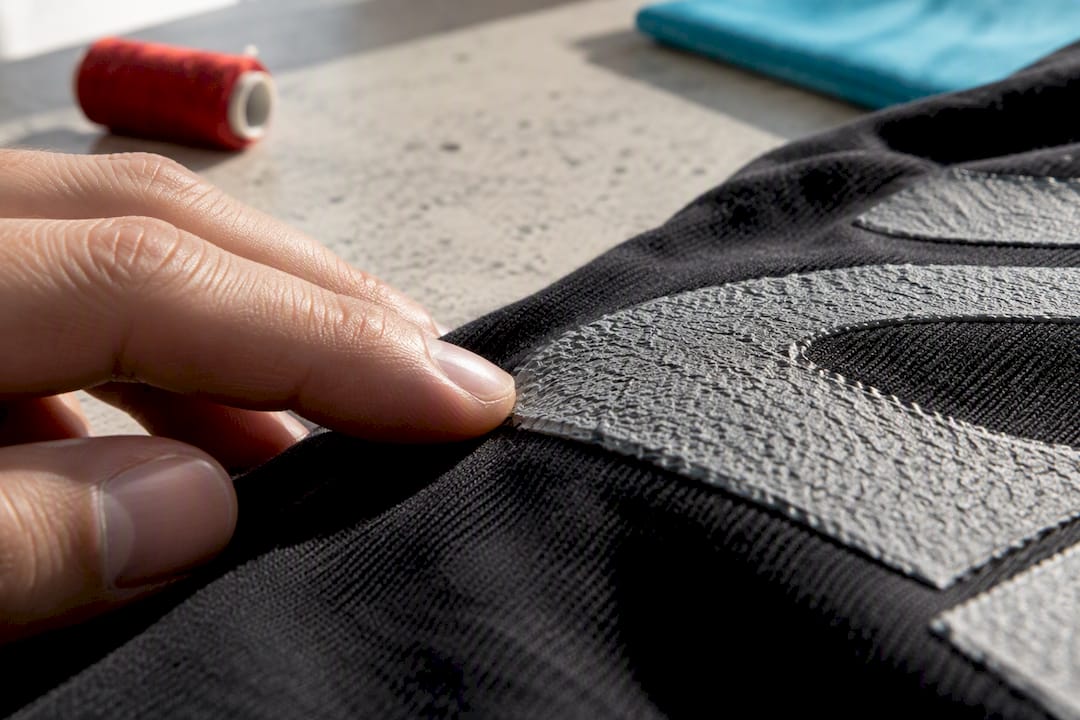
Hardware deserves the same scrutiny. Branded zippers should show clean, legible engraving, not a blurry or shallow stamp. Buttons should sit flush and operate smoothly, without sticking or wobbling in the buttonhole. Cheap zippers that catch or snag on the first pull are rarely found on pieces that retailed above $100.
Buying online means you can’t touch anything, so ask the seller directly for a video of the fabric moving, plus a close, angled photo of any zipper pull or button under bright light. Buying in person, do the scrunch test and the finger test before you even try it on.
Logos and Graphics: Spotting Misaligned Prints and Embroidery
Box logos and large chest graphics are where proportion errors hide in plain sight. Compare letter spacing, baseline alignment, and the overall width-to-height ratio of the logo against a verified reference image, because even a few millimeters of stretching gives away a cheap replica.
Watch for these specific tells:
- Scaling errors: Printed graphics that are slightly larger, smaller, or shifted from the official placement.
- Letter spacing: Uneven gaps between letters, especially on box logo style graphics.
- Embroidery backing: Authentic embroidery often shows a lustrous, silvery metallic backing on the interior, while many fakes use excessive white thread or a rubbery raised texture instead.
- Thread density: Sparse or uneven stitch fill compared to a tightly packed, uniform reference.
Collaborations need extra caution. When two brands appear on one release, both logos have to match their own individual authentication standards. It’s common for counterfeiters to nail one brand’s mark and botch the other, so check each logo separately rather than assuming that if one looks right, the whole piece is real.
Seller Red Flags: Photos, Pricing, and Account History
Vet the seller before you vet the garment, because a shady listing rarely leads to a real piece no matter how convincing the tags look in photos.
- Check the price against resale reality. If a listing sits significantly below the going resale rate on a legitimate marketplace with no explanation, treat that as your first alarm bell rather than a stroke of luck.
- Scan every photo for originality. Stock photos, images pulled from another listing, or crops that conveniently avoid the tag area all suggest the seller doesn’t actually have the item in hand.
- Look at account signals. A brand-new account, or one repeatedly listing “rare” items using the exact same photo set, points toward a scam or a reseller flipping counterfeits at volume.
- Ask for provenance. Request the original receipt or order confirmation with sensitive information redacted, plus a timestamped photo showing the item next to today’s newspaper, a phone lock screen, or anything with a visible date.
Packaging alone isn’t proof of anything. Boxes, hang tags, and receipts are trivial to copy, while the garment’s actual construction is much harder to fake convincingly. A seller who leans hard on “comes with original packaging!” but won’t show you a single stitching close-up is telling you something.
Pro Tip: Reverse image search any listing photo you’re suspicious of. If it turns up on five other listings across different marketplaces, you’re looking at a stolen photo set, not a real item for sale.
Applying the Checklist to Supreme
Supreme remains the most faked streetwear brand in the U.S. resale market, which makes it the clearest case study for this whole checklist. Start with the neck tag: authentic tags run a muted red tint with centered white text and a small, precise ®, while counterfeits tend toward an oversaturated red and bulkier fonts.
Move to the wash tag next. Genuine Supreme wash tags use thin, evenly spaced printing, and the spacing between “Supreme” and “Made in” follows a consistent pattern that fakes routinely get wrong. On box logo pieces, check the embroidery sheen. Real box logos use lustrous thread with clean letter weight, where fakes often show excess white thread or a flat, rubbery finish. Side tags should sit centered, not skewed toward one edge.
One caution that trips up even experienced buyers: Supreme changes tag details and production specs across seasons. Compare your piece against the exact same season and model, not a random authentic photo from a different drop.
Muskop’s Verification Workflow and When to Call a Professional
Before publishing buying guides, a verification team runs every high-value piece through the same five steps: check the seller’s history, request timestamped photos, inspect tags and stitching and materials, compare against exact-release images, and do a final price and provenance check before anyone pays.
For anything over roughly $200, a piece with murky release history, or listing photos too poor to inspect closely, it’s worth paying a professional authenticator. These services use tools most buyers don’t have access to, including magnification and infrared analysis of hang tags, and can spot font and backing differences invisible to the naked eye. Supply them with full-resolution photos of every tag, seam, and logo, front and back, plus any provenance documents you have. If you’d rather sidestep the guesswork entirely, Muskop’s own step-by-step vendor guide walks through finding sellers you don’t need to interrogate in the first place.
Why Original Packaging and Authenticity Cards Matter Less Than You Think
Original boxes, hang tags, and authenticity cards feel reassuring, but they’re the easiest part of any release to counterfeit. A box printed with the right logo and a card with a matching serial number can be produced cheaply and in bulk, long before the actual garment inside gets any real quality control.
That doesn’t mean packaging is worthless. If a seller has the complete original box, tissue paper, and any brand-specific authenticity card, it does add a layer of confidence, particularly for sneaker-adjacent drops that include serialized cards or holograms. Treat it as a supporting signal, never as the deciding one.
The smarter approach: ask for packaging photos in addition to garment photos, not instead of them. If a seller sends you five glossy shots of a box and zero close-ups of stitching or tags, that imbalance itself is a red flag. Genuine sellers usually don’t mind showing the unglamorous parts, because they know the garment is what actually holds up under inspection.
Keep your own packaging too. If you ever plan to resell, an intact box and card genuinely does help your listing stand out among buyers running their own checklist, and it gives your future buyer one more data point in the cluster of signals they should be checking anyway.
Using Official Brand Apps and Authentication Services
A handful of brands now offer their own verification tools, and checking for one before you buy costs nothing. Some sneaker and apparel companies let you scan a QR code or enter a serial number through an official app to confirm a specific unit was produced by the brand. When a brand offers this, use it as your first check, not your only one, since serial numbers on lower-tier counterfeits have occasionally been cloned from real units.
Third-party authentication services fill the gap for brands, like Supreme, that don’t run their own verification app. These services combine trained human review with the kind of magnification and material analysis casual buyers can’t replicate at home. Marketplaces including StockX also maintain internal authentication teams that inspect items before a sale finalizes, which is part of why resale platforms and brand archives are useful reference points for comparing tag variations across seasons even if you’re not buying through them directly.
The tradeoff is speed and cost. Official app checks are usually instant and free. Third-party authenticators charge a fee and can take a few days, but for a piece worth several hundred dollars or more, that fee is small insurance against buying something you can’t resell or wear with confidence. Reserve professional services for exactly those higher-stakes purchases rather than every everyday tee.
Verifying Exclusivity on Limited Releases
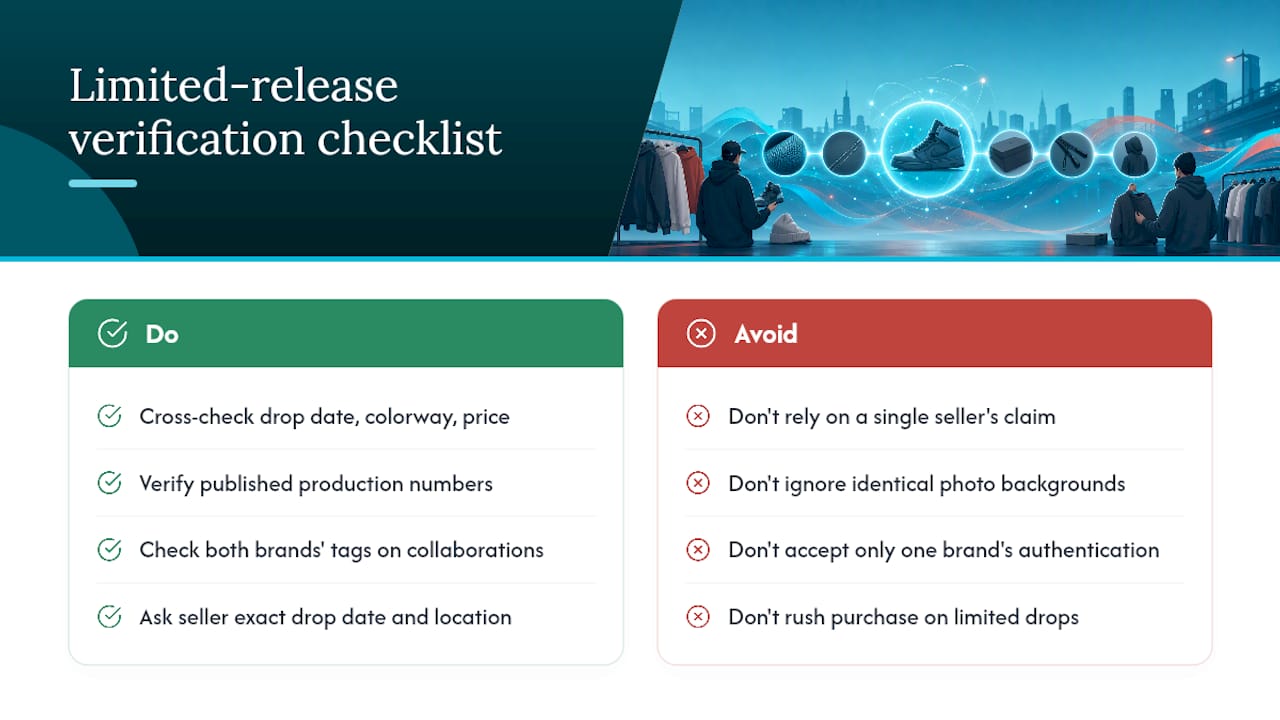
Limited and collaboration drops attract counterfeiters faster than any other category, because scarcity itself is what buyers are paying for. The first step is confirming the release actually happened the way the listing claims. Cross-check the exact drop date, colorway name, and retail price against brand archives or established resale platforms before you even look at the item’s condition.
Pay attention to production numbers when a brand publishes them. If a release was capped at a specific run and a seller claims to have multiples of the “rare” item in different sizes, that’s worth questioning, especially if all the photos share the same background or lighting setup. Genuine limited pieces tend to have a documented resale history you can trace, not just a single seller’s word.
Collaborations carry a second layer of risk: both brands’ individual authentication points need to check out, not just one. A convincing partner logo paired with an obviously wrong main brand tag (or the reverse) is a common shortcut counterfeiters take when replicating collab pieces, since faking two brands’ details well is twice the work.
When in doubt on a genuinely limited piece, slow down the purchase. Ask the seller for the exact drop date and location where they originally bought it, then compare that story against the brand’s own release calendar. Inconsistent timelines are one of the fastest ways to unravel a fake exclusivity claim before money changes hands.
Common Counterfeit Tactics You Should Expect
Counterfeiters have moved well past crude knockoffs, and understanding their playbook makes every check above sharper. The most common tactic right now is the “one perfect detail” trick: nailing a single famous authentication point, like getting the box logo embroidery just right, while everything else quietly falls short.
Other recurring tactics include:
- Photo recycling: Using stolen images from legitimate listings or brand catalogs to sell a different, often lower-quality item.
- Tag swapping: Stitching an authentic tag from a damaged real piece onto a counterfeit garment.
- Bundling fake with real: Selling a genuine accessory alongside a counterfeit main item to build false trust in the whole listing.
- Urgency pressure: Framing a listing as “selling fast” or accepting only immediate payment to rush buyers past careful inspection.
The throughline across all of these is that counterfeiters are optimizing for what a rushed buyer checks first: the logo, the price, the overall silhouette in a photo. They’re betting you won’t ask for the interior seam shot or the reverse of the wash tag. Every extra question you ask closes off another one of their shortcuts, which is exactly why the five-point cluster approach outperforms any single test.
Protecting What Streetwear Actually Means
Fakes don’t just cost you money, they quietly erode the culture that made a piece worth chasing in the first place. Every counterfeit sold undercuts the artists, collaborators, and small labels who put real work into a design. Run the checklist, share it with people in your circle who are newer to collecting, and treat authentication as part of the hobby, not a chore attached to it. Muskop’s other buying guides go deeper on where to shop with confidence.
— Robert
Sources
- How to spot fake Supreme
- Fake vs real Supreme — general guide
- How to Spot Fake Streetwear Before You Buy
- Real vs fake Supreme box logo hooded sweatshirt — authentication guide
FAQ
What Is the 3-3-3 Rule for Clothes?
The 3-3-3 rule is a wardrobe minimalism concept, not an authentication method. It’s unrelated to spotting counterfeit streetwear, so use the five-point checklist covering tags, stitching, materials, logos, and seller history instead when you’re vetting a purchase.
What Is the Most Faked Streetwear Brand?
Supreme is widely considered the single most counterfeited streetwear brand in the resale market, largely because of its high resale premiums and limited drop model. Its neck tags, wash tags, and box logo embroidery are the most commonly targeted details, which is why comparing every tag against exact-release references matters so much for this specific brand.
How Can You Tell if Clothing Is Counterfeit?
Look for a cluster of inconsistencies rather than one obvious flaw: mismatched tag fonts or spacing, uneven stitching at seams and stress points, print that feels rubbery instead of textured, and a seller who can’t produce timestamped or close-up photos. No single detail proves authenticity on its own, so weigh several checks together before deciding.
Can AI Legit-Check Clothes?
AI-based legit check tools can flag obvious mismatches in logo placement, tag layout, and print quality by comparing your photos against a database of verified references. They’re useful for a fast first pass, but they still miss construction details, fabric feel, and subtle embroidery backing differences that professional human authenticators catch under magnification, so treat AI results as a starting point, not a final verdict on high-value pieces.
More questions people ask
How can you tell if a hoodie is real?
Check the neck tag and wash tag for muted red ink, thin clean fonts, and correct spelling, since counterfeiters often rush these details. Turn the hoodie inside out and look at the seams for even stitching and reinforced stress points at the shoulders and underarms. Also feel the fabric weight, since a heavyweight fleece should feel substantial rather than thin.
How do you spot fake merchandise in general?
Treat it as a cluster check rather than looking for one giveaway sign. Compare tags, stitching, material feel, and logo placement against verified reference photos, and watch for sellers who only post stock photos or price items far below resale value.
What are common seller red flags when buying streetwear online?
Be cautious of a price far below resale value, a seller with only stock photos instead of original ones, and tags that don't match verified reference images. Account age and feedback history are also worth checking before you send payment.