

Check your chest measurement against a real body chart, not the label on the tag. Unisex tees run closer to men’s sizing, so if you normally wear a women’s medium, you’ll typically want a small or extra small in a unisex fit. Below, you’ll find a full US unisex size chart, exact measuring steps for your body and for an old shirt, and Muskop’s own take on why garment specs matter more than size names.
TL;DR:
- Women usually need to size down one or two sizes when choosing unisex tees, depending on their frame and the brand’s cut.
- Measuring both your body and an existing shirt provides the most reliable way to select the right fit, accounting for shrinkage and ease.
- Fabric type and weight significantly affect shrinkage and fit after washing, so consider blending or weight when choosing your size.
- Unisex sizing is based on men’s proportions, making it more suitable for men or broader-shouldered women, while petites may need to size down further.
- Confirming garment measurements against your preferred fit and checking return policies before ordering helps ensure satisfaction with your tee size.
Table of Contents
- What Is Unisex T-Shirt Sizing, Exactly?
- How to Measure Yourself and an Old T-Shirt for Accurate Sizing
- Unisex vs. Men’s and Women’s Sizing: Who Sizes Up, Who Sizes Down
- Does Fabric Affect What Size You Should Buy?
- Picking Your Final Size: Fit Style and a Pre-Checkout Checklist
- Muskop’s Take on Sizing Real Customers Ask About
- Ready to Shop With the Sizing Confidence You Just Built
- Sources
What Is Unisex T-Shirt Sizing, Exactly?
Unisex t-shirt sizing is built on a single set of proportions, usually pulled straight from men’s blocks, so one size chart fits shoppers regardless of gender. That’s the whole idea behind the unisex vs. men’s and women’s sizing approach: instead of stocking two separate size runs, brands print one chart and let the measurements do the talking. It works well for tees, hoodies, and other loose-fitting streetwear, though tailored pieces still benefit from gender-specific cuts.
Here’s the US unisex t-shirt size chart most graphic tee and streetwear brands build from, including both body measurements (what you measure on yourself) and garment measurements (what the actual shirt measures when it’s flat).
A common unisex size chart indicates increasing chest and length measurements by size, with garment chest widths incrementally larger for bigger sizes.
Those ranges track closely with the standard unisex size chart most sizing guides reference, and the pattern holds across sizes: garment chest width, measured flat, roughly increases by 2 inches per size step.
“Garment chest width” is the measurement taken with the shirt laid flat and buttoned or zipped closed if applicable, from one underarm seam to the other. Double that number and you get the chest circumference, which is what actually wraps around your body. A t-shirt size chart that only lists the flat number without explaining the doubling step is a common source of confusion, so watch for that when comparing brands.
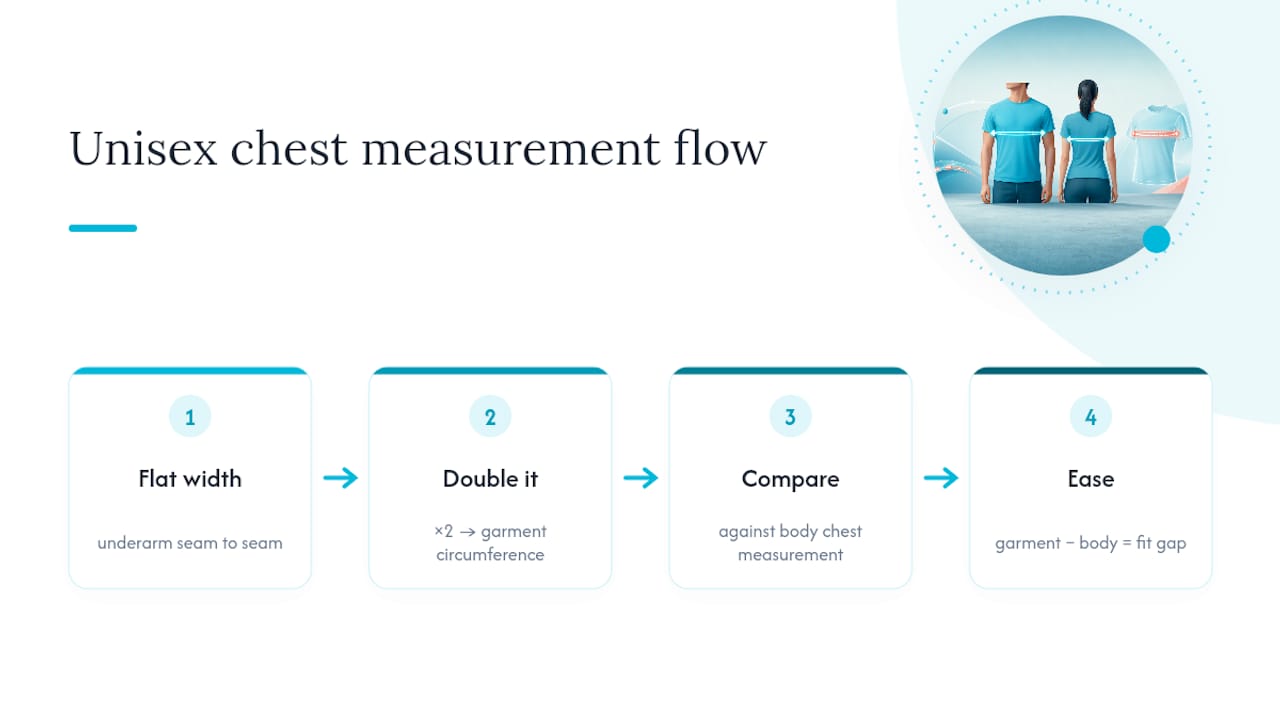
Ease is the gap between your actual chest measurement and the garment’s circumference, and it’s what separates a snug tee from a boxy one. Most unisex tees build in some inches of ease at the chest to ensure comfort. A shirt with less ease will sit close to the body; more ease gives you that classic boxy streetwear silhouette.
How to Measure Yourself and an Old T-Shirt for Accurate Sizing
Two methods work here, and running both gives you a reliable cross-check before you buy.
Flat-shirt method (use a tee that already fits you well):
- Lay the shirt flat on a table, front side up, and smooth out wrinkles.
- Measure straight across from armpit to armpit. That’s your flat chest width, doubled for circumference.
- Measure from the top of the shoulder seam straight down to the hem for body length.
- Measure from the shoulder seam to the end of the sleeve for sleeve length.
Body method (use a soft tape measure):
- Wrap the tape around the fullest part of your chest, keeping it level and snug but not tight.
- Measure across your back from shoulder point to shoulder point for shoulder width.
- Decide your desired shirt length, measuring from where you want the collar to sit down to where you want the hem to land.
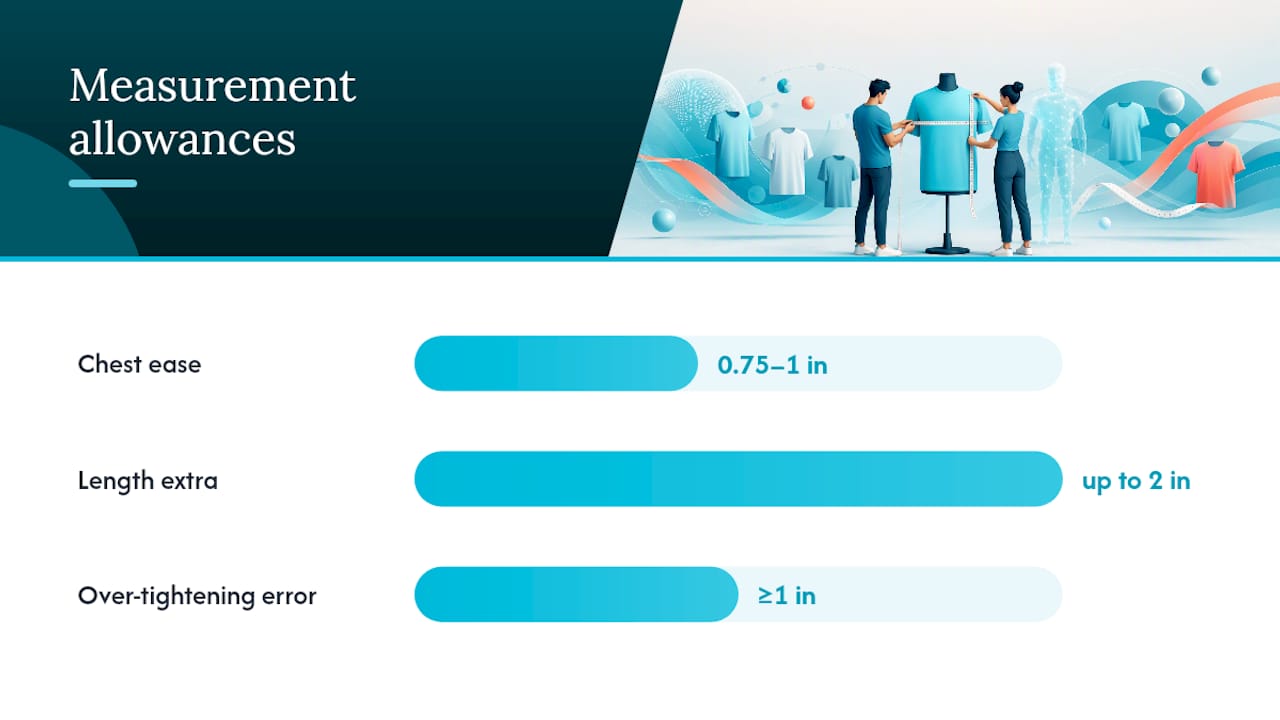
Add about ¾ to 1 inch to your body chest measurement for comfort, and add up to 2 inches to length if you prefer a longer drop. Stand straight with your arms relaxed at your sides, and get a second person to help if you’re measuring your own body. Keep the tape snug against your skin without pulling it tight, since over-tightening throws off the number by an inch or more.
Pro Tip: Before you order anything new, measure a shirt from your closet that already fits the way you want. Compare its flat chest width and length against the garment measurement chart on the product page you’re eyeing. If the numbers line up, you’ve basically guaranteed the fit before checkout.
Unisex vs. Men’s and Women’s Sizing: Who Sizes Up, Who Sizes Down
Unisex sizing almost always defaults to men’s proportions rather than splitting the difference between men’s and women’s blocks. That’s a deliberate choice, not an oversight. It simplifies production for brands, but it means the size chart assumes a longer torso and wider shoulder line than a typical women’s-cut shirt.
Men shopping unisex tees can generally order their usual size with no adjustment. Women, on the other hand, usually need to size down.
- Women typically size down one size when choosing unisex shirts; for example, someone who wears a women’s medium might try a unisex small.
- Broad-shouldered or taller women sometimes stick with their usual number instead of sizing down, since the extra room fits their frame better than a snugger cut would.
- Petite frames may even drop two sizes rather than one, especially in brands that run generously.
The Apliiq sizing guide backs up this pattern: unisex garments are cut from men’s blocks, and sizing down one step is the most reliable way for women to land a comparable fit. Treat it as a starting point, not a guarantee, and check the actual chart every time.
Does Fabric Affect What Size You Should Buy?
Fabric changes how a shirt fits after the first wash, sometimes enough to bump you into a different size than the chart suggests.
- 100% cotton shrinks roughly 3 to 5% on the first wash, which can turn a comfortable fit into a tight one within a single laundry cycle.
- Cotton blends and tri-blends shrink less and hold their shape more consistently over time.
- Heavier GSM (grams per square meter) fabric tends to look boxier and structured; lighter GSM drapes closer to the body.
- Vendor differences matter too, since some blanks run smaller and others run larger even within the same stated size.
That 3 to 5% shrinkage figure comes from T-Shirt Elephant’s sizing guide, and it’s worth taking seriously if you’re deciding between your true size and one size up. For blends, the chart alone is usually reliable. Washing cold and air drying, or using low heat if you must machine dry, keeps shrinkage closer to the low end of that range. Check our t-shirt GSM guide if you want to understand how fabric weight changes drape before you commit to a size.
Picking Your Final Size: Fit Style and a Pre-Checkout Checklist
Your intended look should drive the final call more than the chart alone. Here’s how to think through it:
- Going for an oversized, streetwear silhouette? Size up one from your measured size, especially if you plan to layer over it.
- Ordering for a team or group? Size up slightly across the board, since group orders are harder to exchange individually later.
- Want a fitted, closer-to-body cut? Size down from the chart number, but only if the fabric is a blend with minimal shrinkage.
- Check three specific points before you commit: where the shoulder seam sits, whether the sleeve length matches your preference, and whether the torso length works with how you tuck or wear the shirt.
- Still unsure between two sizes? Order both if the return policy allows it, and keep whichever one fits the way you pictured it.
Before you check out, confirm the retailer’s return and exchange policy, since a flexible policy takes the pressure off getting the size exactly right the first time. Compare the flat garment specs on the product page against a shirt in your closet that already fits the way you want, a step PrintlyMe’s sizing guide calls out as one of the biggest predictors of a good fit. If you want a deeper breakdown of how fit differences show up specifically on graphic tees, our graphic tee fit guide covers that in more detail.
Muskop’s Take on Sizing Real Customers Ask About
The most common fit question we hear at Muskop is simple: “Will this run big?” That’s why every product page lists exact garment specs, not just a size label, so you can measure before you buy rather than guess. We build our tees from quality materials with those specs front and center, and you’ll find them on every listing. For the full breakdown before you order, check our guide to measuring a t-shirt.
— Robert
Ready to Shop With the Sizing Confidence You Just Built
You now know how to read a chart, measure a shirt, and account for fabric shrinkage before you buy. Put that to work on tees built for exactly this kind of scrutiny. Imuskop lists full garment specs on every product page, so you’re never guessing between two sizes, and every order ships free with the option to split payments interest-free through Affirm if you’d rather spread out the cost.

Browse the current graphic tee and streetwear lineup and check the size chart on any product page before you check out. If you’re shopping for a partner or friend, our guide to shopping for men’s fit and style walks through picking the right cut for someone else’s frame. Add your size, confirm the measurements match what you’re after, and place the order knowing exactly what’s coming.
Sources
- Unisex T-Shirt Size Chart — MeasuringKnowHow
- Unisex sizing vs. men’s and women’s sizing: What shoppers need to know — Wearcrafft
- T-Shirt Size Chart — MFG Merch
- T-Shirt Size Chart 2026: Men, Women, Youth Sizing Guide — T-Shirt Elephant
- Unisex T-Shirt Guide: How to Choose the Right Size — PrintlyMe
FAQ
What size should I get in a unisex t-shirt?
Measure an existing shirt you like, or your actual chest, and compare that to the garment chest width on the product page, since the flat measurement doubles for circumference. Women typically size down one size from their usual women's number, and sometimes two if they have a petite frame, while men can usually order their regular size.
What is the size chart for unisex shirts?
A unisex size chart is built on one set of proportions pulled from men's blocks, so chest and length measurements increase together as the size goes up, with garment chest width typically growing by about 2 inches per size. Checking the garment measurements against a shirt that already fits you is the most reliable way to read it.
What is the sizing of unisex t-shirts?
Unisex sizing uses a longer torso and wider shoulder line than typical women's cuts, since it is based on men's proportions rather than splitting the difference between men's and women's blocks. That is why women generally need to size down, while broader-shouldered or taller women sometimes keep their usual size instead.
Should I measure my body or an old shirt first?
Running both checks gives the most reliable result: measure your chest and shoulders with a tape, then lay a shirt that already fits you flat and measure armpit to armpit and shoulder to hem. Comparing both numbers against the product page measurements before checkout helps confirm the fit ahead of time.