

Wash black clothes without fading by turning them inside out, using cold water on a gentle cycle, and dosing a liquid or dark-specific detergent rather than eyeballing it. Air dry when you can, or tumble on low heat. This combination cuts dye loss during the wash and limits the friction and residue buildup that make black fabric look gray over time.
TL;DR:
- Fading black clothes is primarily caused by loose dye in new garments, mechanical abrasion, residue buildup from excess detergent, and heat exposure.
- Using cold water, a gentle cycle, turning clothes inside out, measuring detergent carefully, and air drying significantly reduce dye loss and fabric wear.
- Avoid overloading the washer and never machine-dry with high heat; instead, air dry indoors and store in dark, cool places to maintain color.
- Special fabrics like denim, silk, wool, and garment-dyed tees require specific handling, such as cold washing, minimal washing frequency, or professional cleaning.
- Washing black clothes less frequently, spot cleaning when possible, and choosing high-quality garments enhance longevity and color retention.
Table of Contents
- The Quick Checklist Before You Start a Load
- Why Black Clothes Fade in the First Place
- The Step-by-Step Wash Routine That Actually Works
- Drying and Storage That Protect the Color
- Special Fabrics and Stains That Need Different Rules
- Make Black Clothes Last Longer Between Washes
- Caring for Graphic Tees and Garment-Dyed Pieces
- What Most People Get Wrong About Washing Black Clothes
- Where to Find Black Tees Worth Taking Care Of
- Sources
The Quick Checklist Before You Start a Load
Run through this before you hit start, not after your favorite tee comes out looking chalky.
- Sort tight: true blacks and darks together, and keep heavyweight items like jeans or hoodies away from lighter-weight tees to avoid uneven agitation.
- Turn everything inside out and zip up any zippers; toss delicates or anything with prints into a mesh bag.
- Measure your detergent with the cap line instead of pouring freely, and reach for a liquid or dark-formula detergent.
- Set cold water, gentle or delicate cycle, shorter run time, and don’t cram the drum full.
- Skip the dryer’s high heat. Air-dry indoors or run a low/air-only tumble cycle, away from direct sun.
Pro Tip: Keep a small squeeze bottle of measured liquid detergent by the washer so you’re never tempted to “just add a little more” for a bigger load.
Why Black Clothes Fade in the First Place
Fading isn’t random. It’s the sum of a few controllable habits.
New black garments still have loose dye sitting in the fibers that hasn’t fully bonded, which is why a brand new shirt can bleed color for the first several washes even if the label says colorfast. Every spin cycle also causes mechanical abrasion. Fibers rub against each other and the drum, fraying the surface into tiny broken ends that catch light differently than smooth fabric. That’s what makes black look faded even when the actual pigment loss is minimal. It just looks worn.
Then there’s residue. Excess detergent is one of the most common causes of dulled black fabric, because undissolved soap and minerals cling to fibers and leave a hazy film once dry. Heat compounds all of it: hot water swells fibers and opens them up, which lets dye molecules escape faster, and direct UV exposure breaks down the chemical bonds holding pigment to the fabric.
The Step-by-Step Wash Routine That Actually Works
Here’s the full sequence, start to finish.
- Sort by darkness and weight. Group true blacks separately from navy, dark green, or maroon. Even “dark” colors can pull pigment from black fabric or dull it through cross-contamination, and mixing heavy denim with lightweight tees means the tees get beaten around more than they need.
- Check the care label first. Some blends need hand washing or dry cleaning, and ignoring that instruction is the fastest way to ruin a garment permanently.
- Pretreat stains before they set. Blot, don’t rub, and test any stain remover on an inside seam first to confirm it won’t lighten the fabric. Enzyme-based pretreaters work well on oil and food stains. Avoid bleach entirely on black garments, including color-safe formulas, since misuse can strip pigment unevenly.
- Turn every piece inside out. This single habit protects the visible face of the fabric from pilling and surface friction, which is a big part of why washed-a-hundred-times shirts still look decent.
- Choose a liquid detergent and measure it. Liquid formulas dissolve fully in cold water, while powder can leave a chalky residue that’s especially visible on dark fabric. Add it to the machine’s dispenser rather than pouring it directly onto clothes, which prevents concentrated spots that streak.
- Set cold water and a gentle or delicate cycle. Cold water and shorter, gentler cycles cause less fiber damage and less dye loss than hot, aggressive settings.
- Don’t overload the drum. Clothes need room to move through water freely for detergent to rinse out completely. An overstuffed load traps residue in the fabric.
A few extra habits worth building in:
- Use a mesh bag for anything with embellishments, elastic, or delicate trim.
- Clean your washer’s detergent drawer and drum periodically. Old residue buildup transfers onto your next load.
- A splash of distilled white vinegar in the rinse can help strip lingering soap residue, though it’s not a fix for color that’s already faded.
Pro Tip: If a graphic tee is brand new, wash it alone or with similar colors for the first two or three washes. That’s when most of the loose surface dye releases.
Drying and Storage That Protect the Color
What happens after the wash cycle matters just as much as the cycle itself.
Air drying indoors, away from a sunny window, is the gentlest option you have. Hang shirts on padded or wide hangers to avoid shoulder bumps, and lay knits flat to keep them from stretching out of shape. If you need the dryer, keep garments inside out, use the lowest heat setting, and pull items out while they’re still slightly damp. That single habit cuts both drying time and the tumbling abrasion that grinds down fiber surfaces.
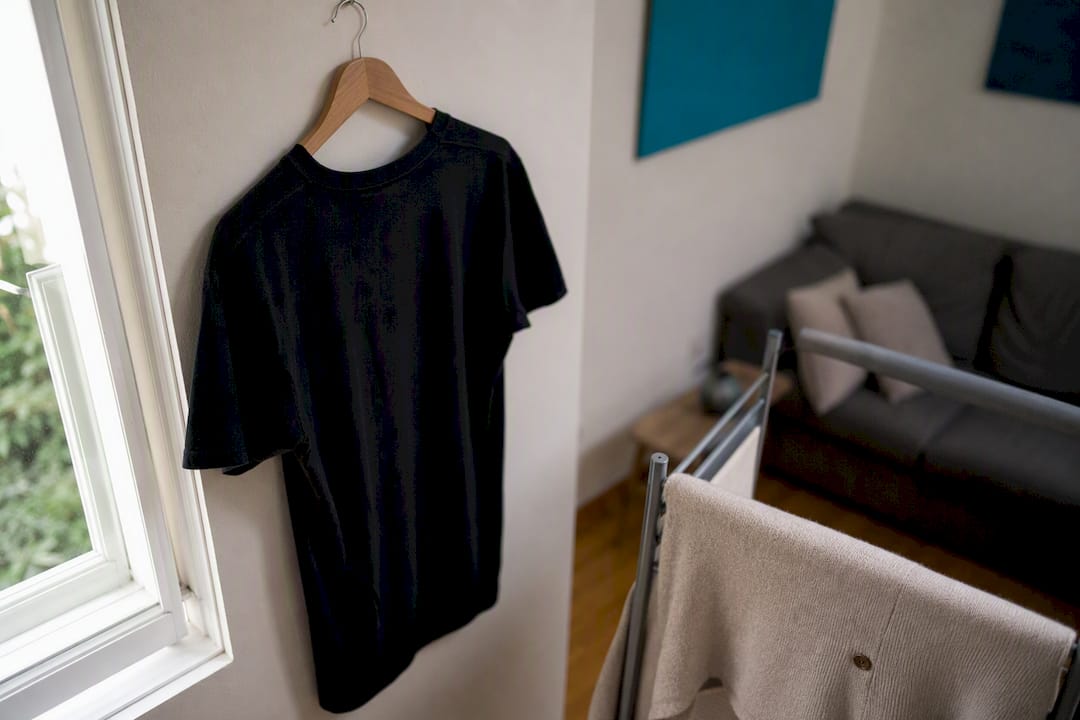
Direct sunlight is genuinely rough on black dye through prolonged UV exposure, so skip line-drying dark clothes outside on bright days if you can help it. Rotate which pieces you wear most often, since one shirt worn and washed twice a week fades far faster than four shirts worn once each.
For storage:
- Keep black clothes in a cool, dark closet or drawer, not somewhere that gets direct sun.
- Fold heavier knits and hoodies instead of hanging them for months, which prevents shoulder stretching. Check out this hoodie and fleece care guide for more on keeping heavier garments looking new.
- Skip wire hangers for tees. They stretch out the neckline over time.
Pro Tip: Fold graphic tees with the print facing inward. It keeps the design from rubbing against other fabric in a drawer.
Special Fabrics and Stains That Need Different Rules
Not every black garment plays by the same rulebook.
Denim sheds a surprising amount of loose dye in its first several washes, so wash it inside out, cold, and separately at first to keep that dye off other clothes. After that, wash denim rarely. It holds up fine with infrequent cleaning.
Garment-dyed and pigment-dyed tees need the gentlest treatment on this list. Cold water only, delicate cycle, air dry. The dye sits closer to the surface on these pieces, so it’s more vulnerable to abrasion than traditionally dyed fabric.

Silk and wool often call for hand washing or professional cleaning, and enzyme-based detergents can damage protein fibers in some wool and silk blends, so check the label before pretreating a stain.
Synthetics like polyester blends do better with lower heat and shorter cycles, and fabric softener can actually dull moisture-wicking or technical finishes.
For any stubborn stain, blot rather than rub, test removers on an inside seam, and see this guide to treating deodorant stains on black shirts for a full pretreatment walkthrough.
Make Black Clothes Last Longer Between Washes
Every wash cycle takes a small toll on color, so the fewer full washes a garment needs, the longer it holds its depth of black.
Before tossing something in the hamper, do a quick sniff and spot check. If it just smells like a long day and has no visible stains, it probably doesn’t need a full wash yet. Airing garments out in a cool, shaded spot or hitting them with a handheld steamer removes odor and wrinkles without the mechanical wear of a washing machine. For lingering smells like smoke, a quick spot-treatment method can refresh a garment without a full cycle.
- Spot-clean visible marks instead of running a whole load for one small stain.
- Use fabric-safe deodorizing sprays sparingly, not as a substitute for actual washing.
- Wear a base layer or undershirt under black tees to catch sweat and body oil before it reaches the outer fabric.
Caring for Graphic Tees and Garment-Dyed Pieces
Graphic prints and garment-dyed fabric behave differently in the wash than a plain solid black tee, and treating them the same way is how prints crack and colors go patchy fast. Turn printed tees inside out every time, wash cold, and skip the dryer’s heat entirely if the print sits on top of the fabric rather than woven into it. Heat is what causes screen prints to crack and peel at the edges first.
Garment-dyed tees, the kind dyed after the shirt is already sewn together rather than dyed as raw fabric, hold color closer to the surface. That makes them look richer out of the box but also more sensitive to hot water and rough drying. Treat them like a delicate every time, not just for the first few washes.
What Most People Get Wrong About Washing Black Clothes
The biggest mistake isn’t hot water or the wrong detergent. It’s frequency. Most people wash black clothes far more often than the fabric actually needs, treating “one wear” as an automatic trip to the hamper the way they might with white socks or gym clothes. That habit alone does more cumulative damage than any single wash setting.
Fewer washes also happen to be the more sustainable choice, since every load uses water, energy, and detergent that a spot clean or an evening on a hanger doesn’t. Buying fewer, better-made pieces and taking care of them longer beats replacing faded shirts every season. One habit worth adopting: keep a designated hanger by your closet door for pieces you wore for a few hours and could wear again before they need a wash.
— Robert
Where to Find Black Tees Worth Taking Care Of
None of this routine matters much if the shirt you’re protecting was cheaply made to begin with. Imuskop builds its graphic tees and garment-dyed pieces with fabric and print quality that actually rewards the extra five minutes of cold-water care, so the design still looks sharp after the twentieth wash instead of the third.

If you’re shopping for pieces that hold their color and their statement, browse the current collection at Imuskop and see the streetwear and graphic designs built to last past a season.
Sources
- How to keep black & dark-colored clothes from fading | Whirlpool
- How to keep your black clothes looking their best | Consumer Reports
- How to wash dark clothes without fading | HowStuffWorks
- Keep dark clothes from fading | The Fabric & Home Care Institute (Cleaning Institute)
FAQ
How do you keep dark clothes dark when washing?
Turn garments inside out, wash on cold with a gentle cycle, and measure your detergent instead of pouring freely. This limits dye loss, fiber friction, and the residue buildup that makes black fabric look gray over time.
Does vinegar keep black clothes from fading?
A splash of distilled white vinegar in the rinse can help strip lingering soap residue, but it will not restore color that has already faded. It works best as a supporting step alongside cold washing and careful detergent dosing.
Do detergents made for black clothes actually work?
Liquid or dark-formula detergents dissolve fully in cold water, which helps avoid the chalky residue that powder detergents can leave on dark fabric. Measuring the amount with the cap line matters just as much as which formula you pick.
Why do black clothes fade after washing?
Fading comes from a mix of loose dye in new garments, mechanical abrasion from the wash cycle, leftover detergent residue clinging to fibers, and heat from hot water or the dryer breaking down pigment bonds.
How do you dry dark clothes without ruining the color?
Air dry indoors away from direct sun whenever you can, since this is the gentlest option for color. If you need the dryer, keep items inside out and use the lowest heat setting instead of high heat.