

Wash flannel shirts in cold or lukewarm water on a gentle or delicate cycle, using a mild detergent and skipping the fabric softener. Turn shirts inside out before washing, and either air dry them flat or tumble on the lowest heat setting, pulling them out while still slightly damp. This combination is what actually prevents the shrinkage, fading, and pilling that ruin most flannel over time.
TL;DR:
- Washing flannel shirts in cold or lukewarm water on gentle cycles with a mild detergent prevents shrinkage, fading, and pilling over time.
- Turning shirts inside out, washing with light loads, and avoiding high heat in dryers significantly reduce fiber damage and texture loss.
- Dark flannels should be washed separately for the first several washes to prevent dye bleeding, and light flannels should be dried in shade to avoid fading.
- Using a half-cup of white vinegar during rinsing preserves softness, while avoiding bleach and starch maintains the shirt’s brushed texture.
- Hand washing is recommended for delicate prints or unknown fibers, and air drying flat or hanging prevents shrinking and preserves natural nap.
Table of Contents
- How Do You Wash Flannel Shirts Step by Step?
- How Do You Pre-Treat Stains on Flannel?
- What’s the Safest Way to Dry Flannel?
- Why Do Flannel Shirts Pill, and How Do You Fix It?
- Do Cotton, Wool, and Blended Flannel Need Different Care?
- How Often Should You Wash Flannel, and How Should You Store It?
- Notes on Washing Printed and Graphic Flannel
- Does Dark Flannel Need Different Washing Than Light Flannel?
- How Should You Iron or Press Flannel Without Flattening the Nap?
- What Are Eco-Friendly Ways to Wash Flannel Shirts?
- A Practical Take on Convenience vs. Fabric Care
- Sources
- FAQ
How Do You Wash Flannel Shirts Step by Step?
Flannel isn’t fragile, but it’s unforgiving about heat and friction. Get those two things right and a shirt can outlast a decade of cold mornings. Get them wrong, and you’ll watch a soft, brushed weave turn into a stiff, bobbled mess after two washes.
Start with sorting, because flannel punishes shortcuts here more than most fabrics do.
- Sort by color and weight. Dark plaids bleed onto light ones, and heavier flannel (the kind with a thick brushed nap) agitates lighter shirts if they’re washed together.
- Empty pockets and clear debris. Tissue, receipts, and loose threads catch in the nap and create friction points that turn into pills.
- Turn shirts inside out and fasten every button or snap. This protects the printed or brushed surface and stops buttons from scraping against other fabric.
- Choose the gentle or delicate cycle, cold or lukewarm water, and a low spin speed. Hot water and high spin are the two biggest causes of shrinkage and pilling in flannel.
- Keep the load light, giving flannel items ample space to move freely during the wash. A packed drum means more rubbing. Rubbing is exactly what breaks down the surface fibers that turn into pills.
- Measure a mild, pH-neutral detergent rather than eyeballing it. Extra detergent doesn’t clean better. It just leaves residue that stiffens the weave over repeated washes.
- Skip the chlorine bleach entirely, even on white or light plaids. It weakens cotton fibers and speeds up color loss.
- Add a half-cup of white vinegar to the rinse cycle instead of liquid fabric softener. Softener coats fibers with a waxy film that dulls the brushed texture over time, while vinegar rinses clean without leaving that residue.
Hand washing is worth the extra five minutes for anything with a printed design, a delicate trim, or fabric you’re not fully sure about.
- Fill a basin or clean sink with cool water and a small amount of mild detergent.
- Submerge the shirt and agitate gently with your hands, no scrubbing or twisting.
- Rinse thoroughly until the water runs clear of soap.
- Press the water out between two towels rather than wringing, since wringing distorts the weave and stresses seams.
Pro Tip: Check the care label before you do anything else. If it says “dry clean only” or “hand wash cold,” that instruction was written for a reason, and it overrides everything in this guide, including the machine-wash steps above.
How Do You Pre-Treat Stains on Flannel?
Test any stain remover on an inside seam or the shirttail hem first. Flannel dye can shift or fade in ways you won’t notice until it’s too late on a visible panel, and testing costs you thirty seconds.
Once you’ve confirmed the product is safe, work the stain in order rather than attacking it all at once.
- Blot liquid spills immediately with a clean cloth. Don’t rub, which just pushes the stain deeper into the nap.
- Apply a small amount of mild detergent or an enzyme-based spotter directly to the stain.
- Let it sit for a few minutes so the enzymes or surfactants have time to break the stain down.
- Lift the stain gently with a soft-bristled brush, working from the outside edge inward.
- Rinse the spot with cool water before running the shirt through a normal wash.
Avoid harsh solvents and chlorine bleach on flannel, full stop. They strip the brushed finish and can bleach out color even on a small spot, leaving a faded patch that’s more obvious than the original stain. For oil-based marks like bacon grease or salad dressing, a drop of dish soap worked into the fibers before a normal wash cuts grease better than most dedicated stain sticks.
Some stains and fabrics call for professional help instead of a DIY fix. If a flannel shirt has leather patches, suede elbow panels, or unknown fiber content, or if a stain has already been through two failed treatment attempts, a professional cleaner is the safer bet. Kula Tactical’s care guidance points out that when you’re unsure what a garment is made of, erring toward hand washing or professional cleaning avoids damage you can’t undo.
What’s the Safest Way to Dry Flannel?
Heat and tumbling are what shrink flannel, not the wash cycle itself. High dryer heat causes cotton fibers to contract while the drum’s constant agitation roughs up the nap, which is why a shirt that fit fine last month suddenly feels tight across the shoulders.
Air drying carries the least risk. Lay the shirt flat on a clean towel, or hang it on a padded hanger away from direct sunlight, which fades color over time. The tradeoff is time: air drying can take most of a day depending on humidity, and a shirt left bunched on a thin wire hanger can stretch out of shape at the shoulders.
If you need the dryer, these steps limit the damage:
- Use the lowest heat setting available, or a no-heat “air fluff” cycle if your machine has one.
- Toss in a couple of wool dryer balls to reduce direct fabric-on-fabric friction and cut down on pilling.
- Pull the shirt out while it’s still slightly damp rather than running a full cycle, since over-drying is what locks in shrinkage.
- Finish drying flat on a towel for the last stretch.
Pro Tip: While the shirt is still damp, gently pat and smooth the seams, cuffs, and collar back into their original shape. Flannel holds whatever form it dries in, so five seconds of reshaping now saves you from a permanently crooked collar later.
Why Do Flannel Shirts Pill, and How Do You Fix It?
Pilling happens when mechanical friction breaks fibers and they knot together into little balls on the surface. It’s a physical process, not a sign of a cheap shirt, and it’s largely preventable once you understand what triggers it.
Reducing friction is the entire prevention strategy: wash inside out, run gentle cycles only, and keep loads light so fabric isn’t constantly rubbing against itself or the drum wall. A washer stuffed to capacity is one of the most common causes of premature pilling because there’s no room for garments to move freely through the water.
If pills have already formed, you have three reasonably safe removal options.
- Fabric shaver: Run it in light, even strokes across the pilled area, checking the blade guard setting so it skims the surface instead of cutting into the weave.
- Sweater stone: Drag it in one direction, gently, across the pills. It’s slower than a shaver but has less risk of gouging fabric.
- Lint or fabric brush: Best for light pilling, this lifts loose fuzz without any cutting mechanism at all.
Whichever tool you use, go slowly and check your progress every few strokes. Southern Living’s flannel care guide specifically warns that a fabric shaver used too aggressively can cut through the weave itself, not just the pills sitting on top of it.
To bring softness back after a few washes, add a half-cup of white vinegar to the rinse, throw in a half-cup of baking soda during the wash cycle to help lift residue, or run a short, low-heat tumble with wool dryer balls to fluff the nap back up. If a shirt is covered in pills across most of its surface, though, that’s usually permanent fiber damage. At that point you’re choosing between living with the texture, patching high-wear spots, or treating it as a candidate for replacement.
Do Cotton, Wool, and Blended Flannel Need Different Care?
Most flannel shirts are cotton, and cotton flannel is generally machine-safe on a delicate cycle. The one rule that matters most: keep it away from high heat in the dryer, since that’s what causes the shrinkage cotton flannel is known for.
Wool flannel plays by different rules entirely. It should be hand washed or dry-cleaned, using a wool-specific detergent, with no vigorous agitation of any kind. Wool fibers have scales that lock together permanently under heat and friction, a process called felting, and once it happens there’s no undoing it. Wool care guidance is consistent on this point: gentle handling isn’t optional, it’s the only thing standing between a soft shirt and a stiff, matted one.
Blends split the difference, and the safest approach is simple:
- Follow whichever fiber in the blend is more delicate. A cotton-wool blend gets wool-level care.
- Check the care label before assuming anything, since blend ratios vary by brand and season.
- Test an inside seam if the label is missing or worn away and you’re not sure what you’re working with.
When genuinely in doubt about fiber content, hand washing costs you a few extra minutes and saves you from guessing wrong on a shirt you actually like.
How Often Should You Wash Flannel, and How Should You Store It?
Flannel worn as an outer layer over a T-shirt doesn’t need washing after every single wear. Every two to three wears is typically enough, since the shirt isn’t in direct contact with sweat the way a base layer is. If you’re wearing flannel against bare skin or sweating in it regularly, wash it after each use instead.
Between washes, air the shirt out on a hanger rather than tossing it straight into a hamper, and spot-clean small marks instead of running a full wash cycle for one coffee splash. Every wash cycle, even a gentle one, adds some wear, so cutting unnecessary washes is one of the simplest ways to extend a shirt’s life.
Storage matters more than most people realize:
- Fold heavier flannel shirts rather than hanging them long-term, since hangers stretch out the shoulders on heavier weaves over months of storage.
- Store shirts in a cool, dry, ventilated space, since damp closets encourage mildew and musty odors that are hard to wash out later.
- Add a cedar block or sachet to drawers or closets to deter moths, which target natural fibers like cotton and wool flannel specifically.
Notes on Washing Printed and Graphic Flannel
Printed flannel needs one extra layer of caution beyond the standard wash routine. Always turn graphic shirts inside out before washing, and group them with similar-weight fabrics so heavier pieces don’t drag against the print and cause it to crack or peel early.
Skip aggressive stain removers directly on printed panels. Spot-test on an inside seam first, and if a mark sits on top of the graphic itself, treat it more gently than you would a plain woven area. A mild detergent and that half-cup vinegar rinse work just as well on printed flannel as on solid colors, without the risk that harsher products carry for ink and dye-based designs.
If pilling shows up on a printed hoodie or flannel piece, Muskop’s guide to removing pilling from knitwear walks through safe tool use in more detail, and the guide to unshrinking cotton shirts covers what’s actually recoverable if a wash goes wrong. For anyone building out a graphic-heavy wardrobe, the same inside-out, gentle-cycle logic applies across every printed piece, not just flannel.
Does Dark Flannel Need Different Washing Than Light Flannel?
Dark and light flannel shirts need slightly different handling to avoid color bleeding and fading. Dark plaids, especially navy, black, and deep red combinations, release excess dye in early washes and can transfer that color onto lighter garments in the same load.
Wash dark flannel separately from light or white pieces for at least the first three to four washes, until the dye stops bleeding out in the rinse water. Cold water slows dye release more than warm water does, which is one more reason to keep the temperature low even after the fabric has been through several washes.
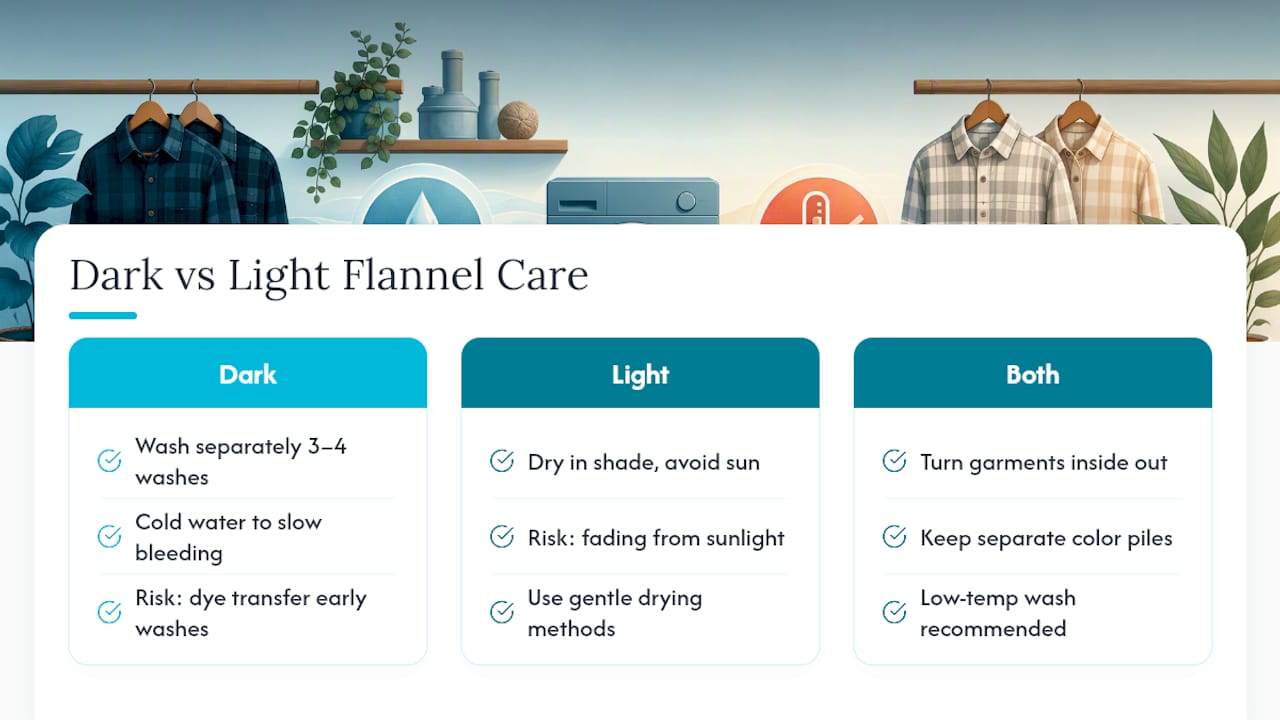
Light and pastel flannel faces a different risk: fading rather than bleeding. Direct sunlight during drying is the biggest culprit, so hang or lay light-colored shirts to dry in shade rather than a sunny window or outdoor line. Turning any colored flannel inside out before washing also protects the outer-facing dye from the friction that fades color fastest, since most of the abrasion during a wash cycle happens on the surface the water and drum contact directly. If you’re building a wardrobe around both dark and light flannel pieces, keeping separate wash piles by color is a small habit that pays off across dozens of washes.
How Should You Iron or Press Flannel Without Flattening the Nap?
Flannel’s texture comes from its brushed nap, and a hot iron pressed directly onto that surface flattens it permanently, leaving shiny, compressed patches that never fully recover.
Set the iron to a medium or low heat setting rather than the cotton-high default most people reach for automatically. Press on the inside of the shirt whenever possible, so any direct heat contact happens against the reverse side rather than the visible brushed surface. A damp pressing cloth between the iron and the fabric adds another layer of protection and helps release wrinkles with less direct heat.
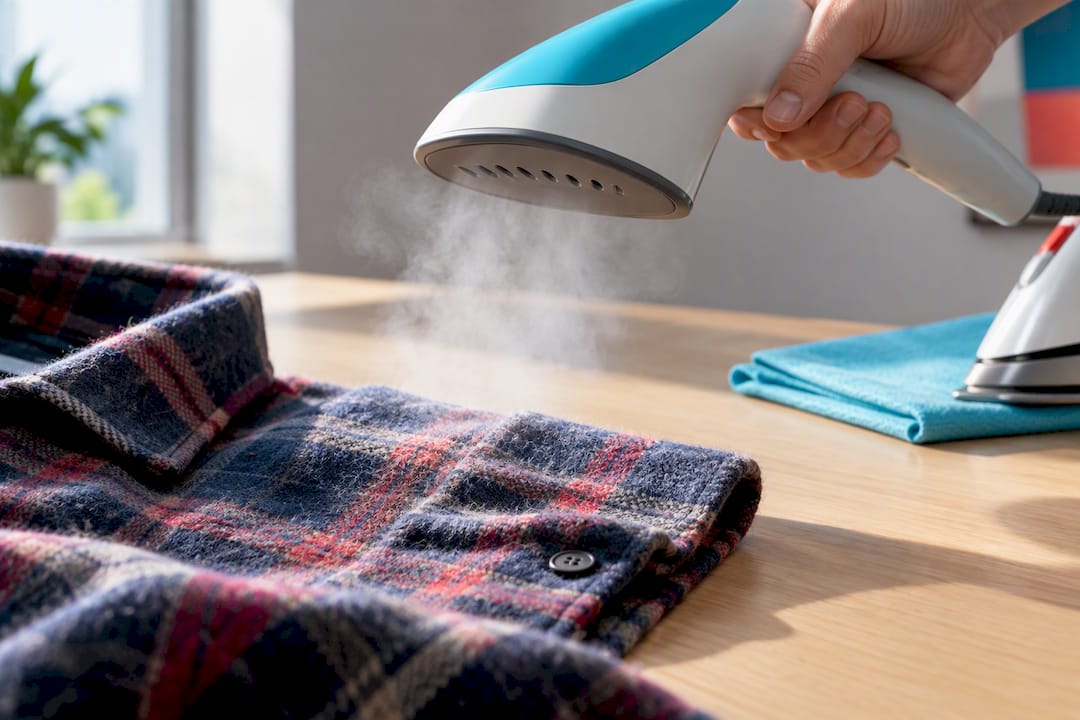
Steam works better than dry heat for flannel specifically. A garment steamer, or an iron’s steam function held slightly above the fabric rather than pressed flat against it, relaxes wrinkles without crushing the nap the way direct ironing does. If a shirt only needs light touch-ups around the collar and cuffs, focus the iron there rather than pressing the entire panel, since less contact means less flattened texture overall.
Skip starch on flannel entirely. It stiffens the weave in a way that fights against the soft, brushed feel that makes flannel worth wearing in the first place.
What Are Eco-Friendly Ways to Wash Flannel Shirts?
Cold and lukewarm water washes, which flannel already needs to avoid shrinkage, also cut energy use significantly compared to hot water cycles, since heating water accounts for a large share of a washing machine’s total energy draw.
Running full loads (while staying under that three-quarter capacity mark to limit pilling) means fewer total wash cycles over a month, which saves both water and electricity. Line drying or air drying flat, already the safest option for flannel’s fibers, also uses zero electricity compared to a dryer cycle, making it the rare case where the fabric-safe choice and the lower-impact choice are exactly the same thing.
Choosing a mild, biodegradable detergent over heavily fragranced or dye-loaded formulas reduces the chemical load going into wastewater, and the white vinegar rinse recommended throughout this guide replaces a store-bought fabric softener with something cheap, biodegradable, and already sitting in most kitchen cabinets. Washing less often by spot-cleaning and airing shirts between wears, covered earlier as a fabric-life strategy, also happens to be the single easiest way to reduce a shirt’s total water and energy footprint over its lifetime.
A Practical Take on Convenience vs. Fabric Care
Brief low-heat drying is fine when you’re pulling a shirt out slightly damp and finishing it flat, the middle path between full dryer exposure and an all-day air dry. Where I’d push back on convenience is the full, high-heat dryer cycle out of habit. That single choice does more cumulative damage to flannel than any detergent or water temperature decision you’ll make.
Before any wash, run through this: check the care label, flip the shirt inside out, look it over for stains that need pre-treatment, and set the machine to a gentle or delicate cycle. That thirty-second habit is the real difference between a flannel shirt that lasts one winter and one that lasts ten.
— Robert
Sources
- How To Wash Flannel Sheets So They Don’t Pill | Southern Living
- How to keep flannel sheets soft | The Company Store
- Flannel shirt care: how to keep them soft and looking new | The Bear House
- Organizing
FAQ
Can Flannel Be Washed in a Washing Machine?
Yes, most cotton flannel is machine-safe on a gentle or delicate cycle using cold or lukewarm water. Wool flannel is the exception. It generally needs hand washing or dry cleaning to avoid felting.
Do Flannel Shirts Shrink When You Wash Them?
Flannel can shrink, but it’s almost always caused by hot water or high dryer heat rather than the wash itself. Sticking to cold or lukewarm water on a gentle cycle keeps shrinkage to a minimum.
Can Flannel Be Put in the Dryer?
Flannel can go in the dryer on the lowest heat setting, but air drying is the safer choice for preserving both size and texture. If you do use a dryer, pull the shirt out while it’s still slightly damp rather than running a full cycle.
How Do You Make a Flannel Shirt Soft Again?
Add a half-cup of white vinegar to the rinse cycle instead of a chemical fabric softener, since vinegar cleans without leaving a waxy residue that flattens the nap over time. A short, low-heat tumble with wool dryer balls also helps fluff the fibers back up after several washes.
More questions people ask
How do I care for flannel fabric?
Wash on a cold or lukewarm gentle cycle with mild detergent, skip the fabric softener, and turn the shirt inside out first. Dry flat or on low heat and pull it out while still slightly damp to avoid shrinkage and pilling.
How do you stop flannel fabric from fraying?
Turn shirts inside out before washing and fasten buttons or snaps so edges and seams aren't rubbing against other fabric in the drum. Washing with a light load and skipping high spin speeds also cuts down on the friction that frays fibers over time.
What is the print on flannel called?
The classic woven grid pattern on flannel is usually called plaid or a check pattern, though graphic flannel can also carry printed designs on top of that woven base. Printed flannel needs extra care, like hand washing or turning the shirt inside out, to protect the design from fading or cracking.