

Soak the shirt in lukewarm water mixed with hair conditioner or baby shampoo for about twenty to thirty minutes, then gently stretch it back toward its original dimensions while it air-dries flat. This works because the conditioner lubricates cotton fibers so they can move again. Expect partial recovery in most cases; a shirt that shrank a full size may not come all the way back, and the fix can fade after the next wash.
TL;DR:
- Using lukewarm water with conditioner or baby shampoo can partially reverse cotton shrinkage, but full recovery is rare and fading may occur after washing.
- Avoid soaking if the fabric is delicate or labeled “dry clean only,” and never use hot water, as heat worsens shrinkage.
- Proper stretching during drying, securing the shape with weights or pins, and air-drying away from heat offer the best chance for reversion.
- The process is temporary since cotton fibers can contract again in heat or moisture, making professional repair advisable for severe shrinkage.
- Prevent shrinkage by washing in cold water, removing clothes early from the dryer, and choosing pre-shrunk or combed cotton fabrics.
Table of Contents
- How to Unshrink a Cotton Shirt Step by Step
- What If You Don’t Have Conditioner on Hand?
- Preventing Shrinkage Before It Happens
- What Results to Realistically Expect
- Our Take on Saving a Favorite Cotton Tee
- Save Your Favorites, Skip the Repeat Fixes
- Sources
How to Unshrink a Cotton Shirt Step by Step
Before you touch a drop of water, check the care tag. If it says “dry clean only” or the fabric is a delicate blend with spandex or rayon, skip the soak and consider a professional cleaner instead. If color transfers, work fast and keep the water cool.
- Fill a basin with lukewarm water. Not hot, not cold. Hot water swells cotton fibers further and can make shrinkage worse, since heat and agitation are the two biggest shrink triggers in the first place.
- Add a few tablespoons of hair conditioner or baby shampoo per quart of water. Both products contain cationic surfactants that temporarily reduce friction between fibers, which is the actual mechanism behind this whole method. Baby shampoo tends to rinse cleaner on lighter fabrics; conditioner has a bit more slip for stiffer cotton.
- Submerge the shirt and soak for about twenty to thirty minutes. Swirl it once or twice, but don’t scrub or agitate it. This soak time comes up consistently across home fixes that actually work.
- Lift the shirt out and lay it on a dry towel. Roll the towel up with the shirt inside and press down gently to squeeze out water. Never wring or twist the fabric. Wringing distorts the weave in ways that are hard to undo, even after all that careful soaking.
- Unroll the shirt and lay it flat on a clean, dry towel. While it’s still damp and the fibers are relaxed, stretch it lengthwise first, pulling from the shoulders and hem in small, even increments. Then work the width, tugging gently from the side seams.
- Hold the stretch with light weights or pins. Soup cans set on the hem, or pins anchoring the sleeves to a towel underneath, keep tension steady while the shirt dries. Check it every hour or so and adjust.
- Let it air-dry completely, away from direct heat or sunlight. This air-drying process can take several hours. Don’t rush it into the dryer.
Pro Tip: Measure the shirt before you start, shoulder seam to hem and armpit to armpit, and write the numbers down. Measure again after drying. That way you’ll know if the stretch actually worked instead of guessing from memory. Our guide to measuring a t-shirt walks through the exact spots to check.
Once it’s fully dry, try it on. If it’s close but not quite there, you can repeat the soak once more. Avoid throwing it straight back in a hot wash and dryer cycle, since that tends to undo the progress you just made.
What If You Don’t Have Conditioner on Hand?
Conditioner and baby shampoo both work through the same surfactant action, just at different strengths. Baby shampoo is gentler and rinses out with less residue, so it’s the safer bet for pale or printed cotton. Regular conditioner has more slip, which helps on thicker fabric like denim-weight cotton, but leave extra time to rinse it out or the shirt can feel waxy.
A few other options worth knowing:
- Fabric softener works similarly but can leave a film on graphic prints over repeated use, so save it for plain shirts.
- Dedicated garment relaxer sprays exist, but they’re really just a packaged version of the same surfactant trick, at a markup.
- Steam-only stretching skips the soak entirely. Hold a garment steamer or iron on steam setting a few inches from the fabric, and stretch it while it’s warm and pliable. Professional cleaners recommend even, consistent pressure across the whole panel rather than yanking one spot, which is exactly where a lot of DIY attempts go wrong.
- Wrinkle-release spray and manual stretching is the quickest fix, best for a shirt that’s only mildly tight, not one that shrank a full size.
Preventing Shrinkage Before It Happens
The best fix is never needing one. A few habits cut your risk dramatically:
- Read the care tag every time, especially with a new shirt you haven’t washed before. Cotton usually shrinks most on its first trip through the wash.
- Wash cold, on the gentle cycle, with a low spin speed. Skip hot water entirely for anything you care about.
- Pull items from the dryer while they’re still slightly damp, then finish air-drying. Overdrying on high heat is one of the most common causes of shrinkage, and pulling clothes early is the single most effective habit for preventing it.
- Buy pre-shrunk or combed cotton when you can. Our breakdown of pre-shrunk cotton explains why that processing step matters, and the combed cotton vs. regular cotton comparison covers which construction holds its shape longer.
What Results to Realistically Expect
Cotton fibers have a kind of memory. Heat and moisture make them contract, and while conditioner temporarily loosens that grip, the change is physical, not permanent. A future hot wash can pull the fibers right back to where they started.
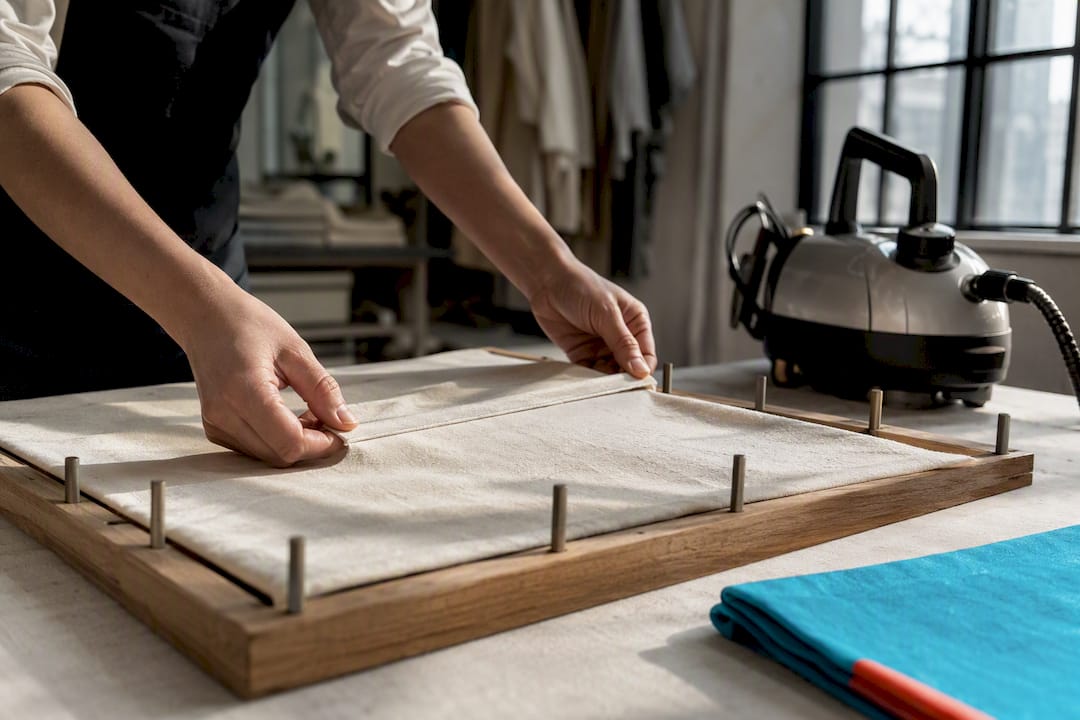
Stretch too aggressively and you risk an uneven shape, stressed seams, or dye bleeding at the collar and hems. If the shirt is a sentimental piece, an expensive one, or the shrinkage is severe, a professional cleaner is worth the cost. Professionals use blocking frames and industrial steam to restore tension evenly across the whole garment, something a basin and a towel can’t fully replicate.
Our Take on Saving a Favorite Cotton Tee
Robert has covered enough apparel-care questions to know that most people give up on a shrunken tee way too fast. The soak-and-stretch method genuinely works often enough to be worth the twenty minutes, especially paired with our notes on how to wash graphic tees without wrecking the print. Quality cotton and low-heat drying advice are important because a shirt that survives its first wash intact is worth more than one you’re constantly rescuing. Test any method on a hidden seam first. Every shirt reacts a little differently.
— Robert
Save Your Favorites, Skip the Repeat Fixes
Our graphic tees are designed to better resist shrinking on initial washes, so you’re spending less time soaking shirts in the bathroom sink and more time actually wearing them. That’s the real advantage here: fewer shrink scares means your favorite designs stay in rotation longer instead of getting shoved in a drawer.

If a shirt you already own needs rescuing, the care guide for washing black clothes without fading and our t-shirt quality guide cover the details that keep prints and colors intact long after the first wash. For sensitive printed cotton, the laundry notes from Bold Faith Apparel on washing screen-printed shirts line up closely with what we recommend. Browse the current graphic tee collection and pick your next shirt with shrink resistance already built in.
Sources
- Why do some clothes shrink in the wash? A textile scientist explains how to ‘unshrink’ them
- The Secret To Unshrinking Clothes Is Hiding In Your Bathroom
- Does Cotton Shrink? How to Unshrink Cotton
- How to Restore a Shrunken Shirt - iFixit Repair Guide