

For most apparel and home textiles, combed cotton is the better pick. The reason comes down to one processing step: after carding, the fiber is run through a fine-toothed comb that strips out short fibers and aligns what remains. The result is a smoother, stronger yarn that holds up longer and feels noticeably better against skin.
Here’s the quick version:
- Best for T-shirts, underwear, and bedding: Combed cotton. The smoother surface resists pilling, prints crisper, and stays soft through repeated washing.
- Best for utility workwear, heavy-duty bags, or tight budgets: Regular (carded) cotton. It’s coarser but costs less and handles rough use without complaint.
- When you’re unsure: Check the label for the word “combed,” then run a fingernail lightly across the fabric. Combed cotton catches almost nothing; carded cotton snags a little fuzz.
Pro Tip: If a product just says “100% cotton” with no other descriptor, assume it’s carded. Brands that use combed cotton almost always say so — it’s a selling point they won’t bury.
Key Takeaways
Combed cotton outperforms regular carded cotton on softness, pilling resistance, and print quality, making it worth the 15–30% price premium for any item worn against skin or expected to last several years.
| Point | Details |
|---|---|
| Combing removes 10–25% of fiber | Short fibers are stripped as noil, raising cost but producing smoother, stronger yarn. |
| Pilling and lifespan | Combed cotton resists pilling longer and typically outlasts carded cotton by one to two years in daily wear. |
| Price premium is real but justified | Expect to pay ~15–30% more; cost per use favors combed cotton for frequently worn items. |
| “Combed” ≠ organic or Egyptian | Combing describes processing only; origin (Egyptian, Pima) and certifications (GOTS, OEKO-TEX) are separate claims. |
| Imuskop uses combed cotton for graphic tees | Combed fiber produces a smoother print surface, sharper graphics, and better shape retention across washes. |
Table of Contents
- How do combed and carded cotton compare side by side?
- Which cotton should you pick for specific items?
- Pros and downsides of combed cotton
- Washing, shrinkage, and lifespan: what to expect
- Price and value: is combed cotton worth the premium?
- How to tell if a garment is actually combed cotton
- Combed cotton vs Egyptian cotton: clearing up the confusion
- How to decide quickly: a buying checklist
- How a clothing brand picks cotton for tees
- The case for caring about what’s in your shirt
- Imuskop graphic tees: combed cotton you can actually feel
- Useful sources and further reading
How do combed and carded cotton compare side by side?
| Dimension | Combed Cotton | Regular (Carded) Cotton |
|---|---|---|
| Softness / hand | Noticeably smoother, silkier | Coarser, more textured |
| Durability / strength | Higher tensile strength | Adequate for most uses |
| Pilling resistance | Low pilling | Higher pilling tendency |
| Weight / opacity | Can be spun finer; lighter options available | Tends toward heavier, bulkier yarn |
| Breathability | Higher (finer yarn = more airflow) | Moderate |
| Price premium | ~15–30% more than carded equivalent | Baseline cost |
| Best uses | Tees, underwear, bedding, dress shirts | Workwear, utility bags, budget basics |
The most consequential differences for everyday buyers:
- Pilling: Combed cotton stays softer, resists pilling, and retains shape longer than regular carded cotton. After 50 washes, a combed tee still looks presentable; a carded one often looks tired.
Pro Tip: The extra cost of combed cotton comes from two places: the additional processing step and the 10–25% of raw fiber lost as noil waste. You’re paying for what was removed, not just what’s there.
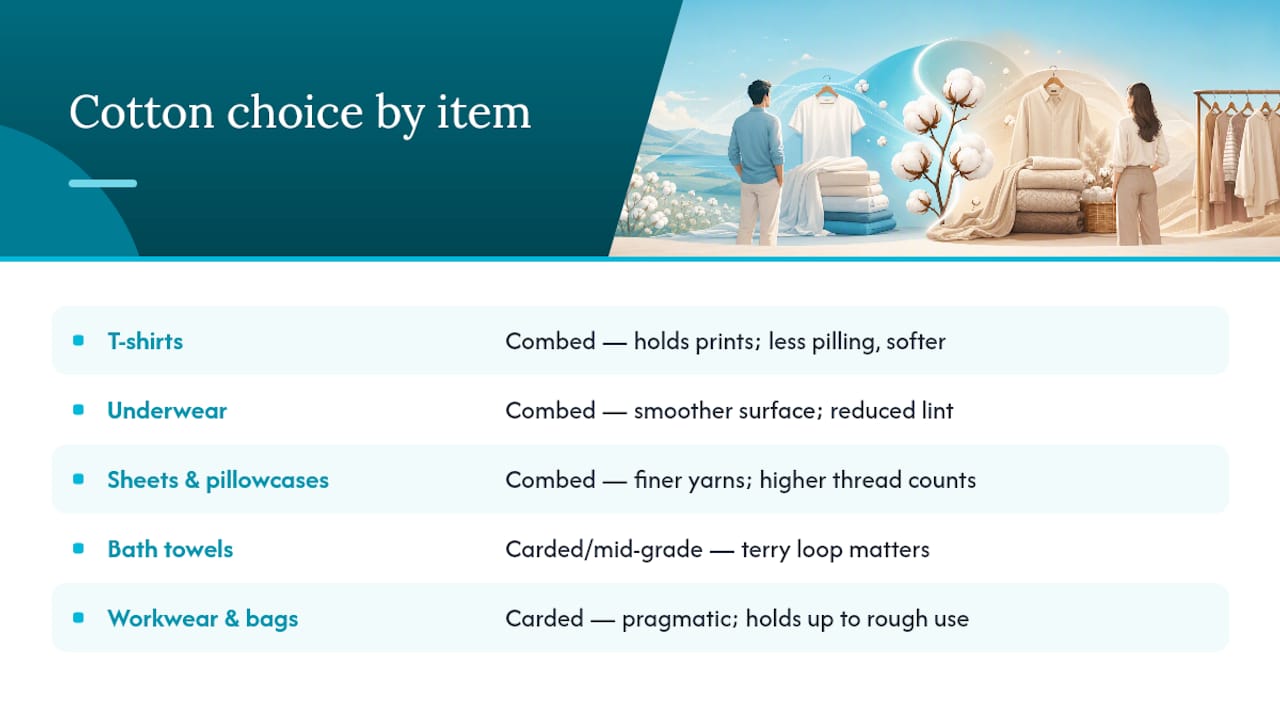
Which cotton should you pick for specific items?
The processing difference translates into clear purchase guidance once you know what the item needs to do.
T-shirts: Combed cotton is the clear choice for everyday and graphic tees. The smoother surface holds prints better, the reduced pilling keeps the shirt looking newer longer, and the softer hand makes all-day wear more comfortable. For men’s fashion T-shirts, combed cotton is essentially the standard for anything positioned above a basic.
Underwear and innerwear: Combed cotton wins here without much debate. Skin-contact items benefit most from the smoother surface and reduced lint. The longer fiber life also means elastic waistbands and seams don’t get stressed by a fabric that’s deteriorating around them.
Sheets and pillowcases: Combed cotton’s ability to be spun into finer yarns makes it the better choice for bedding. Higher thread counts are achievable, and the fabric stays soft through many wash cycles rather than stiffening up.
Bath towels: This is one area where the answer is less obvious. Towels benefit from some texture for absorbency, and the looped terry construction matters more than whether the yarn was combed. Mid-grade carded cotton towels perform well. Combed cotton towels tend to feel more luxurious but aren’t dramatically more absorbent.
Workwear, heavy bags, and aprons: Regular carded cotton is the pragmatic call. These items need abrasion resistance and structural integrity more than softness. A heavyweight carded tee or canvas bag holds up to rough use without the cost premium of combed fiber.
If you’re weighing cotton against blended fabrics for performance wear, the tri-blend vs cotton comparison covers that trade-off in detail.
Pros and downsides of combed cotton
The case for it:
- Noticeably softer hand that holds up through repeated washing
- Significantly less pilling over the garment’s life
- Stronger yarn that resists tearing at seams and stress points
- Cleaner print surface for graphic applications
- Better shape retention — combed tees hold their cut longer
The honest downsides:
- Typical market premium runs ~15–30% over comparable carded cotton, which adds up across a full wardrobe refresh
- Combing creates a noil waste stream and uses more raw cotton per finished meter, a real resource consideration
- More processing steps require additional energy and water use at the mill level
- Marketing sometimes overstates the difference — a poorly constructed combed-cotton garment still fails faster than a well-made carded one
Pro Tip: “Combed cotton” on a label says nothing about whether the garment is organic, ethically sourced, or chemical-free. Those claims require separate certifications. Don’t let one term do the work of three.
Washing, shrinkage, and lifespan: what to expect
Cotton shrinks. Both types do. But combed cotton’s tighter, more uniform fiber structure means it shrinks slightly more predictably and tends to hold its shape better after the initial wash.
The bigger variable is whether the garment has been pre-shrunk. A pre-shrunk combed cotton tee has already been through a controlled shrinkage process at the mill, so the size you buy is close to the size you keep. Without pre-shrinking, expect 3–5% shrinkage in the first hot wash for either cotton type.
| Care Factor | Combed Cotton | Regular Carded Cotton |
|---|---|---|
| Shrinkage (first wash) | 3–5% if not pre-shrunk | 3–5% if not pre-shrunk |
| Shape retention over time | Better; fibers hold alignment | Degrades faster with repeated washing |
| Pilling onset | Later (often 30+ washes) | Earlier (can appear within 10 washes) |
| Recommended wash temp | Cold to warm (30°C) | Cold to warm |
| Drying | Low heat or air dry | Low heat or air dry |
| Lifespan (daily wear tee) | 3–5 years with proper care | 1–3 years typical |
Care checklist for combed cotton:
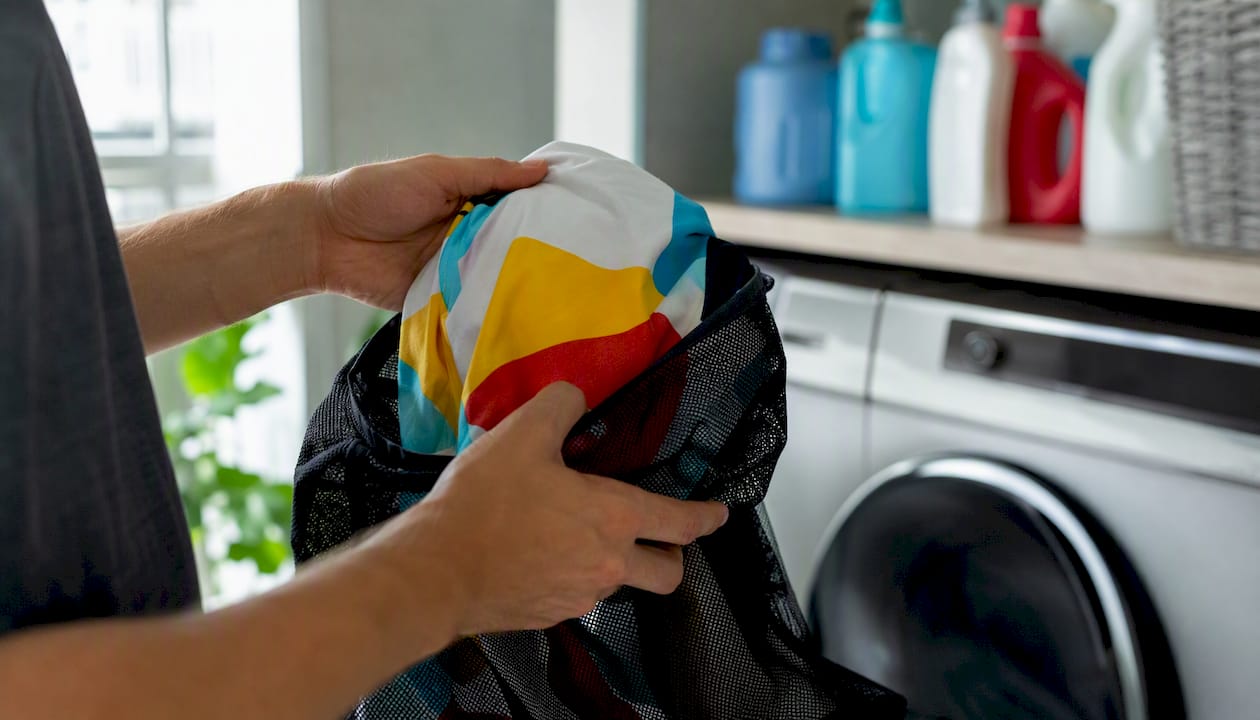
- Wash inside out to protect print surfaces and reduce surface abrasion
- Use cold or warm water; hot water accelerates shrinkage and fiber breakdown
- Tumble dry on low or hang dry; high heat is the fastest way to degrade cotton fiber
- Skip fabric softener on graphic tees — it coats the fiber and dulls prints over time
- Check for early pilling at collar and underarm seams; that’s where carded cotton shows its age first
Price and value: is combed cotton worth the premium?
The short answer: yes, for items you wear or use frequently. The ~15–30% price premium reflects real production costs — extra processing time and the fiber lost as noil during combing. You’re not paying for marketing.
The value case comes down to cost per use. A combed cotton tee that lasts three to five years of regular wear costs less per wearing than a cheaper carded tee that pills and loses shape in year one. The math shifts even further in favor of combed cotton for items like underwear and bedding, where comfort degradation is felt daily.
Where the premium doesn’t pay off:
- One-time event shirts or promotional merchandise
- Items that will see heavy abrasion (construction, outdoor labor)
- Budget basics where appearance after 50 washes isn’t a concern
Pro Tip: When comparing prices online, check whether the garment is pre-shrunk and what the GSM (grams per square meter) is. A 180–200 GSM combed cotton tee is a better value signal than the word “combed” alone on a 140 GSM shirt that will feel thin after three washes.
How to tell if a garment is actually combed cotton
Labels are the first stop. Look for the word “combed” explicitly — “combed cotton,” “combed ring-spun cotton,” or “100% combed cotton.” Ring-spun alone doesn’t mean combed; ring-spinning is a separate yarn-making process that can be applied to either carded or combed fiber.
What to check on labels and product pages:
- The word “combed” must appear — “ring-spun” or “premium cotton” alone is not enough
- GSM listed at 160–200 for a standard tee suggests a quality fabric weight
- “Pre-shrunk” indicates the mill took an extra finishing step, usually a sign of better overall construction
- OEKO-TEX Standard 100 certification means the finished fabric has been tested for harmful substances — a separate but complementary quality signal
The feel test in-store:
- Run your fingers across the fabric surface. Combed cotton feels smooth and slightly cool; carded cotton has a slightly fuzzy, warmer texture.
- Pinch and release. Combed cotton springs back more cleanly.
- Hold it up to light. Combed cotton at the same weight tends to look more uniform and even.
Pro Tip: Ask vendors for the yarn count or fabric spec sheet. A combed cotton tee is typically made from 20s–30s ring-spun combed yarn. If a supplier can’t tell you the yarn count, that’s a signal the “combed” claim may be marketing rather than spec.
Combed cotton vs Egyptian cotton: clearing up the confusion
This is one of the most common mix-ups in fabric shopping. Egyptian cotton and combed cotton describe two completely different things.
- Combed cotton — refers to processing — the combing step applied to any cotton fiber, regardless of where it was grown.
You can have combed Egyptian cotton (long-staple fiber that has also been combed — a genuinely premium combination), or you can have uncombed Egyptian cotton, or combed upland cotton from the American South. The labels describe different dimensions of the same product.
The same logic applies to Pima cotton, which is a long-staple American variety (grown mainly in the Southwest US). Pima can be combed or carded. “Pima” tells you about the plant genetics and fiber length; “combed” tells you about the yarn preparation.
- Combed ≠ organic. The combing step has no bearing on pesticide use, farming practices, or chemical finishing. Certifications such as GOTS and OEKO-TEX indicate farming and finished-product testing; “combed” alone does not.
- ISO textile classifications and bodies like the ICAC provide the industry-level standards suppliers reference when specifying fiber origin, staple length, and yarn count — useful to know when a vendor cites technical specs.
How to decide quickly: a buying checklist
Three rules that cover most situations:
- Pay the premium when: the item touches skin daily (tees, underwear, sheets), you want prints to stay sharp, or you’re buying something you expect to wear for years.
- Choose regular cotton when: the item is for utility use, you’re buying in bulk for events or merch, or the garment will face heavy abrasion.
- Sample before committing to a full order: buy one combed cotton tee and wash it five times. If the hand and shape hold, scale up. If it doesn’t feel different from your current carded cotton basics, the premium may not be worth it for your use case.
Shopping checklist:
- Label says “combed” explicitly
- GSM is appropriate for the use (160–200 for everyday tees)
- Pre-shrunk finish noted
- Care instructions are on the label (a sign of a manufacturer that cares about the product)
- Feel test passes: smooth surface, minimal fuzz, clean drape
How a clothing brand picks cotton for tees
From a maker’s perspective, the combed vs carded decision isn’t abstract — it shows up in spec sheets, supplier conversations, and print quality checks before a single shirt ships.
For graphic tees and statement pieces, combed cotton is the default at Imuskop. The smoother fiber surface is directly tied to print quality: DTF and DTG printing methods both perform better on a tighter, more uniform fabric surface. Ink sits more evenly, fine lines stay sharp, and the print doesn’t crack along fiber texture irregularities after washing.
For heavier basics or utility-adjacent styles, the calculus shifts. A thicker, carded-cotton construction can actually be desirable for structure and weight. The guide to men’s T-shirt fabrics and styles covers how GSM and construction interact with fit.
Practical notes from the sourcing side:
- Always request a fabric spec sheet that lists yarn count, GSM, and whether the cotton is combed or carded — “premium cotton” in a supplier’s pitch means nothing without those numbers
- Pre-shrunk finish is non-negotiable for printed tees; a shirt that shrinks post-print distorts the graphic
- Supplier certifications (OEKO-TEX, GOTS where applicable) are checked separately from the combed/carded spec
- For slim-fit and drape-sensitive styles, combed cotton’s finer yarn count produces a cleaner drape that holds the silhouette better
Pro Tip: For buyers ordering printed tees, ask your supplier specifically whether the cotton is combed ring-spun. That combination — combed fiber, ring-spun yarn — gives you the smoothest print surface available in standard cotton. The difference in print sharpness is visible to the naked eye.
The case for caring about what’s in your shirt
Most people buying a T-shirt aren’t thinking about yarn preparation. They’re thinking about the design, the fit, the price. That’s completely reasonable. But the fabric spec is where the shirt’s actual lifespan is decided, and it’s decided before the cotton ever reaches a loom.
What I find underappreciated in most fabric comparisons is how much the combed vs carded distinction matters specifically for printed apparel. The conversation usually stays at “softer and more durable,” which is true but incomplete. The real story for graphic tees is the print surface. A carded cotton shirt with a beautiful design will show that design degrading within a year of regular washing — not because the print was bad, but because the fiber surface underneath it is changing. Combed cotton holds the substrate stable.
The other thing worth saying plainly: “combed cotton” has become a marketing phrase that some brands use loosely. The word on a label is only as good as the supplier’s spec sheet behind it. Asking for yarn count and GSM takes thirty seconds and tells you far more than any marketing copy. Brands that use genuinely combed ring-spun cotton will have those numbers ready.
Imuskop graphic tees: combed cotton you can actually feel
Graphic tees that look sharp on day one and still look sharp after two years of washing aren’t an accident. At Imuskop, the tees built for statement designs use combed cotton specifically because the print quality difference is visible and the lifespan difference is real.

Every design at Imuskop starts with fabric that can carry it. Combed ring-spun cotton gives the print surface the stability it needs, and the pre-shrunk finish means the fit you order is the fit you keep. Free shipping on all orders, with interest-free payment options through Affirm. Browse the full collection and feel the difference at imuskop.com.
Useful sources and further reading
- Yarn insights: combed cotton vs pure cotton yarn
- 10 Key Differences of Combed Cotton vs Regular Cotton | Suvetah
- Combed Cotton vs Regular Cotton: The Fabric Showdown - Cotton Monk
- Cotton vs Combed Cotton: What Makes The Difference Worth Every Penny? - Charles Millen
- Regular Cotton vs. Combed Cotton - Complete Comparison | YourColors Blog
- Combed Cotton Vs Carded Cotton: 9 Key Differences & Tests - Fabric Supplier
- Best organic t-shirts (buyer guide) - The Good Trade
- ISO — Textiles classification (ICS 59.080.30)
- International Cotton Advisory Committee (ICAC)
“Buyer education matters: comparing swatches and checking GSM often tells you more about expected performance than the ‘combed’ label alone.” — Suvetah fabric insights